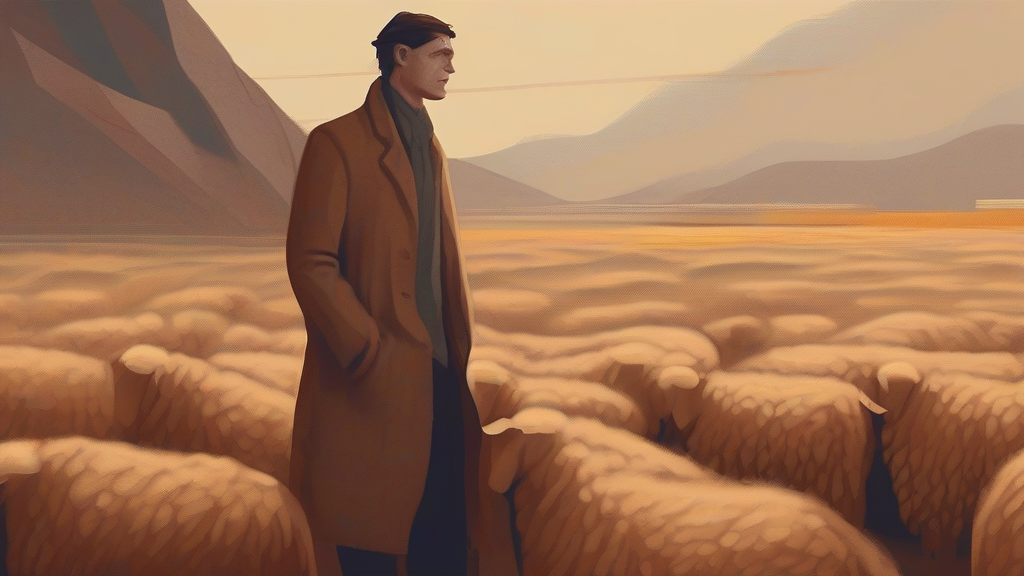
What does astrachan mean?
Astrachan is a noun with two well-established senses, both tracing their names to the Russian city of Astrakhan at the mouth of the Volga. In its most familiar use it denotes the tightly curled fleece of very young karakul lambs, prized as a luxurious fur for coats, collars, and hat trims, particularly in early twentieth-century fashion. In horticulture it refers to an early-ripening apple variety introduced to Western Europe from Russia in the nineteenth century, valued for its tart flavour and summer harvest. The alternative spelling astrakhan is today more widely used, though both appear in historical and trade contexts. When applied to fur, the word evokes vintage glamour and old-world elegance; when applied to fruit, it belongs to the specialist vocabulary of orchardists and heirloom-apple enthusiasts. Its dual identity — one word bridging luxury textile and kitchen garden — makes it a distinctive entry in the English lexicon.
The tightly curled fleece or pelt of a young karakul lamb, used especially as fur for coats, collars, and hats.
"He wore a heavy overcoat trimmed with astrachan."
Now largely encountered in vintage and historical fashion contexts.
An early-ripening variety of apple originating from the Astrakhan region of Russia.
"The orchard's oldest tree was an astrachan that fruited every July."
Standard plural; applies to both the fur (as pelts or garments) and the apples.
"The market stalls were stacked with fresh astrachans."
Named after a Russian city on the Volga delta, this one word covers both a tsarist-era luxury fur and a tart summer apple.
Reviewed by Deb Chak, Editor. AI-assisted content curated by RJS Tech Solutions LLP.
Etymology of astrachan
The word derives from Astrakhan, a historic city in southern Russia whose name ultimately comes from a Turkic source. English borrowed the term in the seventeenth to nineteenth centuries through trade contacts with Russia, applying it first to goods associated with the region and later specifically to the curled karakul lamb fleece exported via the city. The apple variety was likewise named for its supposed place of origin when it reached Western European cultivation in the nineteenth century. Both spellings, astrachan and astrakhan, reflect attempts to render the Russian place-name phonetically.
How astrachan is actually used
The spelling "astrakhan" is now more common than "astrachan" in modern English. The word carries connotations of old-world luxury and vintage fashion when referring to the fur.
Easily confused with astrachan
"Astrakhan" is simply the more common spelling of the same word, both referring to the curly lamb's wool fur or the apple variety from the Russian city.