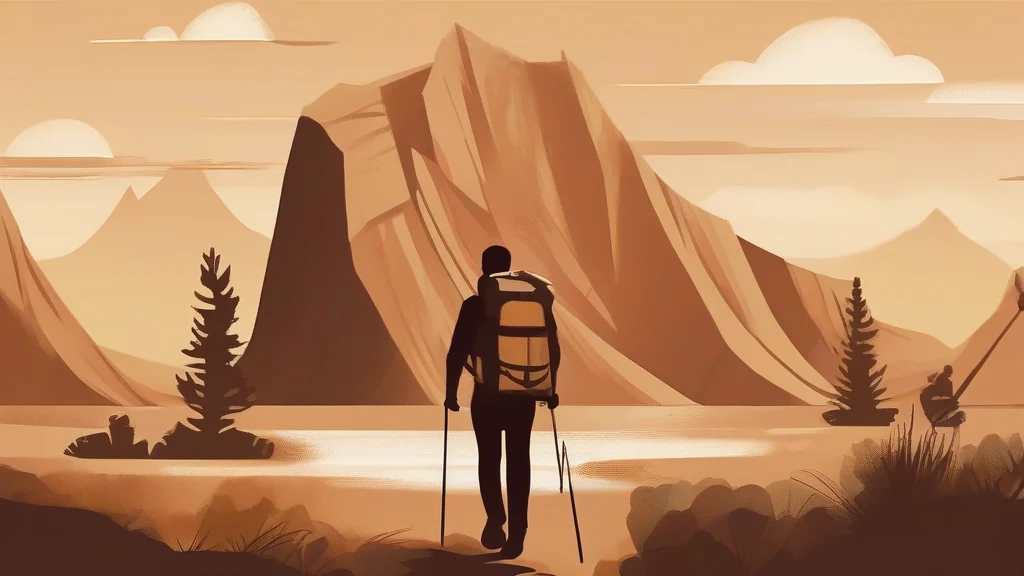
What does backpacking mean?
Backpacking is the practice of travelling with one's belongings carried in a backpack rather than in luggage, and it embraces two related activities. In its original sense, backpacking describes multi-day hiking and camping expeditions in which walkers carry everything they need — shelter, food, clothing, and equipment — on their backs, demanding self-sufficiency and physical endurance. In its broader modern sense, backpacking denotes low-budget, independent travel, often across several countries, typically associated with young travellers, hostels, and flexible itineraries. The word carries broadly positive connotations of adventure, freedom, frugality, and self-reliance, and it is common in both everyday conversation and travel writing. Related terms include backpacker (the person) and backpack (the bag). Because the same word serves both wilderness hikers and globe-trotting budget travellers, context and region determine which meaning applies, making backpacking a versatile but occasionally ambiguous term.
nounThe activity of travelling or hiking while carrying one's belongings in a backpack, often over multiple days and involving camping; also, by extension, budget independent travel using a backpack, typically staying in hostels.
- Hiking or camping trips in which all equipment is carried in a backpack, typically over several days in remote or wild terrain.
- Budget-oriented independent international travel, especially by young people, staying in inexpensive accommodation such as hostels.
"After graduating, she spent three months backpacking through Southeast Asia on a shoestring budget."
"They spent a week backpacking in the Sierra Nevada, carrying tents, food, and sleeping bags."
"Backpacking across Europe on a rail pass was a rite of passage for a generation of students."
As an activity noun, backpacking is normally uncountable and takes no plural form; quantity is expressed through phrases like 'several backpacking trips'.
"She has written about her many backpacking trips over the years."
The word 'backpacking' covers two very different pastimes — wilderness trekking with a tent, and shoestring travel between hostels — yet both share the same simple idea: everything you need is literally on your back.
Reviewed by Deb Chak, Editor. AI-assisted content curated by RJS Tech Solutions LLP.
Etymology of backpacking
Backpacking derives from 'backpack', a compound of 'back' (Old English bæc) and 'pack' (from Middle English pak, probably of Low German or Dutch origin), referring to a bag carried on the back. The verb 'to backpack' and the gerund 'backpacking' arose in English during the twentieth century as recreational hiking with portable gear became popular, and the sense broadened later in the century to describe budget international travel among young people. Close relatives such as knapsack and rucksack reflect the same tradition of portable packs borrowed from Germanic sources.
Related word forms
How backpacking is actually used
Register is neutral to informal. In North America the term strongly connotes multi-day wilderness hiking with camping gear; in Britain, Australia, and much of the world it more often refers to low-budget long-term travel. Context usually makes clear which sense is intended.
Easily confused with backpacking
Hitchhiking means obtaining free rides in other people's vehicles, whereas backpacking refers to travelling with a backpack, usually on foot or by scheduled transport.