
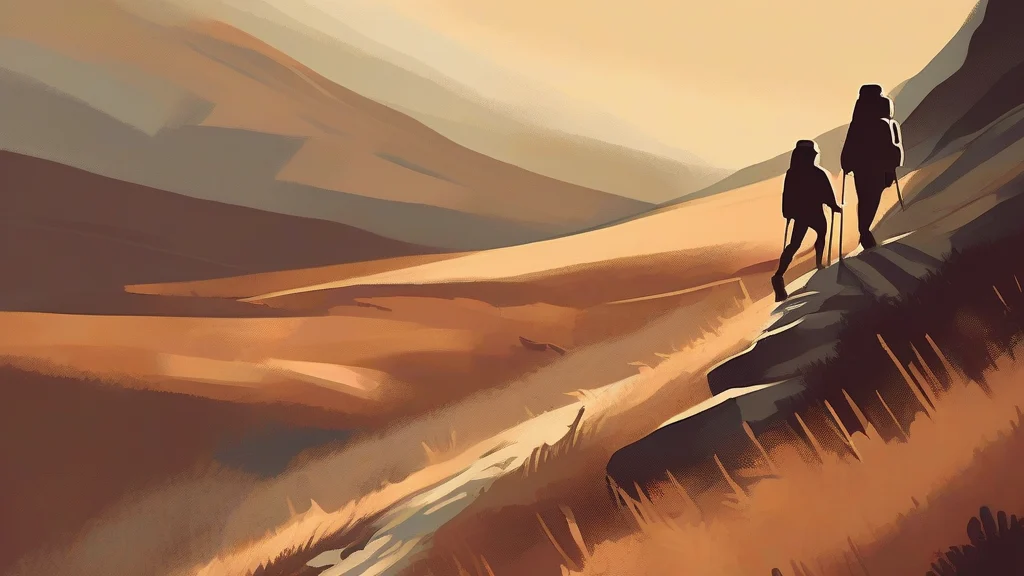
What does trekking mean?
Trekking is the act of walking a long distance, usually over difficult terrain and often as part of an organized journey or expedition. The word usually conveys endurance and physical challenge more strongly than hiking, which may describe a short or comparatively easy recreational walk. As a noun, trekking can denote either the activity itself or a long, arduous journey made on foot. The expression is common in both British and American English and is frequently associated with destinations such as mountain ranges, deserts, forests, and other remote landscapes. Trekking poles, backpacks, and specialist footwear are standard equipment, and the activity has a strong recreational as well as expeditionary character. Etymologically, the word comes from Dutch trekken, “to pull or drag,” through the language of South African English, where trek developed its sense of a long journey. The verb and noun forms remain closely connected in modern usage, with the participle trekking especially emphasizing the physical activity of walking over an extended route.
To travel on foot over a long distance, especially along a difficult route or during an extended expedition.
"They have been trekking since dawn."
Often implies sustained travel and physical endurance rather than a short recreational walk.
A long, arduous journey made on foot; also the activity of walking long distances.
"The club organizes a week-long trekking expedition each summer."
When referring to the activity generally, trekking is normally treated as an uncountable noun.
Rare and chiefly literary; trekking as an activity is normally uncountable, although individual journeys can occasionally be counted as trekkings.
"The book recounts several trekkings across the region."
From the Dutch trekken, meaning “to pull or drag,” the word now describes journeys that are anything but a short stroll.
Reviewed by Deb Chak, Editor. AI-assisted content curated by RJS Tech Solutions LLP.
Where does trekking come from?
Trek entered English from Dutch trekken, “to pull, drag,” and became established in South African English with the sense of a long journey. It later came to emphasize travel on foot, particularly travel involving considerable effort, and trekking is its present-participle and gerund form. Related English words such as track, tracker, and tracking came through Middle Dutch forms connected with the same Dutch verb.
Related word forms
How trekking is actually used
Trekking often suggests a sustained and demanding journey, although it can also refer to organized long-distance walking for recreation. It is common in British and American English.
Easily confused with trekking
Trekking means travelling on foot over a long distance, whereas tracking usually means following a person, animal, signal, or trail.