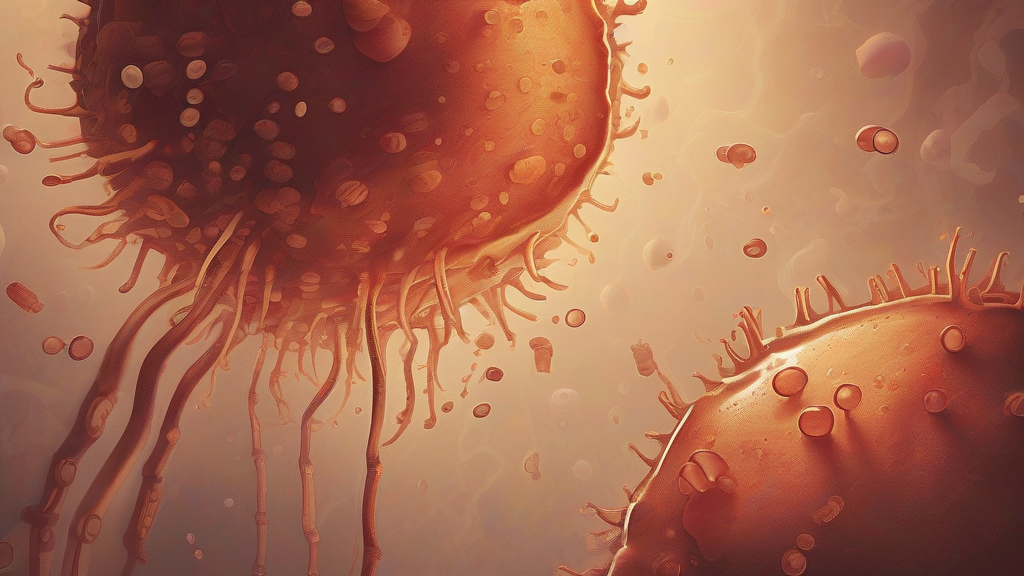
What does bacteriophagy mean?
Bacteriophagy is the process by which bacteriophages — viruses that infect only bacterial cells — destroy their hosts. A phage attaches to a bacterium, injects its genetic material, hijacks the cell's machinery to reproduce, and finally ruptures (lyses) the cell, releasing new viral particles. The term belongs primarily to microbiology and virology, where it describes both this natural phenomenon and its practical application: phage therapy, in which viruses are deployed against drug-resistant infections. Interest in bacteriophagy dates to the early twentieth century, when researchers such as Félix d'Hérelle observed an unidentified agent clearing bacterial cultures and proposed it as a treatment for diseases like dysentery and cholera. Although antibiotics later displaced phage therapy in much of the world, rising antimicrobial resistance has revived scientific attention to bacteriophagy as a precise, self-replicating alternative to conventional antibacterial drugs.
nounThe destruction or consumption of bacteria by bacteriophages — viruses that infect and replicate within bacterial cells, ultimately lysing them.
- The lytic destruction of bacterial cells by bacteriophages (viruses that infect bacteria).
- By extension, the therapeutic or research use of bacteriophages to eliminate targeted bacteria.
"Early microbiologists hoped that bacteriophagy could be harnessed to treat bacterial infections before antibiotics became widely available."
"Félix d'Hérelle coined related terms in the 1910s–20s while studying bacteriophagy in dysentery patients."
"In wastewater treatment studies, bacteriophagy is monitored as a natural mechanism for controlling bacterial populations."
Rarely needed; the term usually appears in the singular.
"Multiple instances of bacteriophagy were recorded across the cultures."
Before penicillin, doctors treated infected wounds with viruses — deliberately unleashing bacteria's natural predators in a process called bacteriophagy.
Reviewed by Deb Chak, Editor. AI-assisted content curated by RJS Tech Solutions LLP.
Etymology of bacteriophagy
Bacteriophagy derives from Greek roots: 'bakterion' (small rod, referring to bacteria) and 'phagein' (to eat or devour), combined with the Latinized adjectival suffix '-y'. The compound emerged in early twentieth-century scientific literature following Félix d'Hérelle's 1917 description of the bactericidal principle he named after the Greek word for eating ('bacteriophage'). Related terms include 'bacteriophage' itself and cognates built on 'phagein' such as 'sarcophagus' (flesh-eating stone) and 'esophagus'.
Related word forms
How bacteriophagy is actually used
A technical, scientific term used almost exclusively in microbiology and virology literature; rare in everyday language. It is largely synonymous with 'bacteriolysis by phage' and appears most often in historical or academic contexts.
Easily confused with bacteriophagy
Bacteriostasis merely inhibits bacterial growth without killing cells, whereas bacteriophagy actively destroys bacteria through viral infection and cell lysis.