What does bajri mean?
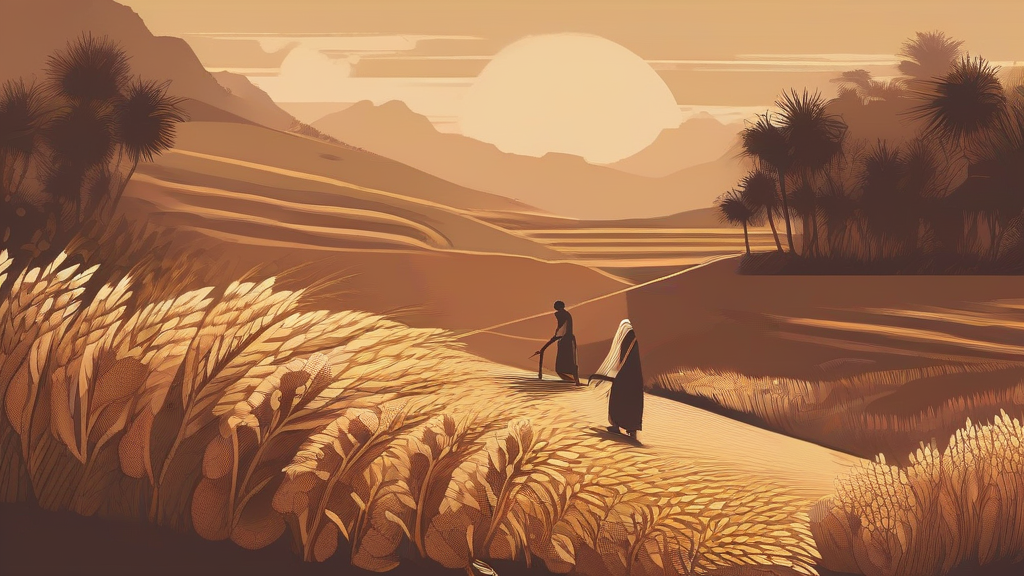
Bajri is the Gujarati and broader South Asian name for pearl millet (Pennisetum glaucum), one of the most drought-tolerant cereal crops cultivated anywhere in the world. The grain is a dietary staple across arid regions of India and Africa, where it is most commonly ground into flour and baked into unleavened flatbreads such as bajri roti or Gujarati bajra rotla. Because it contains no gluten naturally, bajri flour has gained attention among cooks seeking alternatives to wheat, though its dense texture means it is usually blended with other flours for baking. Beyond human food, the plant is valued as nutritious fodder for cattle and poultry. The related spelling 'bajra' is the standard Hindi form and is more familiar to many readers, while 'bajri' predominates in Gujarati-speaking areas such as Maharashtra and Gujarat. For international audiences, 'pearl millet' is the preferred equivalent term.
nounBajri is a South Asian name for pearl millet (Pennisetum glaucum), a drought-tolerant cereal grain widely grown in India and Africa, used both as food grain and as fodder.
- The edible grain or flour of pearl millet used in cooking, especially in western India.
- The pearl millet plant itself, grown as a crop or livestock fodder.
"In Gujarat, bajri flour is ground fresh each day to make the traditional flatbread known as bajra rotla."
"The farmer harvested his bajri crop just before the monsoon arrived."
"She mixed bajri flour with warm water and kneaded it into dough for rotla."
Rarely pluralized in practice; speakers typically treat bajri as a mass noun referring to grain or use the singular for the plant.
"He grew two varieties of bajris on his farm last season."
Pearl millet — bajri — can grow on rainfall so meager that wheat or rice would simply die, making it one of the most climate-resilient grains on Earth.
Reviewed by Deb Chak, Editor. AI-assisted content curated by RJS Tech Solutions LLP.
Etymology of bajri
Bajri derives from Hindi and related North Indian languages, in which the standard form is 'bajra', meaning pearl millet; the Gujarati variant 'bajri' entered Indian English through regional usage in western India. Pearl millet itself was domesticated in the Sahel region of West Africa several thousand years ago and later spread to the Indian subcontinent, becoming established there by ancient times. The English word 'millet' ultimately traces back through French to Latin 'milium', referring to the related but distinct proso millet, which shares only a broad cereal lineage with bajri rather than a direct linguistic root.
How bajri is actually used
Bajri is chiefly used in Indian English and carries no formal register; in international contexts, writers usually use the botanical or trade name 'pearl millet'. It has wholesome, rustic connotations and is often associated with traditional rural cuisine and gluten-free diets.
Easily confused with bajri
Bajra is simply the more widespread Hindi spelling of the same word, while 'bajri' is the common Gujarati and regional variant form.
Barley (Hordeum vulgare) is a temperate cereal of an entirely different genus, whereas bajri is pearl millet, a hot-climate grain.