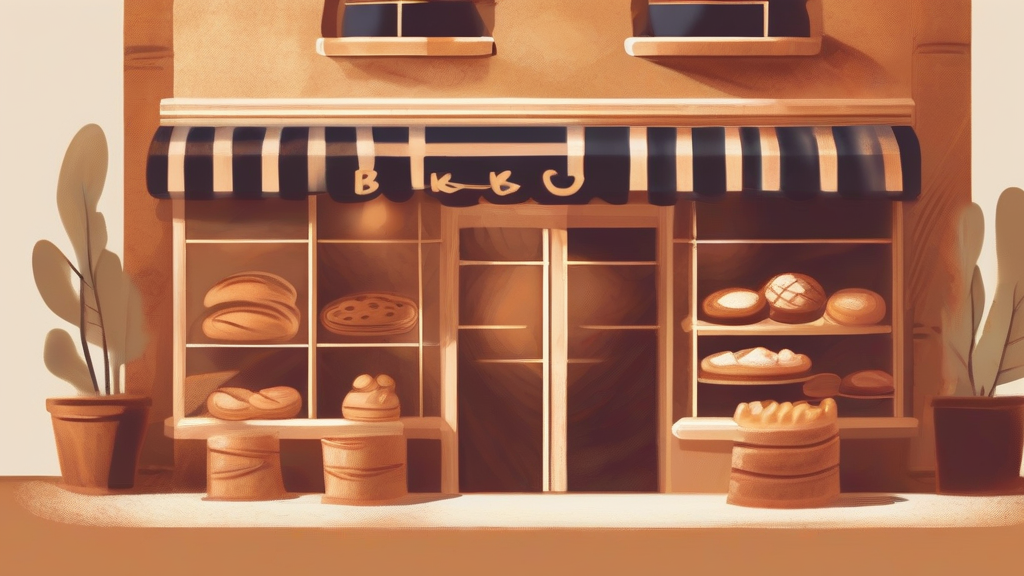
What does bakery mean?
A bakery is an establishment where bread, cakes, pastries, and similar foods are baked and offered for sale, whether as a small independent shop, part of a supermarket, or a large commercial production facility. The word derives from 'bake,' a verb adopted into Middle English from Old Norse, combined with the '-ery' suffix that marks a place associated with an activity. In everyday usage, 'bakery' most often refers to the retail storefront where customers buy freshly baked items, though it can also denote the baking department inside a larger store or, in industrial contexts, the plant where goods are mass-produced before distribution. The word carries warm, comforting connotations — the aroma of fresh bread, neighborhood tradition, and craftsmanship — which is why 'artisan' and 'family-run' bakeries feature so prominently in food culture and marketing. Universally understood across British and American English, it is a practical, evocative word for one of the oldest and most beloved food trades.
nounA place where bread, cakes, pastries, and other baked goods are made and sold.
- A commercial establishment where baked goods such as bread, cakes, and pastries are produced and sold.
- The department or area within a grocery store or supermarket where baked goods are prepared and displayed.
"She stopped by the corner bakery to pick up a fresh sourdough loaf."
"The smell of warm cinnamon rolls drew customers into the little bakery on Elm Street."
"You'll find fresh croissants in the bakery aisle at the back of the supermarket."
Standard plural, used when referring to multiple establishments, e.g., across a city or region.
"Several new bakeries have opened downtown this year."
The word 'bakery' is built on a verb the Vikings brought to Britain — every loaf you buy carries a trace of Old Norse in its name.
Reviewed by Deb Chak, Editor. AI-assisted content curated by RJS Tech Solutions LLP.
Etymology of bakery
The word 'bakery' combines 'bake,' which entered Middle English from Old Norse 'baka' during the Viking Age, with '-ery,' a common English suffix denoting a place or trade connected to an activity. It emerged as the specialized baking trade developed its own dedicated premises in medieval and early modern Europe. Its closest relatives are other derivatives of the same baking root, such as 'baker,' the practitioner of the craft.
How bakery is actually used
'Bakery' is neutral in register and widely understood across English-speaking regions. In American English it commonly covers both sweet and savory baked goods, while British speakers sometimes distinguish a 'baker's' or 'bakers' shop' for bread-focused shops and reserve 'patisserie' for French-style pastry shops.
Easily confused with bakery
A bakehouse refers specifically to the room or building where baking is done, often within a larger establishment, whereas a bakery typically denotes a retail shop selling baked goods.