What does balladeer mean?
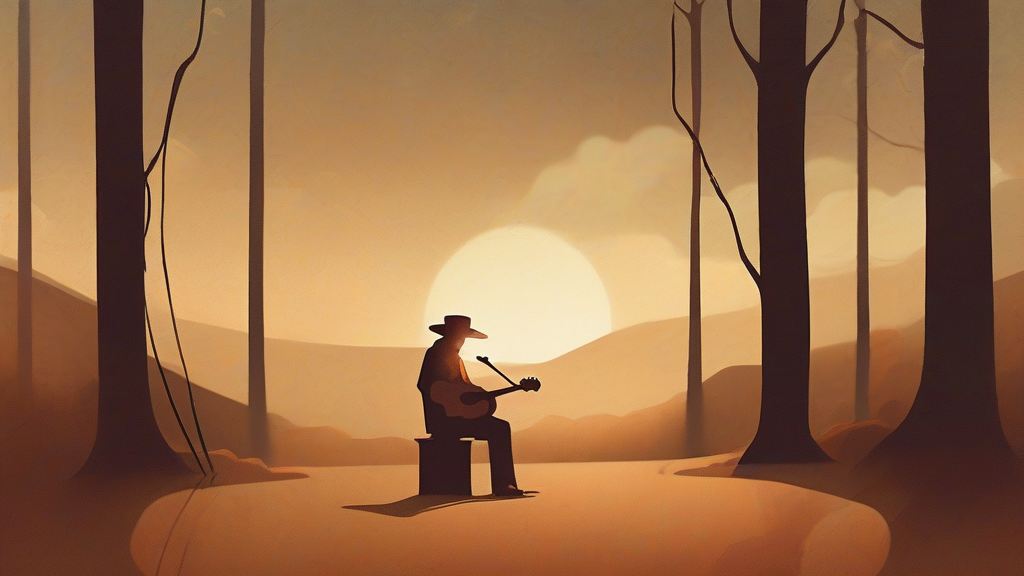
A balladeer is a singer or composer of ballads — songs that tell stories, often of love, loss, or legend. The word combines 'ballad' with the suffix '-eer,' which marks a person engaged in an activity, much like 'engineer' or 'mountaineer.' While it originally referred to performers of traditional narrative folk songs, modern usage has broadened: music critics frequently call a vocalist celebrated for tender, expressive, or romantic numbers 'a fine balladeer.' The term carries warm, slightly nostalgic connotations, evoking troubadours and minstrels more than stadium pop. It should not be confused with 'ballade,' which is not a person at all but a formal French verse pattern of three stanzas. For anyone writing about folk traditions, singer-songwriters, or the great interpreters of the American and British songbooks, 'balladeer' offers a precise and evocative way to describe an artist whose gift lies in storytelling through song.
nounA singer or composer of ballads; a musician known for performing narrative songs, especially sentimental or romantic ones.
- A singer or composer of ballads, typically narrative or sentimental songs.
- More broadly, a popular singer of romantic or emotional songs, as used in modern music journalism.
"The folk balladeer captivated the crowd with songs of love and loss."
"The Irish balladeer moved everyone to tears with his rendition of an old lament."
"Critics hailed her as the finest balladeer of her generation."
Standard regular plural; used when referring to multiple performers of ballads.
"The festival brought together balladeers from across the Celtic world."
A balladeer isn't just any singer — the word carries centuries of storytelling tradition, tracing back to the dancing songs of medieval France.
Reviewed by Deb Chak, Editor. AI-assisted content curated by RJS Tech Solutions LLP.
Etymology of balladeer
Balladeer derives from 'ballad,' a word borrowed from the Old French 'balade,' meaning a dancing song. The French term traces back through Provençal 'balada' to Late Latin 'ballare,' meaning 'to dance' — the same root that gives us 'ballet' and 'ballerina.' The suffix '-eer,' itself from French '-ier' via 'engineer,' was appended in English to denote one who performs the activity, producing a word first attested around the early nineteenth century. Its cousins include 'mountaineer' and 'puppeteer,' formed on the same pattern.
How balladeer is actually used
The word carries warm, somewhat nostalgic connotations and is most often applied to folk, traditional, or romantic singers rather than rock or pop performers generally. In music journalism it can be used approvingly for vocalists specializing in slow, expressive songs.
Easily confused with balladeer
A ballade is a fixed French verse form of three stanzas, whereas a balladeer is the person who sings or writes ballads.
A ballad is the song or poem itself, while a balladeer is the performer or writer of such songs.