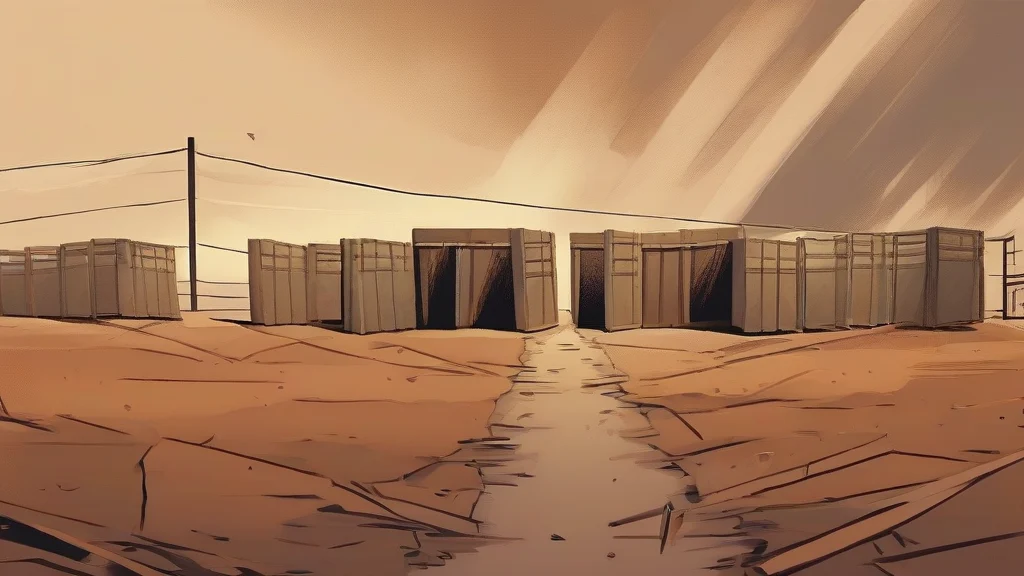
What does barricaded mean?
Barricaded is the past tense and past participle of the verb barricade, meaning to block or close off a passage, doorway, street, or area by erecting a physical barrier. It appears most commonly in passive constructions — 'the road was barricaded' — or in descriptions of people who have shut themselves inside a building for protection or in defiance, as in 'protesters barricaded themselves in the hall'. The word carries strong connotations of urgency, defense, and confrontation, appearing frequently in news reporting on civil unrest, sieges, standoffs, and emergencies. Its adjectival use describes anything sealed off by a barrier. Derived ultimately from the French barrique, meaning a barrel, the term recalls the historical practice of rolling casks into streets to obstruct advancing forces, making it a vivid and historically resonant addition to any vocabulary.
Past tense and past participle of barricade: to block or defend a passage, entrance, or area by building a barrier across it.
"They barricaded the doors before the mob arrived."
Frequently used in passive voice and in constructions such as 'barricaded themselves in'.
Describing a place, passage, or structure that has been blocked or closed off with a barrier.
"The barricaded street was impassable to traffic."
The word traces back to barrels — French protesters in the 1500s rolled wine casks into the streets to build their barriers, giving us both 'barricade' and its cousin 'barrique'.
Reviewed by Deb Chak, Editor. AI-assisted content curated by RJS Tech Solutions LLP.
Etymology of barricaded
Barricaded derives from the verb barricade, which entered English from the French barricader in the late 16th century. The French term itself comes from barrique, meaning a large cask or barrel, reflecting the practice of using barrels filled with earth or stone to block streets during uprisings in France. Related words sharing this barrel-derived root include barrique itself and barrel.
Related word forms
How barricaded is actually used
Most often encountered as a past participle in passive constructions ('the road was barricaded') or describing people who have shut themselves somewhere for safety or defiance. It carries connotations of urgency, defense, or confrontation, whether in protest, siege, or emergency contexts.
Easily confused with barricaded
'Blockaded' refers to sealing off an entire port, city, or region to prevent access or trade, while 'barricaded' refers to physically blocking a specific passage, door, or street with barriers.