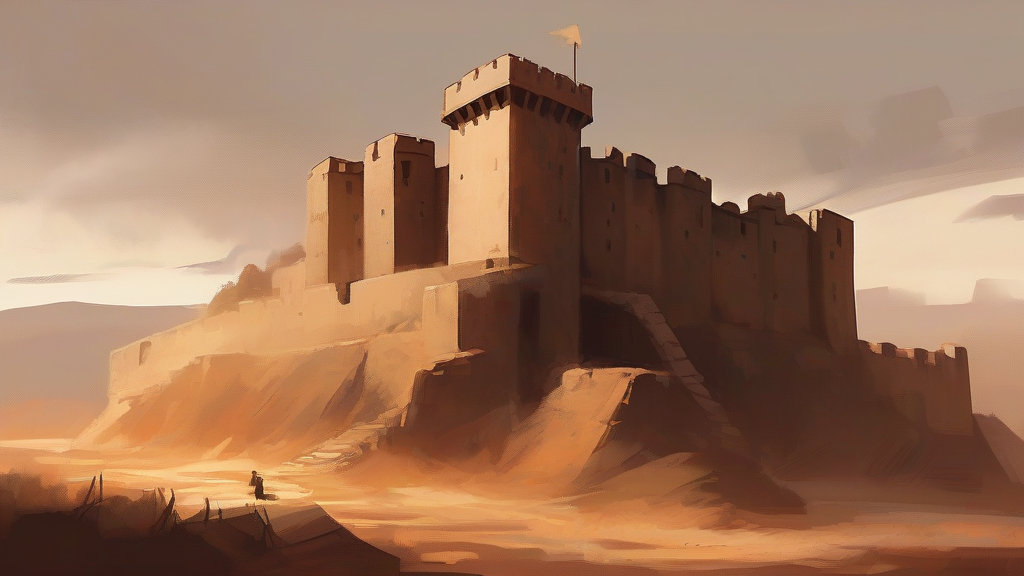
What does bastion mean?
A bastion is, in its original military sense, a projecting structure built at the corner or angle of a fortress wall, shaped so that defenders could fire along the faces of adjoining walls and eliminate blind spots. Developed during the era of gunpowder warfare, such angular bastions became a defining feature of Renaissance and early modern fortification across Europe. In contemporary English, however, the word is used almost entirely figuratively: a bastion is any institution, place, community, or person regarded as a strong and reliable defender of particular principles, traditions, or ways of life. One might describe a university as a bastion of academic freedom, or a rural region as a bastion of traditional farming. The word carries connotations of strength, endurance, and steadfastness, though it can also carry a faintly ironic edge when applied to institutions perceived as outdated or resistant to progress. Common collocations include 'the last bastion of' and 'a bastion of democracy'.
A projecting angular structure in a fortification, built to enable defensive gunfire along the faces of adjacent walls.
"Engineers added two new bastions to strengthen the seaward side of the fortress."
Now largely historical, this sense appears mainly in accounts of military architecture from the sixteenth century onward.
An institution, place, group, or person regarded as a strong defender or upholder of particular principles, values, or traditions.
"The village pub remains a bastion of community life in an age of online socialising."
This is by far the dominant sense today; it is common in journalism and political commentary.
Standard plural; used both for literal fortifications and for multiple figurative strongholds.
"The coastline was dotted with the crumbling bastions of old coastal defences."
The word 'bastion' comes from the Italian 'bastire' — to build — so every time you call something a bastion of freedom, you're literally calling it a building block.
Reviewed by Deb Chak, Editor. AI-assisted content curated by RJS Tech Solutions LLP.
Etymology of bastion
Bastion entered English in the late sixteenth or early seventeenth century from French 'bastion', which itself derived from Italian 'bastione', an augmentative form related to 'bastire', meaning 'to build'. The underlying root may trace further back to a Germanic word meaning to weave or build with twigs, which also gave rise to English words such as 'baste'. Cognate and related forms include French 'bastille' (as in the famous Parisian fortress) and Occitan 'bastida', a fortified town. The figurative sense developed naturally from the architectural one, appearing by the eighteenth century.
How bastion is actually used
In modern usage the figurative sense overwhelmingly dominates; the literal military sense now appears mostly in historical writing about fortifications. The figurative sense often carries a slightly formal or journalistic register and frequently appears in phrases like 'the last bastion of…', sometimes with an ironic tone when describing something outdated or resistant to change.
Easily confused with bastion
Bastinado is a form of torture or punishment involving beating the soles of the feet, whereas a bastion is a fortification or stronghold.