
What does bean mean?
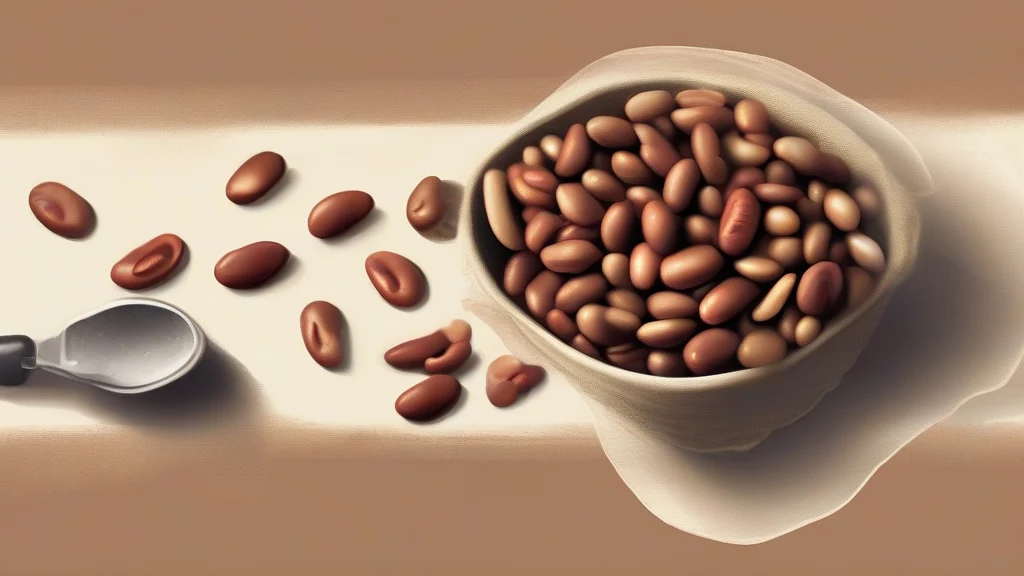
A bean is the edible seed of a leguminous plant, one of humanity's oldest and most widely cultivated foods. Beans come in many varieties — kidney, black, pinto, navy, broad, and green beans among them — and are prized as an inexpensive source of protein, fibre, and nutrients. Beyond botany, the word extends to seeds that merely resemble beans, such as coffee and cocoa beans, and appears in everyday idioms: to 'spill the beans' means to reveal a secret, while saying something is 'not worth a bean' dismisses it as worthless. In informal speech, 'beans' can mean very little money. The word is ancient, tracing back through Old English to Proto-Germanic roots shared with German Bohne and Dutch boon. Versatile, familiar, and rich in figurative uses, 'bean' is a small word with deep culinary and linguistic roots.
An edible seed of a leguminous plant, or the plant producing such seeds.
"Add a tin of cannellini beans to the soup for extra protein."
Often used attributively, as in 'bean soup' or 'bean curd'.
A seed resembling a bean, such as a coffee or cocoa bean.
"She ground fresh coffee beans each morning."
Informal: a small amount of money, chiefly in the plural.
"The repairs cost him beans compared to buying new."
Regular plural; often used in fixed expressions like 'spill the beans' or 'full of beans'.
"The recipe calls for two cups of dried beans."
The word 'bean' is so ancient that its Proto-Germanic root survives across English, German, Dutch, and Norse — people have been naming beans for thousands of years.
Reviewed by Deb Chak, Editor. AI-assisted content curated by RJS Tech Solutions LLP.
Etymology of bean
The word 'bean' comes from Old English 'bēan', which derives from Proto-Germanic '*baunō'. Cognates include German 'Bohne', Dutch 'boon', and Old Norse 'baun', reflecting a term used by Germanic peoples since antiquity. It has been part of English since its earliest recorded stages, long before contact with the New World varieties now most commonly eaten.
Related word forms
How bean is actually used
In British English, 'broad bean' is the standard term for what Americans call the fava bean. The plural 'beans' is common in informal expressions about money or triviality.
Easily confused with bean
'Been' is the past participle of 'be', while 'bean' is a noun referring to an edible seed; they are homophones in most accents.