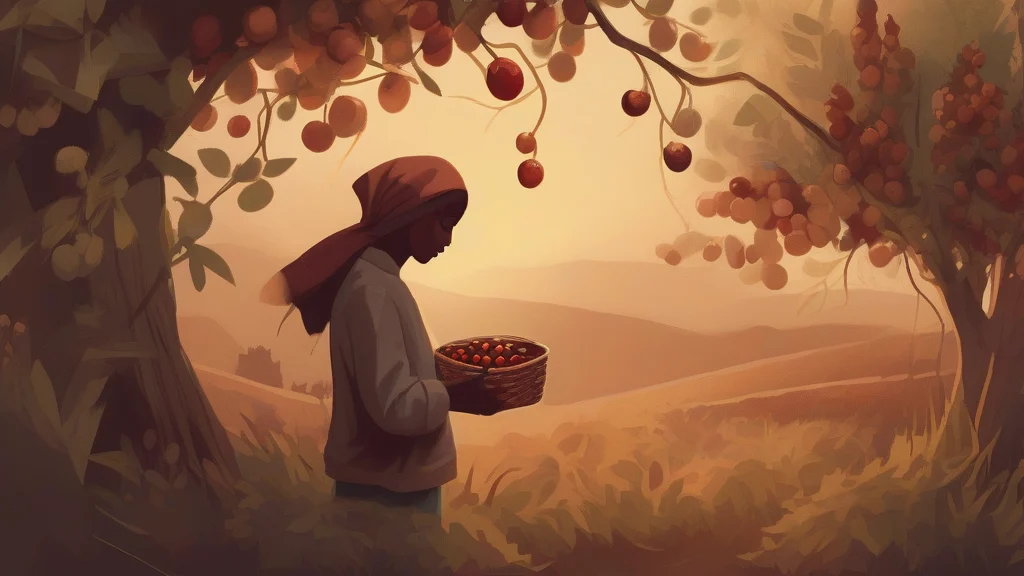
What does berrying mean?
"Berrying" is a verb form describing the act of gathering berries, particularly wild ones such as blackberries, blueberries, or bilberries, from hedgerows, woods, and hillsides. It carries strong connotations of rural life, seasonality, and simple pleasures, evoking late-summer afternoons spent filling baskets by hand. The word is most often used in the pattern "go berrying" or "be out berrying," and while still understood throughout the English-speaking world, it has a distinctly traditional, even nostalgic register today — more likely to appear in nature writing, memoirs, and regional speech than in everyday conversation. A secondary, less common sense refers to the forming of berries on a plant itself, as when brambles are said to be berrying heavily. Closely related words include "berry" (noun and verb) and "berries." Though easy to mishear as "burying," berrying belongs firmly to the harvest rather than the graveyard, celebrating one of humanity's oldest food-gathering activities.
To gather or pick berries from plants, especially wild ones.
"In her youth, whole villages would go berrying on the moors each autumn."
(Of a plant) to produce or bear berries.
"The holly was berrying early this year, promising a bright winter display."
This sense is considerably rarer than the harvesting sense and is chiefly encountered in botanical or gardening contexts.
Long before supermarkets stocked berries year-round, whole families went 'berrying' each summer — a word so old-fashioned it now sounds almost like a holiday from another century.
Reviewed by Deb Chak, Editor. AI-assisted content curated by RJS Tech Solutions LLP.
Etymology of berrying
The word derives from "berry," a noun of Germanic origin found across Old English and related Germanic languages (compare Old Norse "ber" and Gothic "weinabasi", literally "wine-berry"). The verb "to berry," meaning to gather berries, developed from the noun in English, and its present participle "berrying" follows the standard pattern of English verbal nouns. Its cognates are the various Germanic descendants of the same root, including the modern English "berry" and its relatives in other Germanic languages.
Related word forms
How berrying is actually used
The word is somewhat old-fashioned and rural in flavor, common in older literature and regional speech but less frequent in contemporary usage. It is typically used with the verbs "go," "be out," or "spend time."
Easily confused with berrying
"Burying" means placing something in the ground or hiding it, while "berrying" means picking or gathering berries; the two words sound similar but are unrelated in meaning.