What does besiege mean?
To besiege is to surround something — historically a fortified town, castle, or garrison — with armed forces in order to cut it off from supplies and support until its defenders surrender. In modern usage the word has broadened well beyond the battlefield: people are said to be besieged by reporters, besieged with phone calls, or besieged by emails when they are overwhelmed by persistent demands on their time and attention. The verb typically appears in the passive form ('she was besieged with offers'), where it conveys a sense of being swamped or pressed from every side rather than physically attacked. Its connotations are of relentlessness and pressure rather than open violence, which makes it a vivid choice for describing both historical sieges and the modern experience of being inundated. Derived forms include 'besieger', the agent noun, and 'besieged', often used adjectivally.
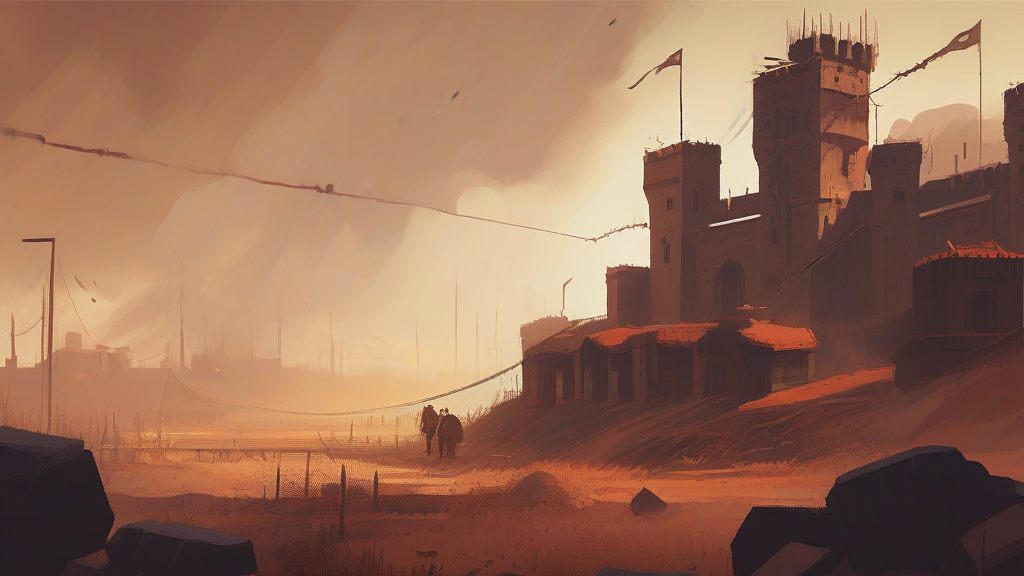
To surround a fortified place with armed forces in order to capture it or force its surrender.
"The Roman army besieged Alesia until the garrison starved into submission."
Mostly used in historical or figurative contexts.
To overwhelm someone with persistent questions, requests, or attention.
"Fans besieged the actor for autographs after the premiere."
Besiege literally means 'to sit down in front of' — medieval armies would camp outside your walls and simply wait you out.
Reviewed by Deb Chak, Editor. AI-assisted content curated by RJS Tech Solutions LLP.
Etymology of besiege
Besiege entered English in the late Middle English period (around the 15th century) via Middle Dutch or Old French, formed from the prefix 'be-' plus 'siege'. The underlying root is the Latin verb 'sedere', meaning 'to sit': a siege was originally the act of sitting down outside a fortress's walls to await its fall. This same Latin root gives English many other words, including 'siege' itself, as well as 'seat', 'session', and 'sedentary'.
Related word forms
How besiege is actually used
The literal military sense is largely historical or figurative; today the verb most often appears in passive constructions such as 'was besieged by/with' to describe being overwhelmed by crowds, calls, or demands. It carries a connotation of relentless pressure rather than violence.
Easily confused with besiege
Besiege implies surrounding a place with forces or crowding someone with demands, while beset means to be troubled or attacked persistently from all sides without the literal sense of encirclement.