What does biddy mean?
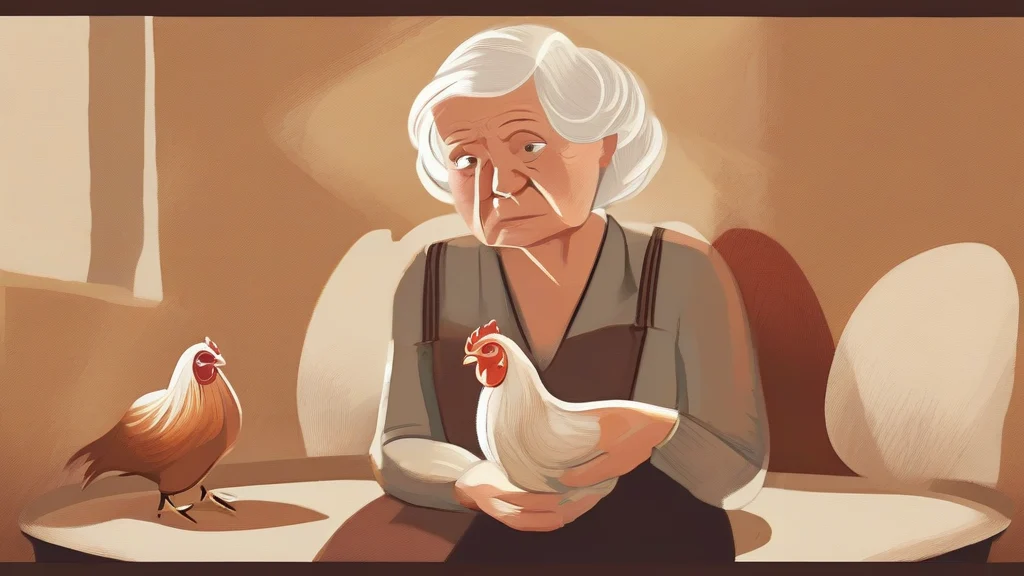
Biddy is an informal English noun with two main senses. In its most common use today it refers to an older woman perceived as fussy, interfering, or sharp-tongued, and the label carries clear negative connotations — describing a person this way is generally regarded as rude and dismissive. The word's second sense denotes a hen, particularly a bantam, a usage that survives mainly in rural or dated contexts, especially in Britain. Biddy originated as a familiar pet form of the Irish female name Bridget, and its application to both women and hens developed from this affectionate nickname before acquiring its disparaging edge. The standard plural is biddies. Writers should be aware of the word's insulting tone when applied to people, reserving it for deliberately colloquial, humorous, or characterising prose rather than neutral description.
An informal, derogatory term for a fussy or meddlesome older woman.
"He grumbled that some busybody biddy had reported his hedge to the council."
Considered rude and mildly sexist; avoid in formal writing.
A hen, especially a bantam (chiefly British, now somewhat dated).
"The farmyard biddies clattered around the coop at feeding time."
Standard regular plural, formed by adding -ies to biddy.
"Two elderly biddies were chatting on the park bench."
"Biddy" started life as a pet form of the Irish name Bridget — so calling someone an old biddy is, etymologically, calling them an old Brigid.
Reviewed by Deb Chak, Editor. AI-assisted content curated by RJS Tech Solutions LLP.
Etymology of biddy
Biddy began as a diminutive of the Irish name Bridget (Irish Brighid), used as an affectionate nickname for Irish women. From there it was extended to hens — likely through association with the common name given to farmyard birds — before taking on its modern disparaging sense of a fussy or meddlesome old woman. Its cognates are essentially the various forms of the name Bridget itself, such as Brigit.
Related word forms
How biddy is actually used
The word is distinctly informal and usually pejorative when applied to a woman, carrying connotations of age, fussiness, and nosiness; using it about a person is generally considered rude and mildly sexist. The hen sense is largely dated or regional and may puzzle modern readers outside rural contexts.
Easily confused with biddy
"Bitty" means made up of many small pieces or tiny in size, while "biddy" is a derogatory term for a fussy old woman or, alternatively, a hen.