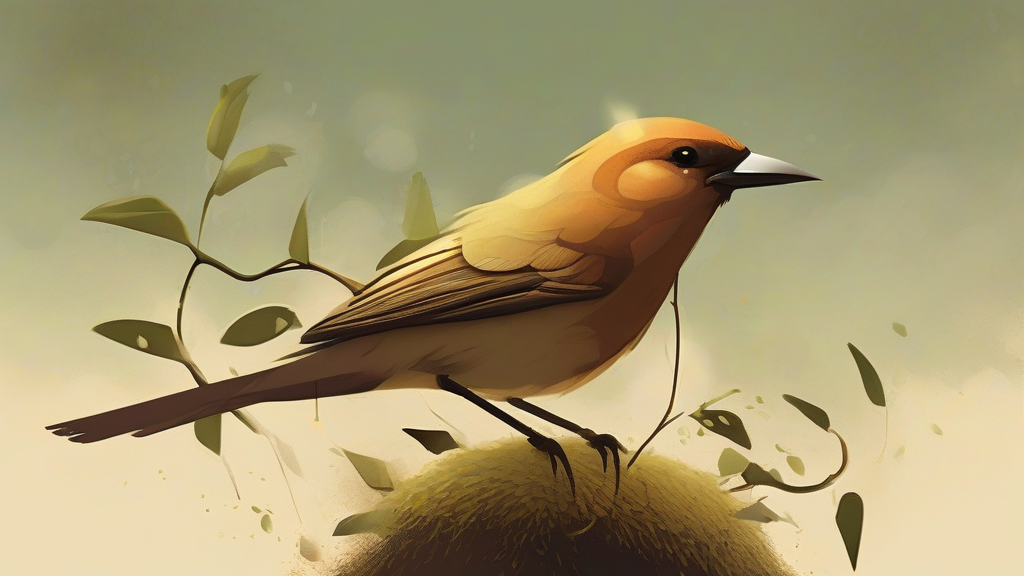
What does birdlime mean?
Birdlime is a sticky substance traditionally prepared from the inner bark of the holly tree — sometimes mixed with other viscous materials — and smeared on branches to catch small birds alive. When a bird perches on a limed twig, its feet adhere to the gum and it cannot take flight, allowing the fowler to collect it. The practice was widespread across Europe for centuries, supplying songbirds both as food and as cage pets, and the word appears frequently in older natural-history and sporting literature. Beyond this literal sense, birdlime has long served figuratively to describe anything that entangles or holds a person fast, whether debt, habit, or circumstance. Today it is encountered chiefly in historical contexts and in literary or metaphorical writing rather than everyday speech, but it remains a precise and evocative term for the idea of being trapped by one's own footing.
nounA sticky substance, traditionally made from the bark of the holly tree, smeared on branches to trap small birds. By extension, anything that entangles or ensnares like such a preparation.
- A sticky preparation, historically made from holly bark or other viscid plant matter, applied to twigs to catch small birds.
- Figuratively, anything that ensnares or impedes, as in 'the birdlime of debt'.
"Poachers once coated the hedgerow branches with birdlime to catch songbirds for the market."
"The fowler spread birdlime along the branch where finches liked to perch."
"He found himself caught in the birdlime of his own promises, unable to move in any direction."
Rarely pluralized; the plural would only appear when referring to different varieties or preparations of the substance.
"Fowlers experimented with various birdlimes made from holly bark, mistletoe berries, and other resinous plants."
For centuries, hunters boiled holly bark into a glue so effective that a bird landing on a treated twig could not fly away — and the same word now names any metaphorical trap that holds you fast.
Reviewed by Deb Chak, Editor. AI-assisted content curated by RJS Tech Solutions LLP.
Etymology of birdlime
The compound is transparently formed from the English nouns 'bird' and 'lime', the latter here meaning a sticky, glutinous substance rather than the citrus fruit or calcium oxide. The word has been current in English since at least the early modern period, reflecting a fowling technique that was already ancient in Europe, where similar preparations were made from mistletoe berries and holly bark. Its components are native Germanic words, so it has no Latin or Greek cognates in the usual sense.
Related word forms
How birdlime is actually used
Birdlime is a somewhat dated or technical term today, familiar mainly from historical accounts of fowling, hunting literature, and figurative literary use. It carries no strong connotation by itself, though its figurative sense often implies entrapment or being held against one's will. It is uncountable when referring to the substance itself.
Easily confused with birdlime
Lime is a citrus fruit or an alkaline substance; birdlime is specifically the sticky compound made from plant material used to snare birds.
'Limed' can refer to treating something with lime (calcium oxide) for whitewashing or soil improvement, whereas 'birdlimed' means coated with sticky trapping gum.