What does biscotti mean?
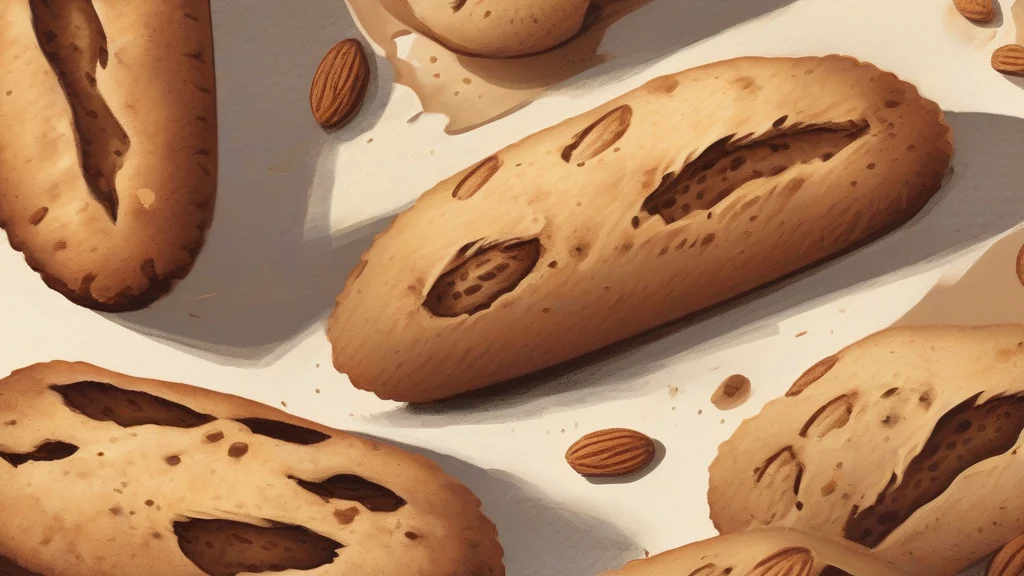
Biscotti are crisp, twice-baked Italian cookies, classically flavoured with almonds and traditionally served alongside coffee, espresso, or a glass of dessert wine such as Vin Santo. The name comes directly from the Italian plural of 'biscotto', itself rooted in the Latin phrase meaning 'twice-cooked', because the dough is first baked as a log, then sliced and returned to the oven until dry and crunchy. This double baking gives biscotti their signature hardness and long shelf life, qualities that once made them practical travel food. In modern English usage, the word functions as a plural noun, though speakers frequently use it loosely for even a single cookie. Biscotti evoke the atmosphere of Italian cafés and refined coffee service, and they remain popular in bakeries and home kitchens alike, often dressed up with chocolate, nuts, or dried fruit. The word is useful not only for describing a specific confection but also for adding a touch of culinary sophistication to menus and conversation.
nounBiscotti are crisp, twice-baked Italian cookies, typically almond-flavoured and sliced from a loaf after the first baking so they become dry and crunchy. In English usage the word is treated as a plural noun referring to several such cookies.
- Crisp, twice-baked Italian cookies, typically containing almonds, eaten especially with coffee or wine.
"She dunked the almond biscotti into her espresso until they softened just enough to bite."
"The café served a small basket of biscotti alongside every cappuccino."
"For the holiday bake sale she dipped each batch of biscotti in dark chocolate and dusted them with pistachios."
'Biscotti' is already the plural form (of the Italian singular 'biscotto'). In everyday English it is sometimes used loosely as if it were singular or a mass noun, but standard usage treats it as plural: 'two biscotti', not 'two biscottos'.
"A plate of biscotti was set out beside the coffee urns at the reception."
Biscotti literally means 'twice-cooked' — the dough is baked as a loaf, sliced, then baked again, which is exactly what made them durable enough for Roman soldiers and long sea voyages centuries ago.
Reviewed by Deb Chak, Editor. AI-assisted content curated by RJS Tech Solutions LLP.
Etymology of biscotti
The word 'biscotti' is the plural of Italian 'biscotto', which derives from the medieval Latin 'bis coctus', meaning 'twice-cooked' or 'twice-baked'. The same Latin root gave rise to the English word 'biscuit' via Old French 'bescuit', making 'biscotti' and 'biscuit' true etymological cousins. The prefix 'bis-', meaning 'twice', also survives in English words such as 'bicycle' and 'bilingual'. Twice-baked breads were valued historically for their durability, which explains why versions of this technique appeared across many cultures long before the modern Italian cookie.
How biscotti is actually used
In Italian, 'biscotto' is the singular form and 'biscotti' is strictly plural; in English, 'biscotti' is commonly used both as a plural ('three biscotti') and, less formally, even for a single item ('a biscotti'), though careful writers reserve it for the plural. The word carries an association with Italian cafés and elegant coffee service rather than casual snacking.
Easily confused with biscotti
A biscuit is a general term for a small baked good (soft and bread-like in American English, crisp and sweet in British English), whereas biscotti refers specifically to the hard, twice-baked Italian cookies.
Cantuccini (or cantucci) are the traditional Tuscan almond biscuits that English speakers often simply call biscotti; 'cantuccini' is the more specific Italian name, while 'biscotti' is the generic Italian word for cookies.