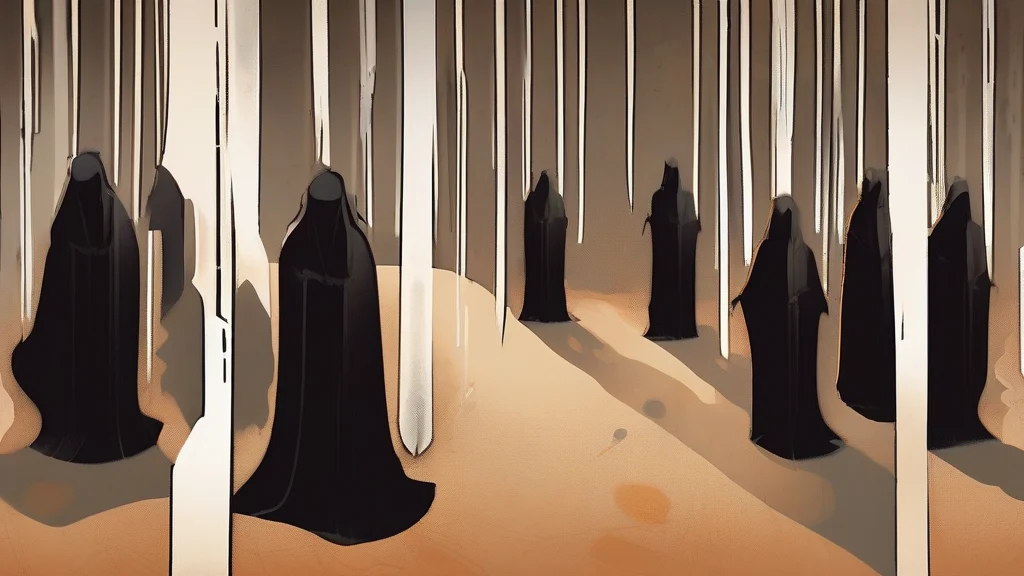
What does blackest mean?
Blackest is the superlative form of the adjective black, describing whatever is most intensely black in colour, and by extension whatever is most dark, gloomy, despairing, or wicked. It appears in everyday descriptions of physical darkness — the blackest night, the blackest coffee — and equally in figurative contexts drawn from centuries of literary tradition: the blackest hour of a crisis, the blackest chapter of a nation's history, or the blackest of moods. Because English has long associated the colour black with both literal darkness and moral darkness, blackest can carry strong emotional connotations, evoking grief, dread, or villainy depending on context. The word is fully standard in both British and American English, and it inflects regularly: blacker for comparison between two things, blackest for three or more or for the ultimate degree. Writers reach for it when they want maximum intensity, whether describing a shade of ink, a sky before a storm, or the darkest stretch of human experience.
adjective (superlative of black)Blackest is the superlative form of the adjective black, meaning most black in color, or, figuratively, most dark, gloomy, evil, or sorrowful.
- Most black in colour; having the deepest shade of black.
- Figuratively: most dark, gloomy, or despairing (e.g. the blackest hour).
- Figuratively: most wicked, evil, or sinister.
"The ravens perched against the blackest part of the storm cloud."
"She wore the blackest velvet dress she owned to the funeral."
"Historians remember that winter as the blackest chapter of the war."
In Old English, one word — blæc — covered both the colour and its moral shadow, which is why 'the blackest deed' still carries a whiff of ink and sin.
Reviewed by Deb Chak, Editor. AI-assisted content curated by RJS Tech Solutions LLP.
Etymology of blackest
The word traces back through Middle English blak to the Old English adjective blæc, meaning black or dark, which itself derives from Proto-Germanic *blakkaz, a root shared by cognates such as Old High German blah and Old Norse blakkr. This Germanic origin makes black part of the native Germanic core of the English vocabulary rather than a Latin or French borrowing. Interestingly, Old English also had the near-homophone blæc meaning pale or shining white, from a different Proto-Germanic root, and the two words coexisted confusingly before the dark sense prevailed. Blackest simply adds the regular Old English superlative suffix -ost, the ancestor of modern -est.
Related word forms
How blackest is actually used
Blackest is standard as the inflected superlative of black; 'most black' is possible but rare and usually stylistically marked. The literal colour sense is neutral register, while figurative uses (blackest hour, blackest deeds) tend toward literary or dramatic writing. In British English, 'blackest humour' is an established phrase for the darkest kind of comedy.
Easily confused with blackest
Bleakest means most cold, bare, or hopeless (from bleak), while blackest means most dark in colour or most wicked/gloomy (from black).