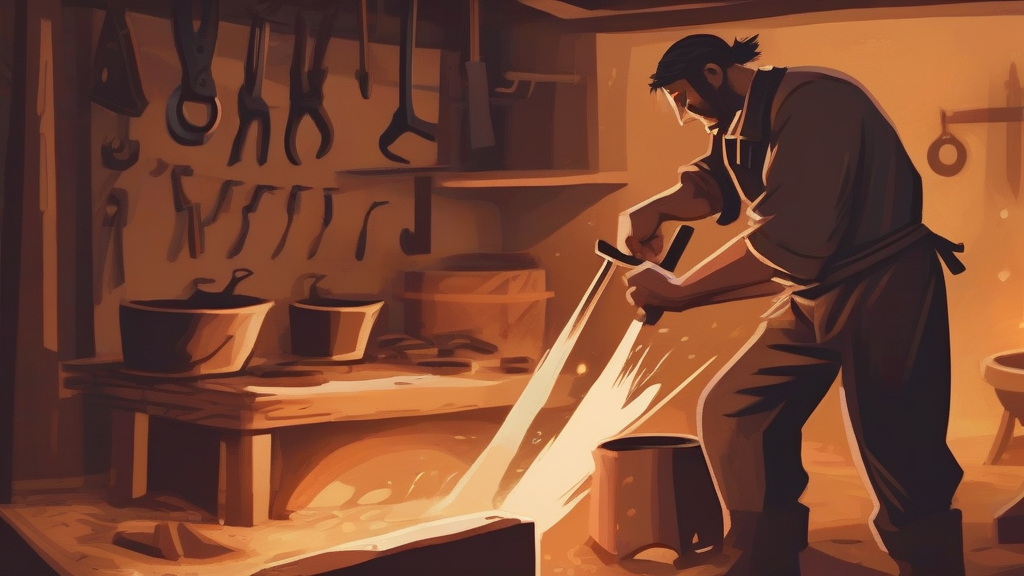
What does blacksmith mean?
A blacksmith is a craftsperson who shapes iron and steel by heating the metal until it becomes malleable and then hammering it into form on an anvil. Traditionally, blacksmiths made essential goods such as horseshoes, plowshares, nails, tools, hinges, gates, and weapons, making them central figures in nearly every town and village before industrialization. The word combines 'black,' referring to the dark oxide that forms on heated iron, with 'smith,' from an Old English term meaning a worker in metal. Today the trade survives mainly through farriers, who specialize in shoeing horses, and through artist-blacksmiths who create custom architectural and decorative ironwork. Figuratively, calling someone a blacksmith evokes strength, patience, and hands-on skill. Though no longer a mass profession, blacksmithing has seen a revival among hobbyists and artisan makers, keeping this ancient craft alive in the modern world.
nounA blacksmith is a craftsperson who forges iron and steel by heating metal in a forge and shaping it with a hammer and anvil, traditionally making items such as horseshoes, tools, gates, and hardware.
- A person who forges and shapes iron and steel by hand using a forge, hammer, and anvil.
- (By extension) anyone skilled in forging metal, including modern artist-blacksmiths producing decorative ironwork.
"The village blacksmith still shoes horses the old way, hammering each shoe to fit on his anvil."
"My grandfather apprenticed as a blacksmith before opening his own shop."
"The ornate iron gate was designed by an artist-blacksmith and forged entirely by hand."
Regular plural; standard in both British and American English.
"In the nineteenth century, most rural towns had two or three blacksmiths serving the local farming community."
The 'black' in blacksmith refers to the layer of black oxide that forms on forged iron — so the name literally describes a smith who works with 'black metal.'
Reviewed by Deb Chak, Editor. AI-assisted content curated by RJS Tech Solutions LLP.
Etymology of blacksmith
The word 'blacksmith' comes from Old English 'smið,' meaning a worker in metal, combined with 'black,' referring to the black oxide scale that forms on the surface of iron when heated — distinguishing ironworkers from 'whitesmiths,' who worked with tin or polished metals. The compound is attested in Middle English. It shares its root with other occupational compounds such as 'goldsmith,' 'silversmith,' and 'locksmith,' all derived from the same Germanic base that also gives us 'smithy' (the workshop).
Related word forms
How blacksmith is actually used
The word carries a traditional, rustic connotation and is often used figuratively to evoke craftsmanship and hard physical labor. In modern usage it can refer both to farriers who shoe horses and to artisans creating decorative or functional ironwork; the term 'artist-blacksmith' distinguishes the latter. Historically male-dominated, but the term is gender-neutral today.
Easily confused with blacksmith
A farrier specializes specifically in caring for horses' hooves and fitting horseshoes, while a blacksmith works with iron more broadly and need not work with horses at all.
A silversmith crafts objects from silver (such as jewelry or tableware), whereas a blacksmith forges iron and steel.