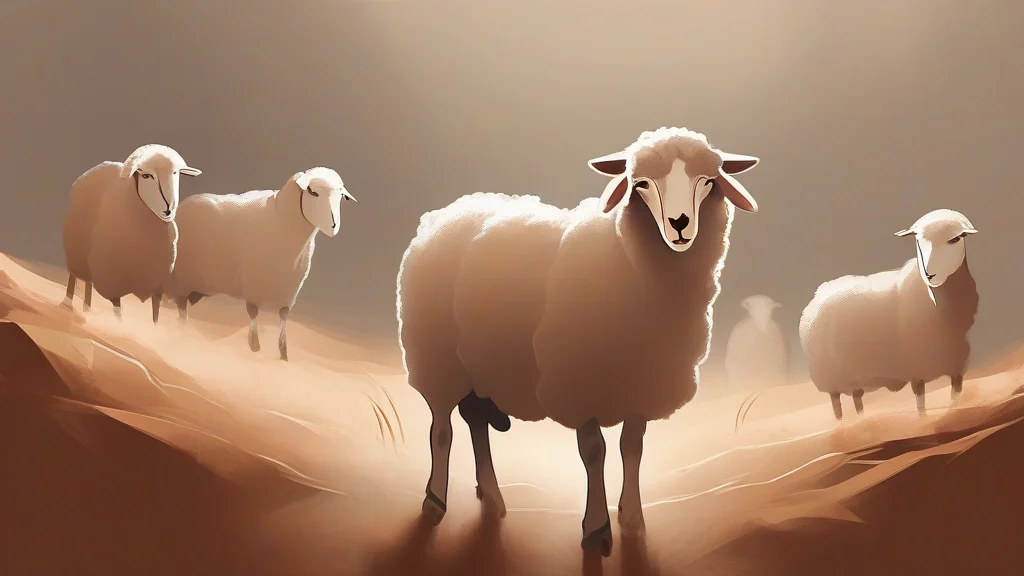
What does bleated mean?
"Bleated" is the past tense and past participle of the verb "bleat," which describes the distinctive wavering cry that sheep and goats make. A lamb bleats when separated from its mother; a ewe bleats to call her young or signal distress to the shepherd. By extension, the word is applied to people who speak in a weak, complaining, or mindlessly repetitive way — a politician might bleat about taxes, or a critic might describe someone's excuses as bleated rather than argued. This figurative use carries a mildly contemptuous tone, implying feebleness or lack of conviction, so writers deploy it deliberately for satirical effect. The verb has existed in English since the Old English period, and its very sound seems designed to echo the noise of the animal it names. Whether describing livestock in pastoral writing or human petulance in satire, "bleated" offers a vivid, precise alternative to plainer verbs like "cried" or "said."
verb (past simple and past participle of 'bleat')The past tense and past participle of "bleat": made the characteristic wavering cry of a sheep, goat, or calf, or (of a person) spoke in a weak, complaining, or foolish manner.
- (Of a sheep, goat, or calf) made its characteristic wavering cry.
- (Of a person) spoke in a weak, querulous, or foolishly repetitive way.
"The lost lamb bleated pitifully at the edge of the field until its mother answered."
"A ewe bleated anxiously from across the meadow, searching for her lamb among the flock."
""But we've always done it this way," he bleated, offering no real argument."
The word "bleat" may itself be an imitation of the sound it describes — one of the rare English words that tries to speak for the animals.
Reviewed by Deb Chak, Editor. AI-assisted content curated by RJS Tech Solutions LLP.
Etymology of bleated
The verb "bleat" descends from Old English "blǣtan," which meant to bleat as a sheep does, and it has close relatives in other Germanic languages such as Dutch "blaten" and German "blöken." The word has been part of English continuously since before the Norman Conquest, making it far older than many common vocabulary items. Its ultimate origin is uncertain but is often thought to be imitative — the word attempting to mimic the sound of the animal itself. The form "bleated" follows the standard weak-verb pattern of English past-tense formation.
Related word forms
How bleated is actually used
When applied to people, "bleated" is mildly derogatory, suggesting feeble, whining, or unthinking speech; it is more common in literary and descriptive prose than in everyday conversation. The literal sense applies mainly to sheep and goats, though it can extend to calves and similar animals.
Easily confused with bleated
"Blatted" is the past tense of "blat," a chiefly American dialect word for the bawling of a calf or similar animal, whereas "bleated" refers specifically to the wavering cry of sheep and goats.