What does bleater mean?
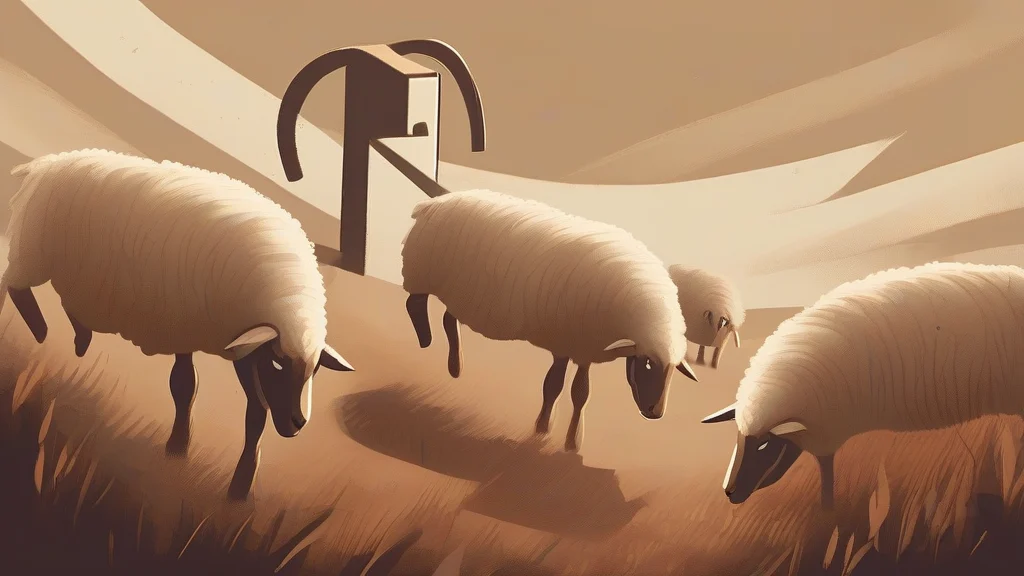
A bleater is, literally, any animal that bleats—the term applies chiefly to sheep and goats, whose wavering, plaintive cry is one of the most recognizable sounds of the countryside. The word is the natural agent noun formed from the verb 'bleat', so it can describe anything that produces that sound, whether a ewe calling for its lamb or, humorously, a mechanical imitation. Figuratively, a bleater is a person who complains constantly and feebly, whining about grievances without acting on them; this sense borrows the connotations of the verb, which has long been used to characterize ineffectual grumbling. Because of that association, applying the word to a person carries a mildly mocking tone: it implies weakness and persistence rather than righteous anger. Though not a common word in everyday speech, 'bleater' offers writers a precise and evocative label, equally at home describing livestock in pastoral prose or puncturing a chronic complainer with dry wit.
nounA person, animal, or thing that bleats; especially a sheep or goat that utters the characteristic cry of its kind. By extension, a person who complains persistently or whines in a feeble way.
- An animal (typically a sheep or goat) that bleats.
- A person who bleats or who complains in a weak, persistent, or whining manner.
"The hillside was alive with the sound of bleaters calling to their lambs."
"From across the field we could hear each bleater searching for its mother."
"He's become such a bleater about the office coffee that nobody takes him seriously anymore."
Standard plural; used both for multiple animals that bleat and, figuratively, for multiple complainers.
"The valley rang with the cries of a hundred bleaters at feeding time."
The word 'bleater' turns a sheep's plaintive 'baa' into an insult for human complainers.
Reviewed by Deb Chak, Editor. AI-assisted content curated by RJS Tech Solutions LLP.
Etymology of bleater
'Bleater' derives from 'bleat', the verb denoting the cry of a sheep or goat, which entered English in the early 16th century. Its ultimate origin is uncertain, but it is often connected to Germanic imitative words for animal cries, comparable to Dutch 'blaten' and related forms; some sources also note resemblance to Latin 'balare', meaning to bleat, which would make 'blatant' a distant relative. The agent noun 'bleater' followed naturally once the verb was established.
Related word forms
How bleater is actually used
Literal use for sheep and goats is straightforward and neutral. The figurative sense—applied to people—is mildly derogatory, suggesting feeble, repetitive complaining rather than justified protest. The word is informal and somewhat rare; 'bleater' is most often encountered as the agent noun formed from the verb 'bleat'.
Easily confused with bleater
A bleater makes the wavering cry of a sheep or complains feebly, while a breather is simply one who breathes or takes a rest.