What does bloodworm mean?
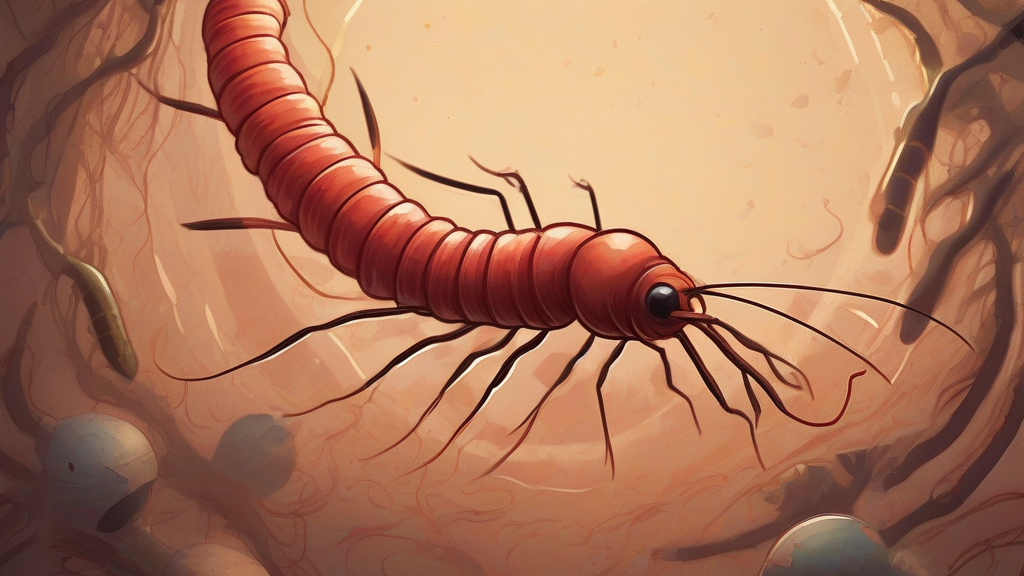
A bloodworm is any of several small, blood-red aquatic worms, most commonly the larvae of non-biting midges that live in the muddy bottoms of ponds, lakes, and slow streams. Their striking crimson hue comes from hemoglobin, which allows them to survive in oxygen-poor water where few other animals can. Bloodworms are best known as bait: freshwater anglers use them to catch trout, panfish, and carp, while marine species of the genus Glycera are dug from tidal mudflats for saltwater fishing. They are equally important in fishkeeping, sold live, frozen, or freeze-dried as a nutritious food for tropical fish, and they serve as food for birds and other wildlife. The word is straightforwardly functional rather than emotive, appearing mostly in angling, aquarium, and ecological writing. Its vivid name and remarkable physiology make it memorable even to readers with no interest in fishing.
nounA blood-red aquatic worm, especially the larva of a non-biting midge (chironomid), commonly used as bait by anglers and as food for aquarium fish; also, a marine polychaete worm of the genus Glycera used similarly as bait.
- The bright red larva of a chironomid (non-biting) midge, living in the mud of ponds and streams and widely used as fish bait and aquarium fish food.
- Any of various marine polychaete worms (notably genus Glycera) with reddish coloring, also prized as bait by sea anglers.
"The angler threaded a bloodworm onto the hook and cast into the tidal flats."
"Tropical fish keepers often feed freeze-dried bloodworms as a protein-rich treat."
"Diggers harvested bloodworms at low tide to sell to coastal bait shops."
Regular plural; used when speaking of multiple specimens, e.g. in bait shops or feeding instructions.
"Feed your betta two or three thawed bloodworms once a week."
Bloodworms get their crimson color from hemoglobin — the same oxygen-carrying pigment in your own blood — which lets them thrive in waters too low in oxygen for most other creatures.
Reviewed by Deb Chak, Editor. AI-assisted content curated by RJS Tech Solutions LLP.
Etymology of bloodworm
Bloodworm is a transparent English compound formed from 'blood', from Old English 'blōd', and 'worm', from Old English 'wyrm'. The name arose as a descriptive vernacular term referring to the creature's red coloration, with compounds of this kind attested in English from around the early modern period onward. It shares its elements with countless other English compounds such as earthworm and silkworm.
How bloodworm is actually used
The term is chiefly used in angling, fishkeeping, and ecological contexts. In freshwater fishkeeping it refers almost exclusively to chironomid larvae, sold live, frozen, or freeze-dried; among saltwater anglers it usually means Glycera worms. The plural 'bloodworms' is standard.
Easily confused with bloodworm
An earthworm is a common terrestrial soil-dwelling worm, whereas a bloodworm is an aquatic, blood-red larva or polychaete used mainly as fishing bait or fish food.