What does bombardier mean?
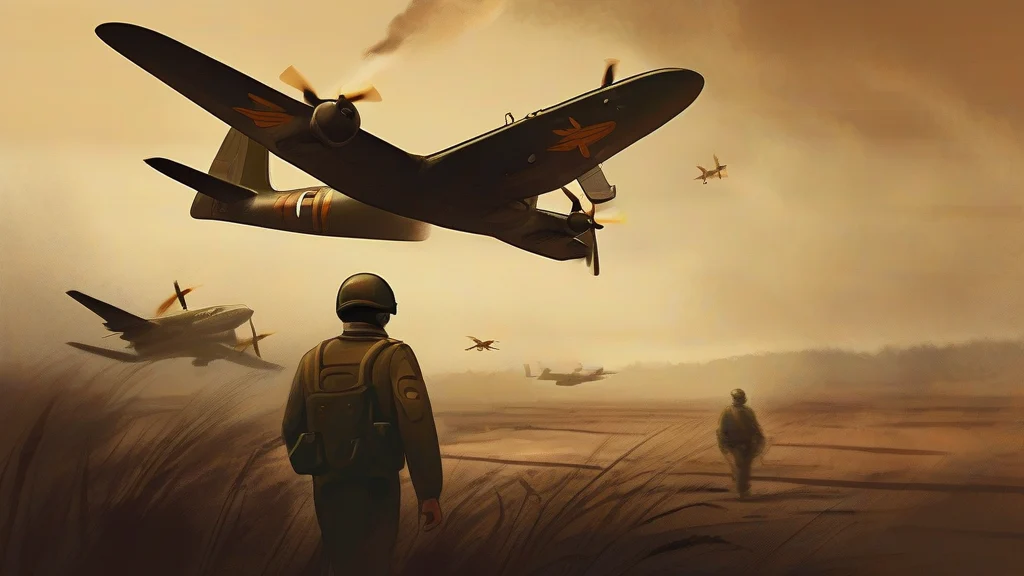
A bombardier is a member of a military aircraft crew whose job was to aim and release bombs, typically using a precision bombsight in the nose of the aircraft. The role reached its peak during the Second World War, when bombardiers aboard bombers such as the B-17 Flying Fortress were trained specialists whose accuracy could decide a mission's success. The word has older roots: originally a bombardier was an artillery soldier who operated a bombard, an early heavy cannon, and the title survives as a rank in some artillery traditions. The term also appears in natural history — the bombardier beetle is famous for defending itself by shooting a scalding chemical spray from its abdomen. Today the aviation sense is mostly historical, since modern bombing relies on automated systems rather than a dedicated crew position, yet the word retains vivid associations with wartime aviation. Learners should note the distinction from the verb 'to bombard', meaning to attack continuously, and be aware that capitalized 'Bombardier' is also the name of a prominent Canadian manufacturer of trains and aircraft.
A member of a bomber aircrew who aims and releases bombs; historically, an artillery soldier who operated a bombard.
"The bombardier took his position in the aircraft's glazed nose and began his run on the target."
Often encountered in historical or veterans' contexts; in modern usage the role has been absorbed into automated bombing systems.
Used attributively in 'bombardier beetle', a ground beetle that defends itself by ejecting a hot, noxious chemical spray.
"Startled, the bombardier beetle fired a puff of steaming spray at the curious lizard."
This is a fixed compound rather than an independent sense of the noun; the insect is named for its explosive defense, echoing the artillery sense.
Regular plural; used when referring to multiple airmen or artillerymen of this rank or role.
"The squadron's bombardiers were briefed together before dawn."
The bombardier beetle fires a chemical spray at around 100 °C from its abdomen — nature's original namesake for the airmen who dropped bombs.
Reviewed by Deb Chak, Editor. AI-assisted content curated by RJS Tech Solutions LLP.
Etymology of bombardier
Bombardier comes from French, where it meant an artillery soldier handling a bombarde, an early cannon; the French term derives ultimately from 'bomb', whose deeper origin lies in the Greek word bombos, meaning a booming or buzzing sound. As artillery evolved into aerial warfare, the title transferred naturally to the aircrew member responsible for dropping bombs, a sense established by the time of the First World War and central to Second World War bomber operations. English shares this word family with French, and related forms such as bombard and bombardment carry the same explosive lineage.
Related word forms
How bombardier is actually used
The aviation sense is now largely historical, since modern bombing is computer-assisted rather than performed by a dedicated crew member; the term remains strongly associated with Second World War aircraft such as the B-17. Capitalized, 'Bombardier' is also a well-known Canadian aerospace and rail manufacturer, which can cause momentary confusion in news contexts.
Easily confused with bombardier
A bombard is an early cannon or the verb 'to attack with bombs', while a bombardier is the person — historically the gunner, later the aircrew member who aims and drops bombs.