What does boogy mean?
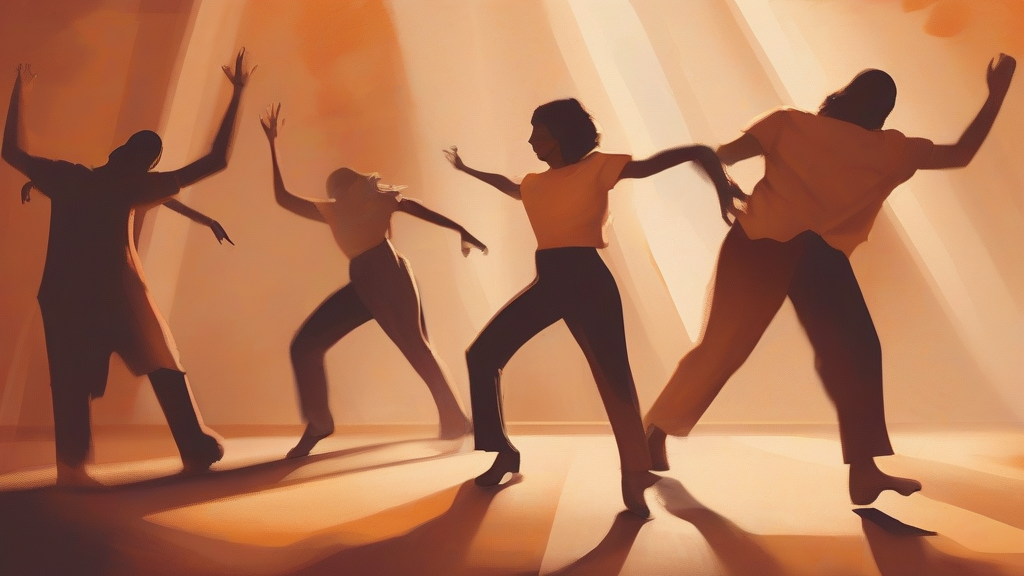
Boogy is a variant spelling of the informal English word "boogie," which functions both as a verb meaning to dance energetically to up-tempo popular music — rock, funk, disco, or soul — and as a noun denoting such a dance or a piece of music that invites it. To say people were boogying is to picture lively, loose-limbed dancing rather than any formal style; the word carries connotations of fun, abandon, and retro party culture, evoking the disco era and boogie-woogie piano traditions. It belongs firmly to casual speech and writing, appearing at parties, in music journalism, and in nostalgic references to seventies nightlife. The spelling is unstable — boogie, boogy, and occasionally boogey all appear in print — so writers should note that "bogey" (golf scores, ghosts) and "bougie" (bourgeois) are unrelated lookalikes. The word ultimately descends from "boogie-woogie," the African-American blues piano style whose name emerged in the early twentieth century, giving this playful little word surprisingly deep musical roots.
To dance energetically to up-tempo popular music, especially rock, funk, or disco.
"Everyone was boogying by the time the second set started."
Regular inflections apply: boogies, boogying, boogied. Strictly informal.
An energetic dance, or a piece of music suitable for such dancing; short for boogie-woogie in musical contexts.
"The DJ closed the night with a slow, rolling boogy."
Less common than the verb; often used loosely for any funky dance track.
Standard pluralization applies when used as a noun.
"The album is packed with upbeat boogies."
Spelled three ways — boogie, boogy, boogey — this one dance word has more spelling confusion than almost any other word on the dance floor.
Reviewed by Deb Chak, Editor. AI-assisted content curated by RJS Tech Solutions LLP.
Etymology of boogy
"Boogy" is a variant spelling of "boogie," which derives from "boogie-woogie," the name of an energetic African-American blues piano style that became widely known in the United States during the early twentieth century. The ultimate origin of "boogie-woogie" is debated; it is often traced to African-American vernacular speech, with some sources suggesting West African roots, though no single etymology has been conclusively established. From the musical term, "to boogie" developed by mid-century as a general verb for dancing energetically to popular music. The variant spelling "boogy" reflects casual phonetic spelling and appears chiefly in informal contexts.
Related word forms
How boogy is actually used
Informal register throughout; "boogy" is a recognized variant spelling of the standard "boogie" and appears mainly in casual writing. As a verb it takes regular inflections (boogies, boogying, boogied). Avoid confusing the spelling with "bogey" (golf/ghost) or "bougie" (bourgeois slang).
Easily confused with boogy
"Boogie" is the standard spelling; "boogy" is simply a less common variant spelling of the same word, not a different word.
"Bogey" means a golf score of one over par, a standard of measurement, or (as bogeyman) a frightening figure, whereas "boogy" refers to dancing.
"Bougie" is slang for bourgeois or materialistically middle-class, while "boogy" relates to dancing.