What does borecole mean?
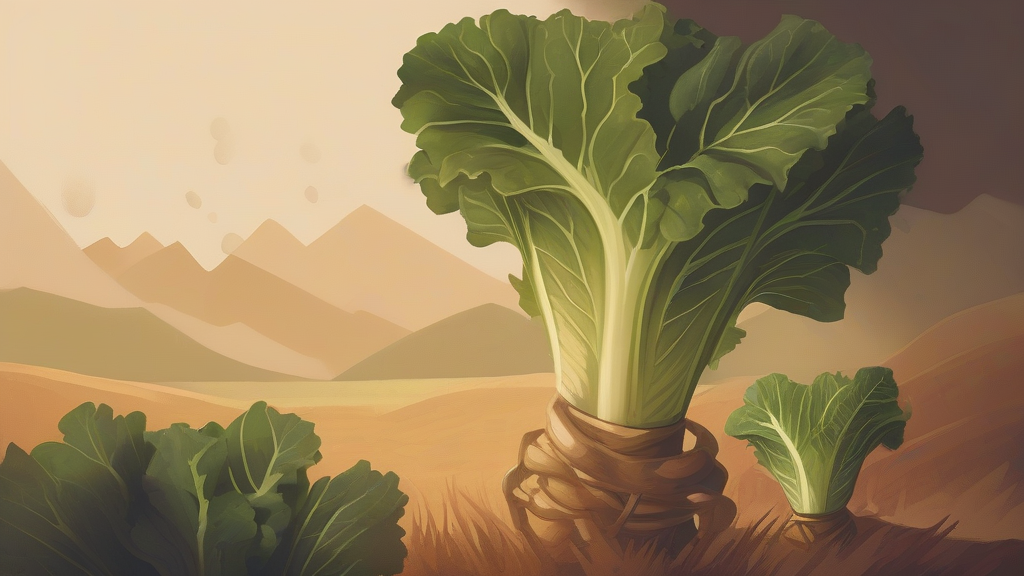
Borecole is a chiefly British name for a hardy variety of Brassica oleracea that never forms a tight head, instead producing a rosette of deeply curled or crinkled green leaves harvested through autumn and winter. In modern usage it is far more commonly called simply kale or curly kale, so 'borecole' tends to appear in seed catalogues, gardening books, and older cookery writing rather than casual conversation. The word entered English from Dutch boerenkool, literally 'farmer's cabbage', reflecting the vegetable's long-standing role as a cheap, dependable peasant crop across northern Europe. One of its best-known qualities is that frost improves its flavour: cold nights convert some of the plant's starches to sugars, giving the leaves a sweeter taste. Gardeners value it for its resilience in poor weather, and cooks prize it as a robust green for soups, stews, braises, and sautés when little else grows.
nounA variety of cabbage of the species Brassica oleracea that does not form a compact head, bearing curled or wrinkled edible leaves; also known as kale or curly kale.
- A hardy, non-heading variety of Brassica oleracea with curled, edible leaves, grown as a winter vegetable; kale.
"The allotment's hardiest crop was the borecole, whose frilled leaves stood green through every frost."
"Frost-touched borecole makes a sweeter addition to winter soups than most garden greens."
"She planted a bed of borecole in late summer so the curly leaves would carry the kitchen garden through the cold months."
As a countable noun referring to individual plants, borecole takes a regular plural, though it is often used uncountably when referring to the vegetable in bulk.
"Two rows of young borecoles were set out before the first frosts."
'Borecole' comes straight from the Dutch boerenkool — literally 'farmer's cabbage' — and its leaves famously sweeten after a frost.
Reviewed by Deb Chak, Editor. AI-assisted content curated by RJS Tech Solutions LLP.
Etymology of borecole
Borecole derives from the Dutch boerenkool, meaning 'farmer's cabbage' (boer 'farmer' + kool 'cabbage'), which itself traces back to Latin caulis, 'stalk or stem of a cabbage plant'. It was adopted into English in the seventeenth century as a horticultural term for the non-heading, curled-leafed brassica known elsewhere as kale. Its cognates include other caulis-derived vegetable names such as cauliflower and coleslaw (from Dutch koolsla, 'cabbage salad').
How borecole is actually used
Borecole is chiefly a British horticultural term; in everyday cooking contexts most speakers simply say 'kale'. It carries a slightly old-fashioned, gardening-catalogue flavour and may be unfamiliar to many readers outside Britain.
Easily confused with borecole
Collards are a smooth-leafed, non-heading variety of Brassica oleracea grown for loose leaves, whereas borecole specifically refers to kale with curled or crinkled leaves.