What does boulevard mean?
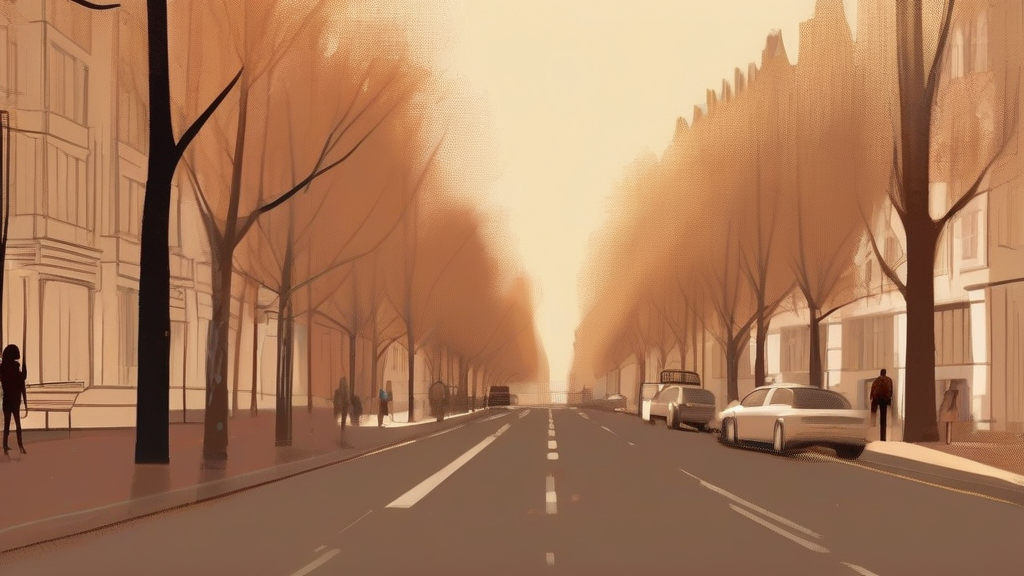
A boulevard is a wide street in a town or city, classically one that is lined with trees and laid out to make walking or driving agreeable. The word evokes the great boulevards of nineteenth-century Paris, whose broad, elegant thoroughfares became symbols of cosmopolitan life, café culture, and leisurely public display. Because of this heritage, 'boulevard' tends to carry connotations of grace and sophistication, distinguishing it from plainer words like road or street. In practice, however, usage varies by region: in many American cities, especially in California, 'Boulevard' appears in the official names of busy arterial roads that bear little resemblance to Parisian promenades. The word entered English from French in the seventeenth century and ultimately derives from a Dutch term meaning bulwark, since early examples were built on the levelled ground of former fortifications. A related word, 'boulevardier', describes a fashionable urban sophisticate.
A broad street or avenue in a town or city, typically one that is tree-lined or otherwise landscaped.
"The hotel overlooked a magnificent boulevard shaded by plane trees."
Often capitalized as part of an official street name, e.g. Sunset Boulevard.
A principal multi-lane road in a city's street network, especially when designated 'Boulevard' in its name.
"Take Wilshire Boulevard east until you reach the intersection."
Standard plural, used both for multiple individual streets and for the general category of such streets.
"Haussmann's redesign filled Paris with sweeping new boulevards."
'Boulevard' literally means 'bulwark' — Paris's famous ring of grand avenues was built where the city's medieval fortress walls used to stand.
Reviewed by Deb Chak, Editor. AI-assisted content curated by RJS Tech Solutions LLP.
Etymology of boulevard
The English word 'boulevard' comes from French, which took it from Dutch 'bolwerk', meaning a bulwark or defensive rampart — the same Germanic root that gives us the English 'bulwark'. The connection is literal: when Paris dismantled its old fortress walls in the seventeenth century, the open ground where the ramparts stood was turned into broad promenades, and these came to be called boulevards. The word has been used in English since at least the seventeenth century, first in reference to the streets of Paris and later generalized to any wide urban avenue.
Related word forms
How boulevard is actually used
The word carries pleasant connotations of elegance, leisure, and urban sophistication, largely due to its association with the grand boulevards of Paris. In American cities such as Los Angeles, 'boulevard' is also simply part of official street names for major roads that may not be leafy or elegant at all. The derived noun 'boulevardier' refers to a fashionable, sociable man who frequents stylish urban places.
Easily confused with boulevard
A bulwark is a defensive wall or protective barrier, while a boulevard is a wide urban street — the two share the same Dutch origin but mean entirely different things.