What does brancher mean?
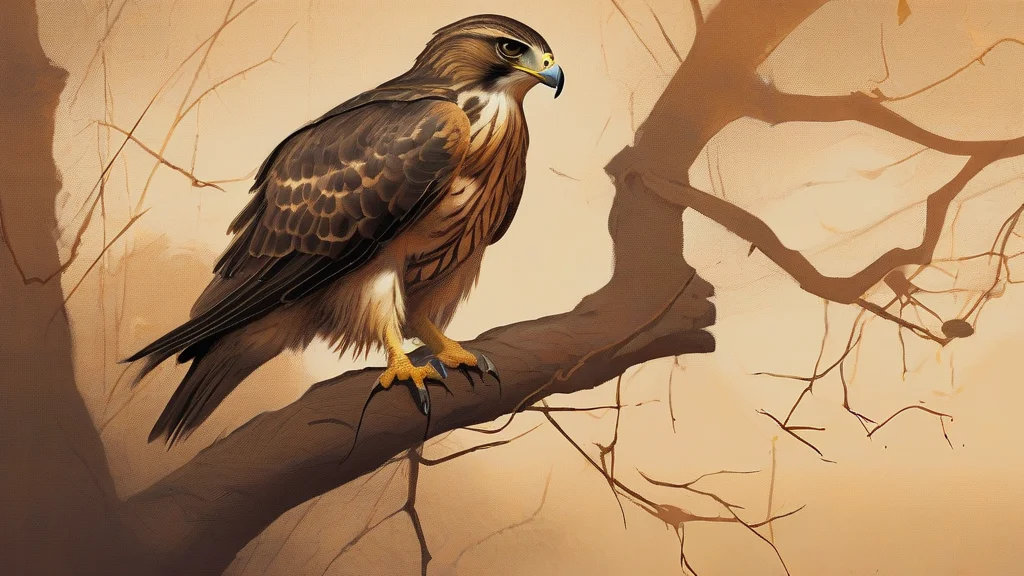
A brancher is a young bird that has reached the stage of leaving its nest but cannot yet fly with full competence. Rather than launching into the air, the brancher climbs and hops along nearby branches, fluttering awkwardly between perches while its parents continue to feed it. The word is most closely associated with birds of prey and appears frequently in falconry, where a brancher describes a hawk taken for training at this intermediate age — older than a nestling taken from the eyrie, but younger than a bird capable of sustained flight. Outside these specialist circles, the more familiar term is fledgling, which refers broadly to any recently fledged young bird. Because it captures a precise moment in a bird's development, "brancher" remains valued by falconers, banders, and ornithologists who need terminology finer than everyday vocabulary allows. It is a rare but well-established word, and encountering it usually signals a text written by someone with hands-on experience of raptors.
nounA brancher is a young bird, especially a hawk or other raptor, that has left the nest and perches on nearby branches while still depending on its parents for food. In ornithology and falconry, the term denotes this specific stage between nestling and fully fledged flight.
- A young bird, especially a raptor, that has left the nest but not yet become fully fledged, typically perching on branches near the nest.
- In falconry, a hawk taken from the wild at this pre-fledging stage for training.
"The falconer chose a healthy brancher from the eyrie, knowing it had already grown strong enough to hop among the pines."
"The owlets had become branchers, clambering along the oak limbs while still calling to be fed."
"Taking a brancher rather than an eyass gives the falconer a bird that already has some strength in its wings."
Regular plural; used when referring to multiple young birds at this stage, such as a brood of hawks or owls.
"All three branchers were banded before they could fly beyond the grove."
Before a young hawk ever takes true flight, it spends days hopping tree-to-tree as a 'brancher' — a word falconers have treasured for centuries.
Reviewed by Deb Chak, Editor. AI-assisted content curated by RJS Tech Solutions LLP.
Etymology of brancher
Brancher is formed transparently from the noun "branch" plus the agentive suffix "-er," literally denoting a creature that occupies or moves about on branches. The underlying noun "branch" entered Middle English from Old French "branche," which itself derives from the Late Latin "branca," meaning a paw or limb. The compound thus reflects both the physical habit of the young bird and the long history of "branch" in English, where it has carried senses ranging from tree limbs to divisions of knowledge since the medieval period.
Related word forms
How brancher is actually used
"Brancher" is a specialist term found chiefly in ornithology and falconry literature; general readers are more likely to encounter "fledgling," which covers the broader concept. The plural "branchers" follows regular formation.
Easily confused with brancher
A blancher is something that whitens food or removes color, whereas a brancher is a young bird at the perching stage.