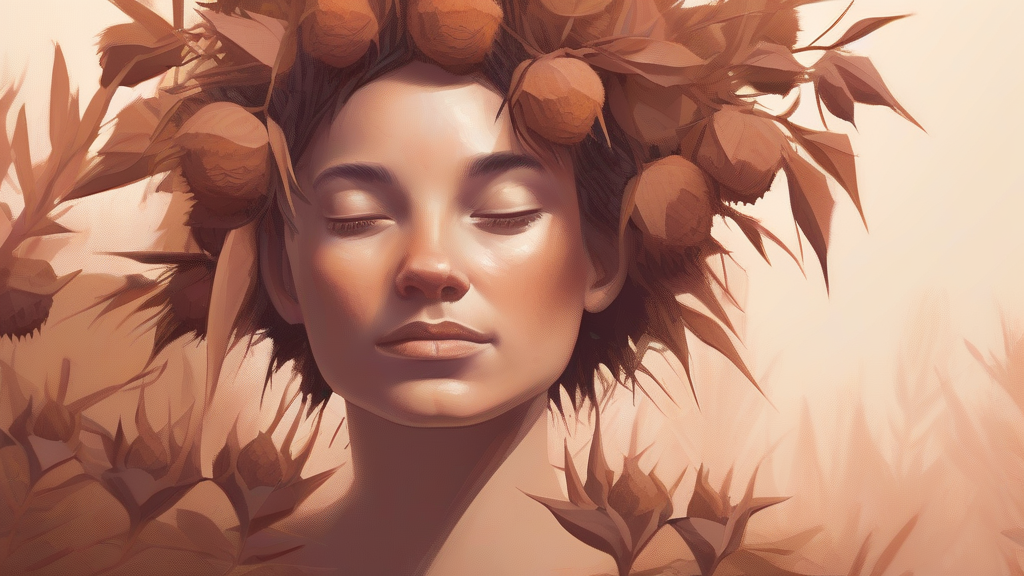
What does briary mean?
Briary is an adjective describing land or vegetation that is thickly grown with briers — the prickly, rambling shrubs of the rose family, such as wild blackberries and roses. A briary hillside, hedge, or footpath is one so tangled with thorny growth that passage is slow and painful, and writers use the word to evoke wildness, neglect, and the rough charm of untended countryside. The word is relatively rare and literary in register; its commoner variant spelling is briery, and both derive from the noun brier (or briar), which entered English from Middle English. Beyond literal landscapes, briary can be applied figuratively to anything that feels impenetrable or beset with difficulties, much as one might speak of a thorny problem. For readers of nature writing, rural fiction, and older poetry, recognizing the word adds texture to descriptions of hedgerows, thickets, and forgotten corners of the landscape where brambles have taken hold.
adjectiveCovered with or full of briers (prickly shrubs such as blackberry or rose bushes); resembling or characteristic of a thicket of thorny plants.
- (of ground or vegetation) covered or thick with briers; overgrown with prickly shrubs
- (figurative or descriptive) having the tangled, prickly character of a brier thicket
"We abandoned the shortcut when the path grew too briary to pass."
"The old orchard had gone wild, its edges dense and briary."
"He pushed through the briary undergrowth, sleeves torn by the time he reached the clearing."
A briar pipe isn't made from a blackberry bush at all — it comes from the root of the heath tree Erica arborea, which is why the 'briar' in your grandfather's pipe and the 'briars' in a hedgerow aren't even the same plant.
Reviewed by Deb Chak, Editor. AI-assisted content curated by RJS Tech Solutions LLP.
Etymology of briary
Briary is formed from the English noun brier, meaning a prickly shrub such as a wild rose or blackberry, plus the adjectival suffix -y. The noun itself descends from Middle English forms recorded as 'brer' and 'brere', which are related to Old English 'brēr'. The variant spellings briar and briery arose later, and the double-vowel form became especially associated in Britain with briar pipes, though that wood actually comes from the heath tree Erica arborea rather than a true brier.
How briary is actually used
Briary is a literary and somewhat rare adjective; the variant spelling 'briery' is more frequently encountered in modern usage. It is most often used descriptively of landscape, paths, and undergrowth, occasionally figuratively for anything difficult to penetrate. The noun it derives from appears as both 'brier' and 'briar' in American English, while British English generally prefers 'briar'.
Easily confused with briary
Briery is simply the more common variant spelling of the same adjective — both mean 'covered with briers', and neither has a separate meaning.
Briar is the noun naming the prickly shrub itself (or its root, as in briar pipes), while briary is the adjective describing something overgrown with such shrubs.