What does brickbat mean?
A brickbat is, at root, a fragment of a broken brick — originally the kind of rough missile one might hurl. From this concrete sense grew a figurative one that now dominates: a brickbat is a harsh, cutting remark or a piece of severe criticism aimed at a person, institution, or work. Modern usage is overwhelmingly figurative; writers speak of politicians 'weathering brickbats' or a film 'drawing brickbats from critics', and the word typically appears in the plural, as in 'a hail of brickbats'. It belongs chiefly to journalism and formal commentary, carrying an unmistakably negative connotation. A memorable fixed pairing contrasts brickbats with bouquets — abuse and applause — capturing how public figures tend to receive both. The word's vivid physical origin gives it more punch than plainer synonyms like 'criticism' or 'complaint': to throw a brickbat is to attack bluntly and without ceremony, which is precisely why the term has endured for centuries in English prose.
nounA brickbat is literally a piece of broken brick, especially one used as a weapon; figuratively, it denotes a harsh criticism or unkind remark directed at someone.
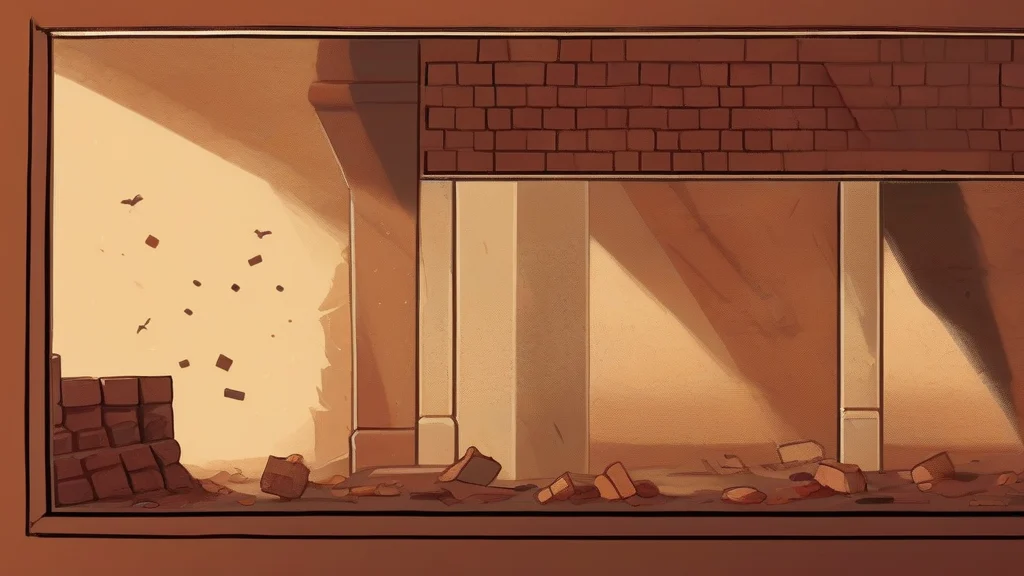
- A piece of broken brick, especially one thrown as a missile or used in rough building work.
- A harsh verbal attack, unkind remark, or piece of severe criticism.
"The minister weathered a hail of brickbats from the press after the scandal broke."
"Workmen cleared away the brickbats left behind when the old wall came down."
"Her latest novel drew brickbats from reviewers who once admired her work."
The plural is the most common form in modern usage, particularly in the figurative sense of critical remarks.
"The plan met with brickbats from nearly every quarter."
Before it meant an insult, a brickbat was quite literally half a brick — hurled at people long before critics threw words instead.
Reviewed by Deb Chak, Editor. AI-assisted content curated by RJS Tech Solutions LLP.
Etymology of brickbat
Brickbat arose in English in the early 17th century as a transparent compound of 'brick' and 'bat' in its older sense of a lump, piece, or cudgel-like fragment — the same 'bat' seen in words like 'cudgel-bat'. It first denoted a piece of brick used as a weapon or for rough construction, and by the mid-17th century the metaphorical sense of a hostile remark was established. The word is native to English formation rather than borrowed, so it has no true cognates from Latin or Greek roots.
How brickbat is actually used
The literal sense (a fragment of brick) is now rare and largely historical; in modern usage the word almost always appears in its figurative sense of hostile criticism. It carries a strongly negative, often journalistic connotation and is frequently found in plural form ('brickbats'), especially in phrases like 'a hail of brickbats'. The tone is somewhat formal or literary.
Easily confused with brickbat
In the fixed pairing 'brickbats and bouquets', a bouquet is praise or compliment, the opposite of a brickbat's harsh criticism.