What does briquetting mean?
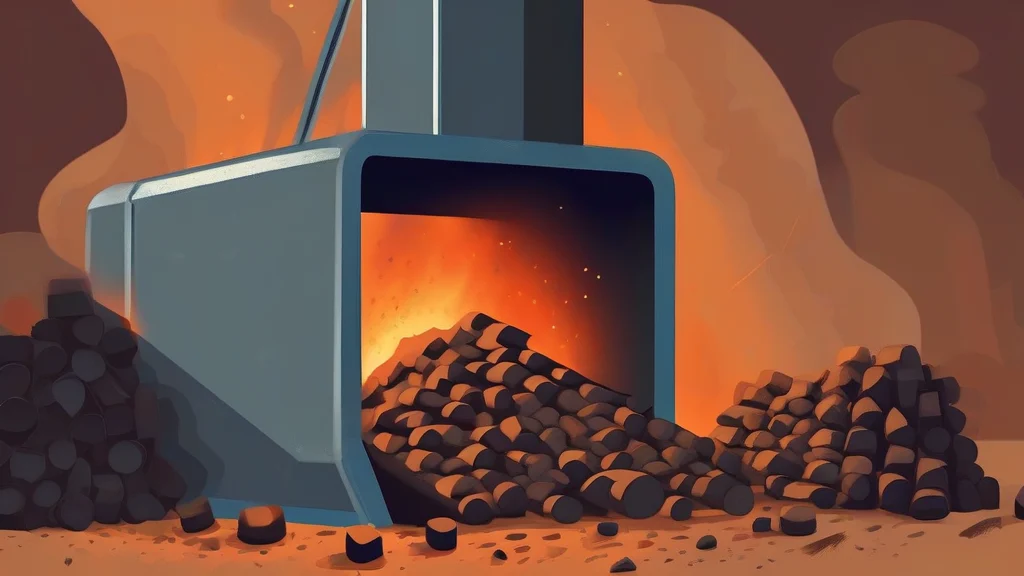
Briquetting is the industrial process of compressing loose, granular material — most commonly coal dust, charcoal fines, sawdust, or metal particles — into firm, uniform blocks known as briquettes. The process typically uses a hydraulic or roller press, sometimes with a binding agent such as starch or pitch, to give the finished blocks enough strength to be stored, transported, and burned or reprocessed without crumbling. Briquetting serves two main purposes: it turns dusty or otherwise unusable by-products into convenient fuel or feedstock, and it reduces the volume of waste material, making handling cheaper and cleaner. The word derives from the French 'briquette', a diminutive of 'brique' (brick), reflecting the block shape of the product. It appears almost exclusively in technical and trade contexts — mining, metallurgy, biomass fuel production, and recycling — rather than in everyday speech. Related machinery is described with terms such as 'briquetting press', a standard phrase in industry literature.
nounBriquetting is the process of compressing loose material such as coal dust, charcoal fines, sawdust, or metal shavings into compact blocks called briquettes, typically using a press and often with a binding agent. It is chiefly an industrial term for turning granular waste or fuel material into solid, easily handled lumps.
- The industrial process of compressing powdered or granular material (such as coal dust, charcoal, sawdust, or scrap metal) into solid blocks called briquettes, usually with a press and sometimes a binder.
"The plant's new briquetting line compresses iron filings into dense blocks that can be sold back to steel mills."
"Coal briquetting was widely adopted in the early twentieth century as a way to make use of fine coal that would otherwise be wasted."
"Sawdust from the furniture workshop is collected and sent through a briquetting machine, producing fuel logs for sale."
Rarely used; 'briquetting' normally functions as an uncountable mass noun referring to the process as a whole.
"Different feedstocks require different briquettings conditions in the press line."
The word 'briquette' comes from French, where 'brique' simply means brick — so every lump of charcoal you barbecue on owes its name to a French mason's brick.
Reviewed by Deb Chak, Editor. AI-assisted content curated by RJS Tech Solutions LLP.
Etymology of briquetting
Briquetting derives from 'briquette', a French diminutive of 'brique', meaning brick, which itself traces back through Old French to Germanic origins shared with the English word 'brick'. The English noun 'briquette', denoting a compressed block of coal dust or other fuel, was adopted from French in the nineteenth century as industrial coal processing expanded across Europe. The gerund form 'briquetting' arose naturally to name the manufacturing process by which such blocks are made.
Related word forms
How briquetting is actually used
Briquetting is a technical term used mainly in mining, metallurgy, biomass energy, and recycling industries. It functions as a mass noun referring to the process itself; it is not commonly used outside these specialized contexts.
Easily confused with briquetting
Bracketing means enclosing something in brackets or taking a series of photographs at different exposures, while briquetting is the industrial process of pressing material into blocks.