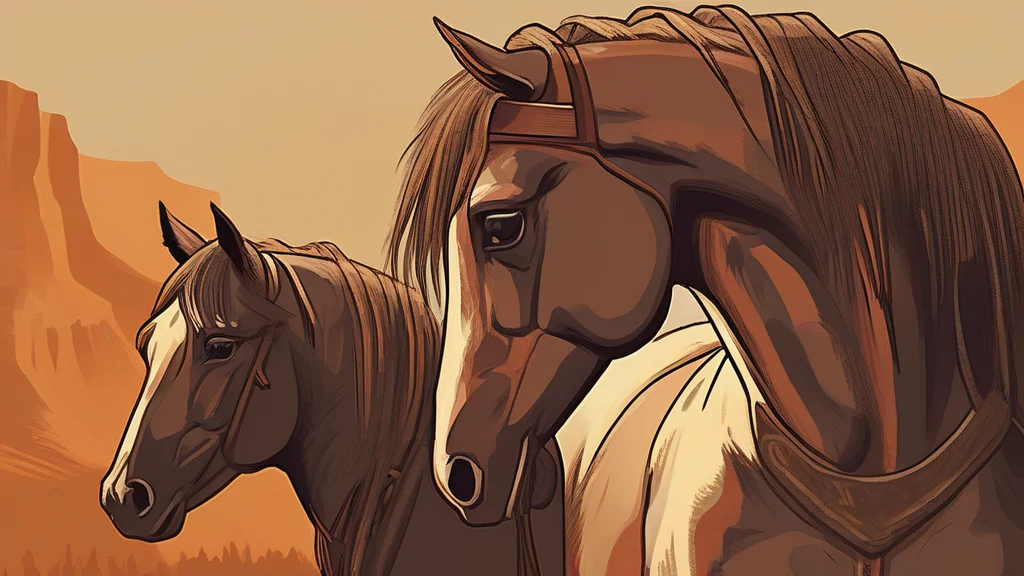
What does broncho mean?
A broncho is an unbroken or imperfectly trained horse of the North American West, famed for bucking wildly under saddle. It is essentially a variant spelling of "bronco," the standard form used today, and both words come from Spanish "bronco," meaning rough or untamed, which itself traces back to a root associated with roughness or projecting teeth. In American English, particularly from the nineteenth-century cattle-ranching era onward, the term became emblematic of frontier life: cowboys prided themselves on their ability to ride such horses, and the image of the bucking broncho endures in rodeo events and Western folklore. Today the word sounds informal and slightly old-fashioned, evoking dusty corrals and eight-second rides rather than everyday speech. Writers reaching for it usually want that deliberately Western flavor; otherwise, "bronco" or simply "unbroken horse" serves more naturally in modern usage.
nounA broncho is an unbroken or half-trained horse of the North American West, especially one that bucks violently when ridden. The word is chiefly a variant spelling of "bronco."
- An unbroken or half-tamed horse of the North American West that bucks when ridden.
"The rodeo rider clung to the broncho for eight seconds before it finally threw him."
"He drew the wildest broncho in the corral and lasted barely three seconds in the saddle."
"Old-timers on the ranch still talked about the dun-colored broncho that had never been fully broken."
The plural drops the final vowel's accent pattern and adds -s, following standard anglicized pluralization of Spanish loans.
"The remuda contained several young bronchos awaiting breaking."
The same Latin root behind "broncho" may have originally meant "projecting teeth" — fittingly snarly for a horse that refuses to be ridden.
Reviewed by Deb Chak, Editor. AI-assisted content curated by RJS Tech Solutions LLP.
Etymology of broncho
English borrowed "broncho" directly from Mexican Spanish "bronco," meaning rough, coarse, or untamed, during the era when Anglo-American ranchers encountered the feral and half-wild horses of northern Mexico and the American Southwest. The Spanish adjective likely derives ultimately from Late Latin "broccus," meaning pointed or projecting, a root also connected to words like "broach." It entered English alongside other cowboy-era loanwords and has since largely been displaced by the spelling "bronco."
How broncho is actually used
Informal and somewhat dated register today; "bronco" is now the far more common spelling. The word carries strong associations with the American West, ranching, and rodeo culture. It should not be confused with the medical prefix "broncho-," which relates to the bronchial tubes.
Easily confused with broncho
"Bronchus" is one of the two main airways branching from the windpipe into the lungs, whereas "broncho" refers to an untamed western horse.
"Bronco" is the standard modern spelling for the untamed horse, while "broncho" is a now less common variant spelling of the same word.