What does bronco mean?
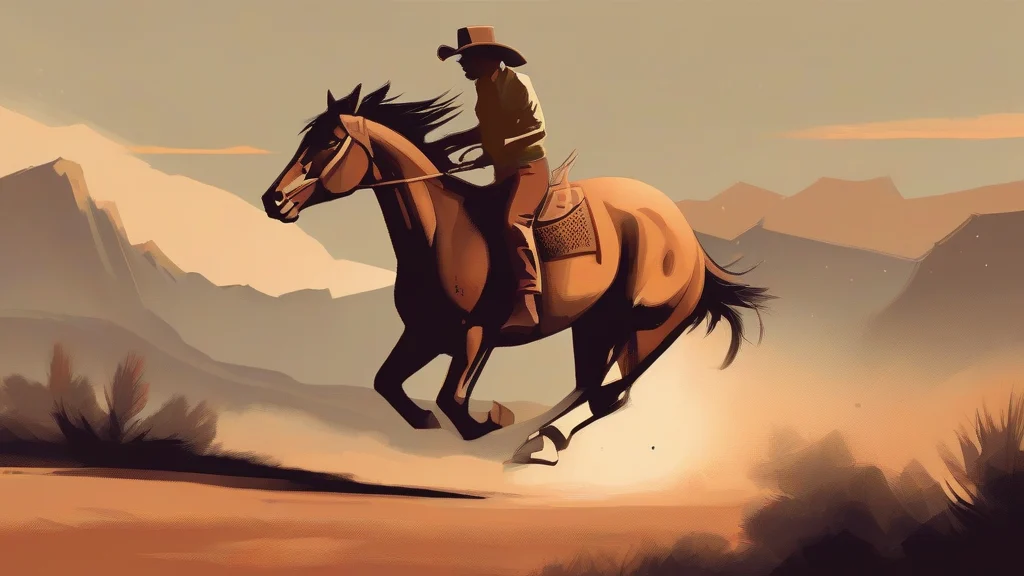
A bronco is an unbroken or only partially domesticated horse of the North American West, prized — and feared — for its tendency to buck violently when ridden. The word entered English in the nineteenth century from Spanish, where it was originally an adjective meaning rough or harsh, and it became firmly embedded in the vocabulary of the American frontier through the practices of Mexican vaqueros and the cowboys who learned from them. Today 'bronco' is inseparable from rodeo culture: the event known as bronco riding or bronc riding, in which competitors try to stay mounted on a deliberately bucking horse, keeps the term alive in everyday American speech. It also carries strong connotations of wildness, toughness, and untamed independence, so writers sometimes apply it figuratively to spirited people or things. The shortened forms 'bronc' and the older variant 'broncho' appear alongside it, particularly in regional and historical contexts.
nounA bronco is an untrained or half-tamed horse of the North American West, especially one that habitually bucks. The term also appears attributively in phrases such as 'bronco busting', referring to the breaking in of such horses.
- An untrained or only partially trained horse of western North America that characteristically bucks when ridden; a wild or half-wild range horse.
"The young cowboy held on grimly as the bronco twisted and bucked beneath him."
"Riders at the frontier ranch were paid by the head for every bronco they could break to saddle."
"The rodeo crowd roared as the bronco launched into its first twisting leap out of the chute."
The standard plural is 'broncos'; an informal variant 'broncoes' exists but is less common. The clipped form 'bronc' pluralizes regularly as 'broncs'.
"The remuda contained several young broncos that had never felt a saddle."
Every rodeo 'bucking bronco' owes its name to a Spanish adjective that literally means 'rough' — cowboys adopted the word whole from Mexican vaqueros in the nineteenth century.
Reviewed by Deb Chak, Editor. AI-assisted content curated by RJS Tech Solutions LLP.
Etymology of bronco
Bronco comes from Spanish, where it was originally an adjective meaning rough, harsh, or coarse. The ultimate origin of the Spanish word is uncertain, though some sources link it to Visigothic or Vulgar Latin roots. English speakers in the American West borrowed the term during the nineteenth century from Mexican vaquero culture, applying it specifically to the rough, unbroken horses of the open range, and it has remained a staple of Western and rodeo vocabulary ever since.
Related word forms
How bronco is actually used
Informal to neutral register, strongly associated with the American West, rodeo culture, and nineteenth-century frontier history. The clipped form 'bronc' is common among riders and in rodeo contexts. Pluralization varies informally between 'broncos' and 'broncoes', though 'broncos' is standard. In British usage the word is largely confined to descriptions of the American West and rodeos.
Easily confused with bronco
Bronchial relates to the air passages of the lungs, while bronco is an untrained, bucking horse of the American West.
Branco is the Portuguese word for 'white' and is unrelated to bronco except in superficial sound.