
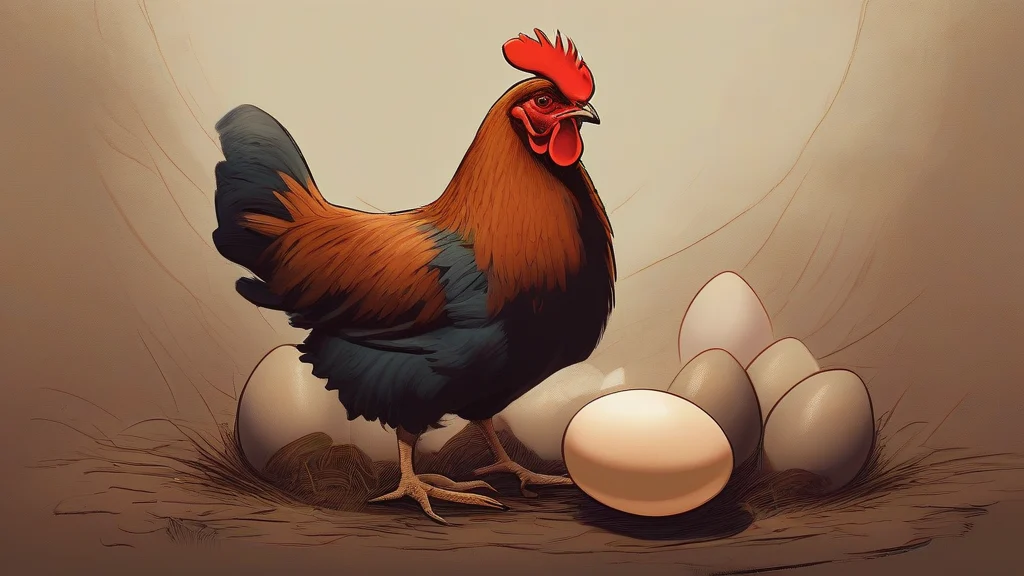
What does broodiest mean?
Broodiest is the superlative form of the adjective 'broody', meaning most inclined to brood — that is, most given to silent, prolonged, and often melancholy thought. It describes a person at the peak of a moody, withdrawn, or pensive state: someone staring out a rainy window, giving short answers, and clearly lost in their own head is at their broodiest. The word carries an informal register and often a touch of gentle humour rather than severe judgment. A second, older sense applies specifically to domestic hens: the broodiest bird in a flock is the one most determined to sit on her eggs and hatch chicks. This agricultural sense gave rise to the emotional one, since a sitting hen appears still, silent, and absorbed. Related forms include 'broody', 'broodier', 'broodily', and the noun 'broodiness'.
Superlative of 'broody': most inclined to brood; most sullen, moody, or deeply preoccupied with one's thoughts.
"It was during his broodiest winter that he wrote his darkest poetry."
Informal; typically used with 'at one's broodiest' or 'in one's broodiest mood'.
Superlative of 'broody': (of a hen) most strongly inclined to sit on and incubate eggs.
"Keep the broodiest hens separate if you don't want fertilized eggs."
Primarily used among poultry keepers and in agricultural contexts.
The same word that describes your moodiest teenage phase also describes the hen most determined to hatch her eggs.
Reviewed by Deb Chak, Editor. AI-assisted content curated by RJS Tech Solutions LLP.
Etymology of broodiest
Broodiest derives from 'broody', formed from the noun and verb 'brood', which comes from Old English 'brōd', meaning the young of birds hatched from eggs. The verb 'to brood' originally referred to a hen sitting on eggs to hatch them, and by extension came to mean dwelling anxiously or moodily on thoughts — a metaphorical shift already present in early modern English. The suffix '-y' created the adjective 'broody', and the superlative '-iest' yields 'broodiest'. Cognates include Dutch 'broed' and German 'Brut', both referring to hatched offspring.
Related word forms
How broodiest is actually used
Informal register. The figurative sense describing a person's mood is far more common in modern usage than the literal poultry sense. Often used with a slightly affectionate or humorous connotation rather than as harsh criticism. The base form 'broody' is more frequently used than the superlative.
Easily confused with broodiest
'Broodish' is not a standard English word; 'broodiest' is the correct superlative form of 'broody', meaning most moody or contemplative.