What does brood mean?
"Brood" functions as both noun and verb with two distinct strands of meaning. As a noun, it denotes a set of offspring — most typically a group of birds hatched from the same clutch, though by extension it can describe any litter or even a parent's children, sometimes with affectionate irony. As a verb, its oldest sense is to sit on eggs to hatch them, but today its dominant use is figurative: to brood is to dwell persistently on worries, grievances, or regrets, turning them over in the mind with a gloomy, self-absorbed intensity. This sense colours the adjective "brooding," which describes a mood of dark pensiveness — a brooding sky, a brooding silence, a brooding hero. The word derives from Old English brōd, related to the verb breed, reflecting its original link to reproduction and rearing. In everyday speech, "don't brood over it" is a gentle admonition against unproductive rumination.
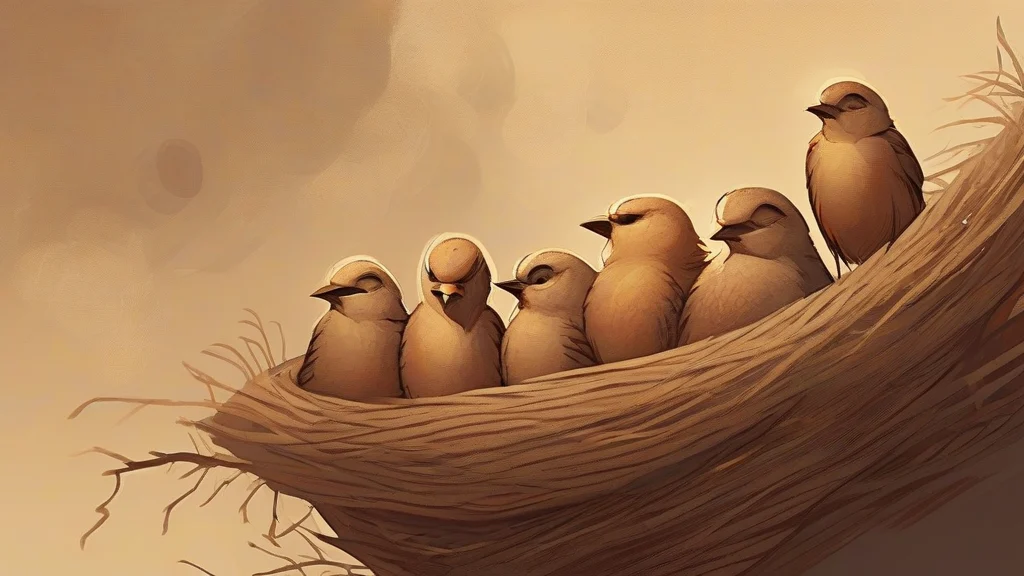
A family of young birds or animals produced at one time; the young of a bird hatched from one clutch.
"The duck led her brood down to the pond for their first swim."
Often used figuratively or humorously for a parent's children: 'arriving with the whole brood.'
To sit on eggs in order to hatch them; more commonly, to think about something continuously in an unhappy or anxious way.
"Rather than brooding over the rejection, she channelled her energy into her next project."
Frequently followed by 'over,' 'on,' or 'about.' The egg-hatching sense is now chiefly technical.
Standard plural, used when referring to multiple groups of offspring, e.g. successive clutches.
"A single pair of robins may raise several broods in one season."
The same Old English root gave us both 'brood' and 'breed' — a bird's brood is literally the thing it has bred.
Reviewed by Deb Chak, Editor. AI-assisted content curated by RJS Tech Solutions LLP.
Etymology of brood
Brood comes from the Old English noun brōd, meaning the young of birds hatched at once, formed from the same Germanic root as the verb breed. It has been used in English since before the Norman Conquest in its literal senses of offspring and incubation. The extended figurative sense — to ponder anxiously, as though mentally sitting on a thought — developed in Middle English and became well established by the early modern period. Its Germanic cousins include Dutch broed and German Brut, both retaining the core sense of hatchlings.
Related word forms
How brood is actually used
The verb sense meaning to hatch eggs is chiefly technical or literary. The figurative sense of dwelling anxiously on thoughts is very common in modern usage and carries a distinctly negative, gloomy connotation — 'brooding' suggests dark, self-absorbed rumination rather than calm reflection. The noun can be applied humorously to human families ('the whole brood').
Easily confused with brood
'Brewed' is the past tense of brew (to make beer or coffee), while 'brood' refers to offspring or anxious contemplation.