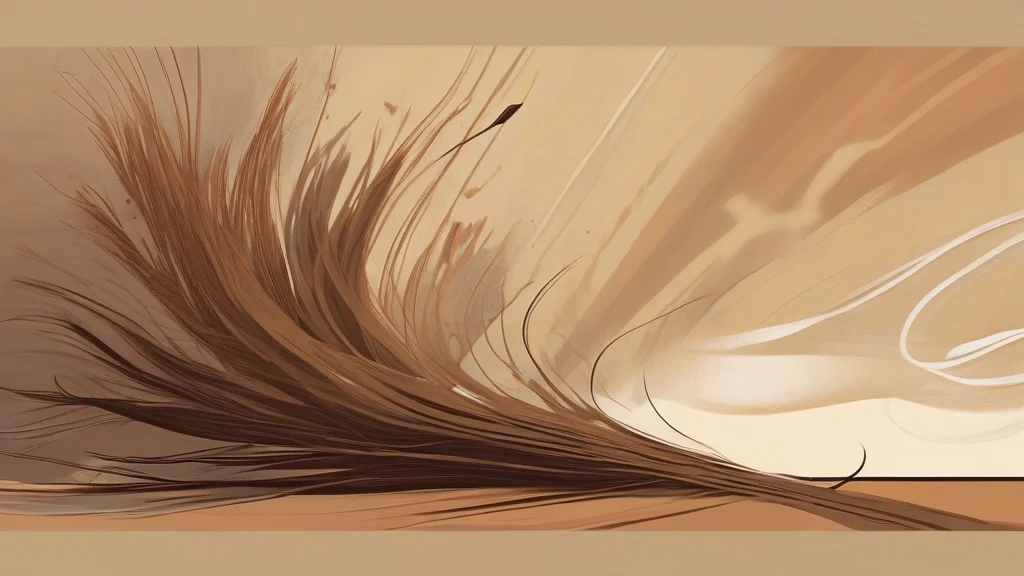
What does brushlike mean?
Brushlike is a descriptive adjective used for anything that resembles a brush in shape or texture — typically something made up of many fine, stiff, densely packed filaments, hairs, or bristles. A fox's bushy tail, the plumed flower head of a bottlebrush plant, or a cluster of wiry fibers might all be described as brushlike. The word is transparent in meaning and neutral in tone, formed simply by combining the noun 'brush' with the suffix '-like'. It appears most often in scientific and nature writing, where precision of description matters: botanists may describe brushlike inflorescences, zoologists brushlike fur or tails, and writers of all kinds use it whenever a vivid visual comparison is needed. Because the image it evokes is so immediate, brushlike lets a reader picture a texture instantly without further explanation.
adjectiveResembling a brush in appearance or texture, especially in having many fine, stiff filaments, hairs, or bristles clustered together.
- Resembling a brush in form or texture, especially having dense, fine, stiff filaments or hairs.
"The fox's tail ended in a thick, brushlike tuft that swept the snow as it ran."
"The plant's brushlike flower heads attracted clouds of tiny pollinators."
"He sketched the tree canopy with quick, brushlike strokes of charcoal."
Naturalists call an animal's bushy tail a 'brush' — so calling it brushlike is literally naming it after itself.
Reviewed by Deb Chak, Editor. AI-assisted content curated by RJS Tech Solutions LLP.
Etymology of brushlike
Brushlike is formed transparently from the English noun 'brush' plus the adjectival suffix '-like', following a common pattern of descriptive word formation. The underlying noun 'brush' entered Middle English from Old French 'broisse' or 'brosse', referring originally to brushwood or a bundle of twigs before coming to denote the familiar implement of bristles. As such, its deeper origins are Germanic rather than Latin or Greek. Compounds and derivatives built on 'brush' include brushwood, underbrush, and brushwork.
How brushlike is actually used
'Brushlike' is chiefly descriptive and appears most often in natural history, botany, and zoological writing, though it also occurs in art criticism and general descriptive prose. It carries a neutral connotation and is more common in written than spoken English.
Easily confused with brushlike
'Brash' describes bold, hasty, or aggressive behavior, while 'brushlike' purely describes something that physically resembles a brush.