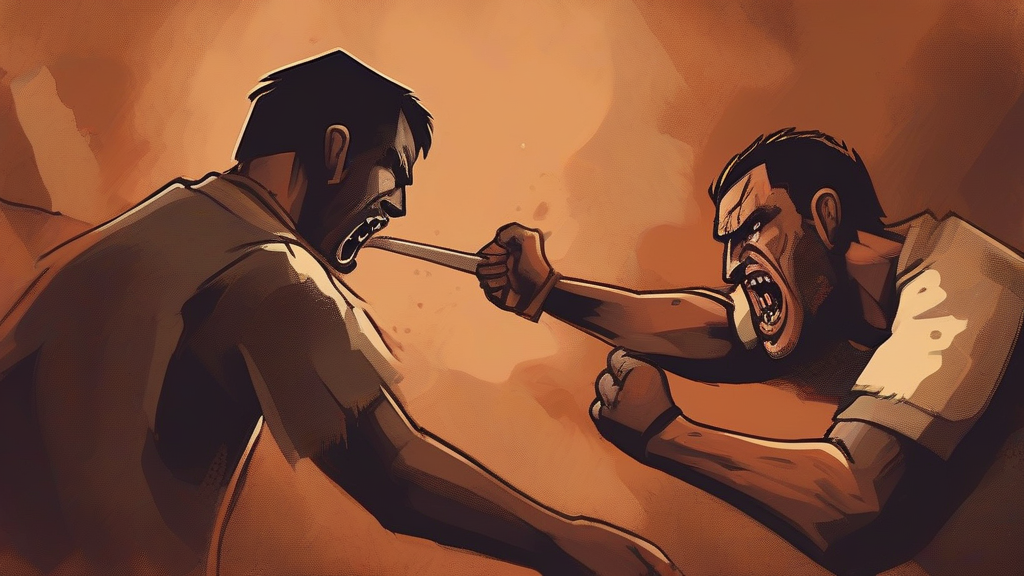
What does brutality mean?
Brutality is the quality of being extremely cruel, savage, or violent, whether in deliberate physical harm or in harshness of tone, judgement, or circumstance. As a noun, it typically appears in discussions of violence — phrases such as 'police brutality', 'state brutality', and 'the brutality of war' are firmly established in journalism and human rights discourse — but it also extends figuratively to describe the merciless severity of events, markets, or words, as in 'the brutality of an economic crisis'. The word derives from Latin brutus, meaning heavy or dull-witted, the same root that gives us 'brute' and 'brutal', so calling something brutal is etymologically likening it to an animal acting without reason or conscience. Brutality is uncountable in general use, though plural forms occur when enumerating distinct acts of cruelty. Strongly pejorative and largely formal to neutral in register, it is an indispensable term for condemning cruelty with precision and force.
Cruel, savage, and violent treatment of others; the state or quality of being brutal.
"The documentary exposed the brutality of the penal system."
Usually uncountable; the plural 'brutalities' refers to individual acts of cruelty.
Extreme severity or harshness of a condition, statement, or situation.
"He was taken aback by the brutality of her criticism."
Rarely used; appears mainly when referring to multiple distinct acts or instances of cruelty, often in historical or journalistic accounts.
"The tribunal catalogued the brutalities committed during the occupation."
The word 'brutality' literally traces back to the Latin for a beast — calling an act brutal is etymologically saying it belongs to an animal, not a human being.
Reviewed by Deb Chak, Editor. AI-assisted content curated by RJS Tech Solutions LLP.
Etymology of brutality
Brutality entered English in the early 17th century, derived from the French brutalité and ultimately from the Latin brutus, meaning 'heavy, dull, stupid'. The Latin root also produced English 'brute' and 'brutal', all carrying the sense of animal-like insensitivity or unreasoning coarseness, since beasts were thought to act without rational restraint. Over time the word shifted from implying mere crudeness toward its modern emphasis on cruel and violent conduct.
Related word forms
How brutality is actually used
Brutality is an uncountable noun in most contexts, though 'brutalities' can appear when referring to specific instances or acts of cruelty. The word carries strongly negative connotation and is common in journalism, human rights reporting, and historical writing; it is formal to neutral in register rather than colloquial.
Easily confused with brutality
Brutishness refers to a coarse, animal-like lack of refinement or intelligence, while brutality specifically denotes cruel and violent behaviour.