What does buccina mean?
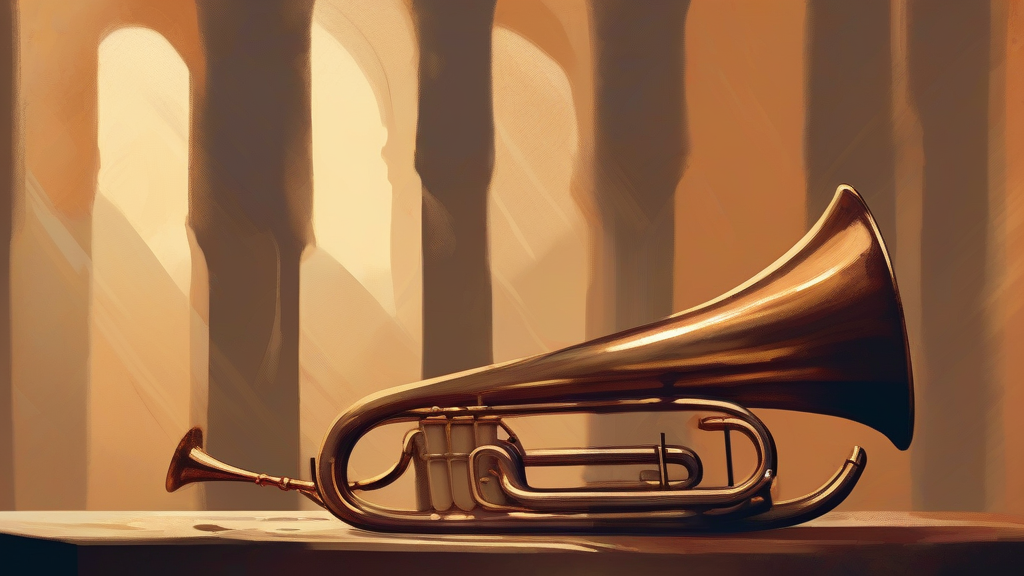
The buccina was a bronze wind instrument of ancient Rome, used primarily by the army to give signals. It consisted of a long, narrow tube of metal that widened into a flared bell and was shaped so that its lower section curved around the player's body, with the bell rising above the head or over the shoulder. Because its deep, carrying tone could be heard across a sprawling legionary camp, the buccina was ideal for sounding practical commands: changing the watch, breaking camp, or ordering a march. Its player, known as a buccinator, held an important post in the Roman army's communication system. The word today appears almost exclusively in scholarly writing about Roman history, archaeology, and historically informed performance, where musicians reconstructing ancient instruments have revived the buccina for recordings and reenactments. Though rare, it remains a vivid reminder that empires were coordinated, quite literally, by sound before any written order arrived.
nounA curved brass wind instrument used by the ancient Romans, especially for military signals; it resembled a large horn coiled into a circular shape with the bell passing over the player's shoulder.
- An ancient Roman military horn of bronze, curved and carried over the shoulder, used to signal camp commands such as watch changes and marches.
"The legionary sounded the buccina at dawn to rouse the camp."
"Reenactors at the fort demonstrated how a single buccina could carry orders across an entire legionary camp."
"In the museum's collection, a surviving buccina fragment hints at the instrument's imposing length and deep tone."
The standard English plural follows the Latin second-declension pattern; 'buccinas' occasionally appears but is less common in scholarly writing.
"Several reconstructed buccinae were played together during the opening ceremony."
Before radios, Rome's legions marched to the blast of the buccina — a bronze horn so long it curled over the soldier's own shoulder.
Reviewed by Deb Chak, Editor. AI-assisted content curated by RJS Tech Solutions LLP.
Etymology of buccina
The word comes directly from Latin buccina (also spelled bucina), the name the Romans themselves gave this military horn. The deeper origin of the Latin noun is debated; some scholars connect it with words for the cheek or mouth, while others relate it to Greek boukanē, a similar instrument. The Latin term passed into Romance languages, giving Spanish bocina, which still means 'horn' or 'loudspeaker'.
Related word forms
How buccina is actually used
A scholarly term encountered mainly in discussions of Roman military history, archaeology, and early music performance; it would be unusual in everyday conversation.
Easily confused with buccina
The cornu was a different Roman brass instrument, more tightly coiled like a modern French horn, whereas the buccina was a longer, simpler curved tube used chiefly for military commands.