What does bugloss mean?
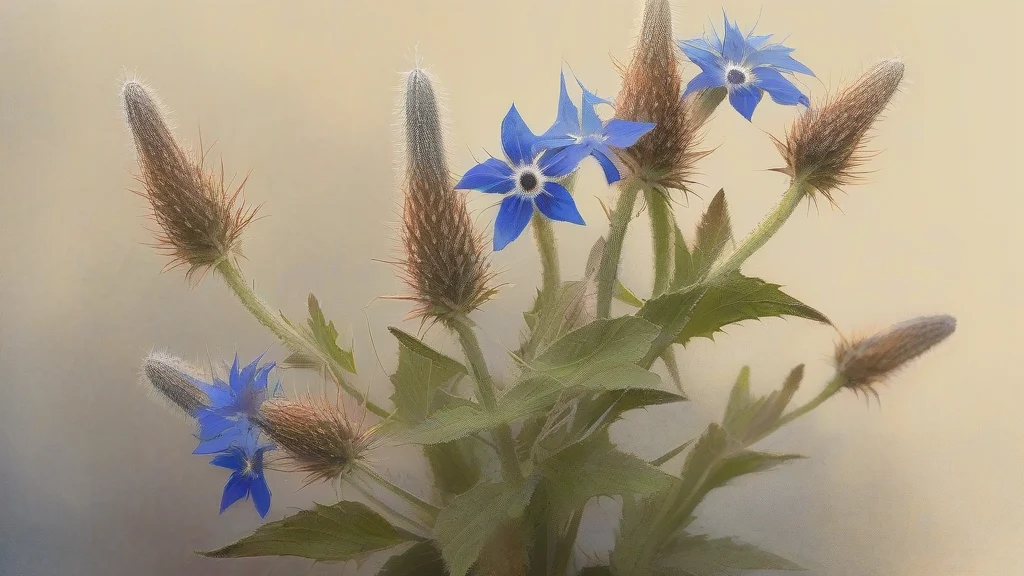
Bugloss is the common name for several coarse, bristly plants of the borage family (Boraginaceae), most familiarly common bugloss (Anchusa officinalis) and viper's bugloss (Echium vulgare). These are hardy European herbs producing tall spikes of striking blue, violet, or purple flowers that bloom over much of the summer, making them popular in wildflower meadows and cottage gardens and valuable to beekeepers as a nectar source. The word comes from the Latin buglossa, itself borrowed from Greek bouglossos, literally 'ox-tongue', a reference herbalists drew from the rough texture and shape of the leaves. In modern usage, bugloss belongs mainly to botanical and gardening vocabulary; it rarely stands alone, appearing more often within compound names that distinguish particular species. Its old-world associations — herbal medicine, honeybees, and untamed roadside colour — give it a quietly romantic flavour among plant names.
nounAny of several coarse hairy plants of the borage family (Boraginaceae), especially Anchusa officinalis and related species such as Echium vulgare, bearing spikes of typically blue or purple flowers; the name derives from the supposed ox-tongue shape and roughness of the leaves.
- Any of various rough-leaved plants of the borage family, especially common bugloss (Anchusa officinalis) and viper's bugloss (Echium vulgare), grown for their blue or purple flower spikes.
"The dry meadow was brightened by the deep blue spikes of bugloss in early summer."
"Beekeepers value viper's bugloss for the long season of nectar its vivid blue flowers provide."
"In the old border, the bugloss self-seeded freely among the roses each June."
Pluralized regularly when referring to multiple individual plants; in botanical writing the plural may simply be 'bugloss' when treated collectively.
"The borders were thick with buglosses by midsummer."
Its very name means 'ox-tongue' in Greek — because medieval herbalists thought its rough, bristly leaves felt like one.
Reviewed by Deb Chak, Editor. AI-assisted content curated by RJS Tech Solutions LLP.
Etymology of bugloss
Bugloss entered English in the Middle Ages via Latin buglossa, which was itself taken from Greek bouglossos, a compound of bous ('ox') and glossa ('tongue'). The name was applied by ancient writers to plants whose stiff, hairy leaves were thought to resemble an ox's tongue in shape and roughness. The second element, glossa, is also the source of English words such as glossary, polyglot, and glottis, while bous underlies terms like bucolic.
How bugloss is actually used
Bugloss is primarily used in botanical, horticultural, and historical-herbal contexts rather than everyday conversation. It appears most often in compound names such as 'viper's bugloss' and 'common bugloss', which denote specific species.
Easily confused with bugloss
Borage (Borago officinalis) is a related but distinct herb of the same family with star-shaped blue flowers, whereas bugloss refers chiefly to Anchusa and Echium species.
A gloss is an explanatory note or surface shine on a word or object, unrelated in meaning to bugloss despite the shared spelling sequence.