What does buhrstone mean?
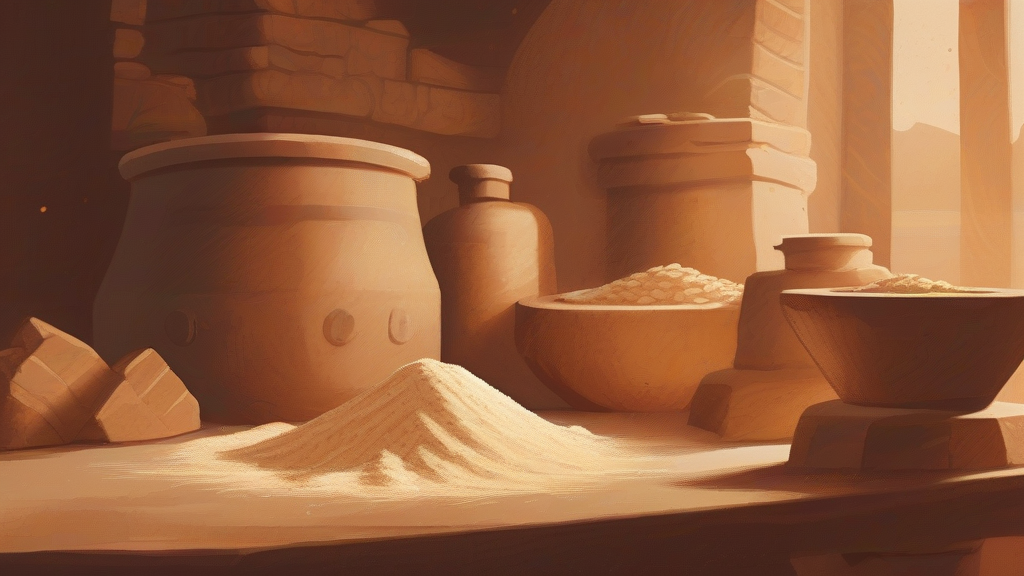
A buhrstone is a millstone made from buhr (also spelled burr), a hard, porous, cellular limestone whose rough, honeycombed texture makes it exceptionally effective at grinding. Buhrstones were used in pairs in traditional flour mills: grain was fed between the two stones, one stationary and one rotating, and the abrasive surfaces sheared the kernels into flour. The most celebrated buhrstone came from the Paris region of France, and blocks of this French stone were exported widely, including to North America, where they were prized by millers above local alternatives. The word belongs mainly to technical and historical registers today, appearing in discussions of milling heritage, industrial archaeology, and geology rather than everyday speech. With the rise of roller milling in the late nineteenth century, buhrstones were displaced commercially, but surviving examples remain a tangible link to centuries of craft milling.
nounA type of millstone made of a tough, porous cellular limestone (called buhr or burr), traditionally used in pairs to grind grain, especially in flour milling. The term also refers more generally to any grinding stone of this kind.
- A millstone made of porous cellular limestone (buhr) used in pairs for grinding grain.
- The cellular siliceous limestone itself when used as an abrasive material for millstones.
"The old watermill still turns its pair of buhrstones, grinding wheat into flour just as it did two centuries ago."
"The miller dressed the buhrstones carefully before each season's grinding began."
"Chunks of French buhrstone were exported worldwide because no other rock ground flour so finely."
The plural typically refers to the pair of stones working together in a mill, which is the standard arrangement for grinding grain.
"Both buhrstones were re-dressed before the harvest could be milled."
The finest buhrstones came from quarries around Paris, and French millstones were shipped across the Atlantic just so American mills could grind flour worth the name.
Reviewed by Deb Chak, Editor. AI-assisted content curated by RJS Tech Solutions LLP.
Etymology of buhrstone
Buhrstone derives from 'buhr', a variant spelling of 'burr', the name given to the porous cellular limestone from which such stones are cut. 'Burr' itself traces back through Middle English, likely related to words denoting rough, prickly seed heads and rough outgrowths, reflecting the stone's coarse texture. The compound 'buhrstone' arose in English usage among millers, with variant forms such as burrstone appearing alongside it. Its closest relatives are therefore other English derivatives of burr, such as burl and burdock, rather than words from another language family.
How buhrstone is actually used
A chiefly technical and historical term, encountered in contexts relating to traditional flour milling, industrial archaeology, and geology. The spellings 'burrstone' and 'burr'/'buhr' vary; 'buhrstone' is common in American milling literature. Largely obsolete in modern industry, replaced by steel rollers in the late nineteenth century.
Easily confused with buhrstone
A millstone is any stone used for grinding in a mill, whereas a buhrstone specifically denotes one cut from porous cellular limestone prized for its abrasive quality.
A grindstone is typically a revolving abrasive wheel for sharpening tools, while a buhrstone is one of a pair of flat stones used for milling grain.