What does bullsnake mean?
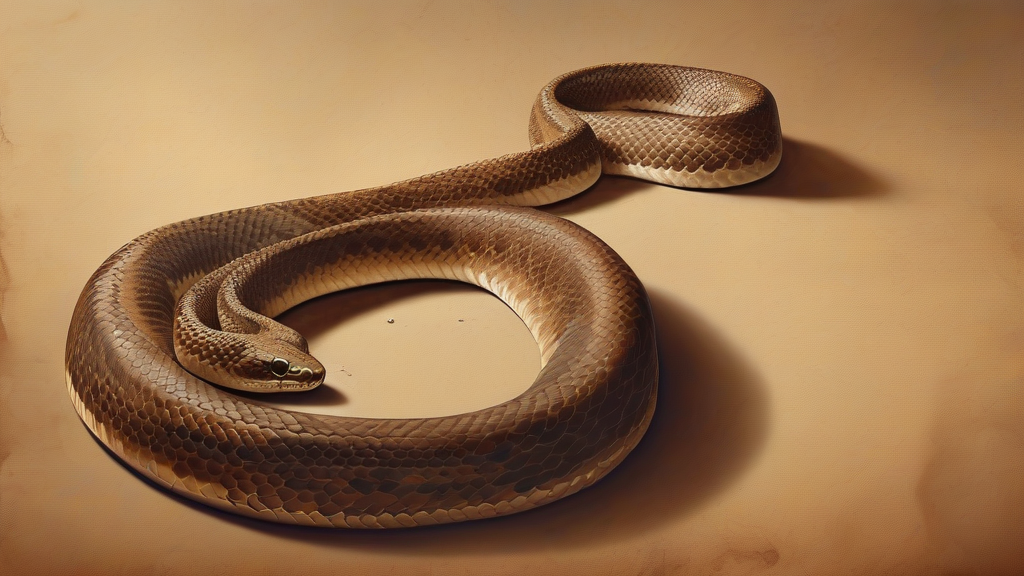
A bullsnake is one of the largest nonvenomous snakes in North America, a heavy-bodied constrictor of the central United States and southern Canada, typically yellowish or cream-colored with dark brown blotches. Adults commonly reach five to six feet in length. Bullsnakes are named, by some accounts, for their loud, bellowing hiss—a defensive display in which they coil, flatten their heads, vibrate their tails against dry vegetation, and strike with a closed mouth. Because this performance closely imitates a rattlesnake, bullsnakes are frequently killed out of fear despite being harmless to humans. In reality they are highly beneficial animals: their diet consists largely of rodents, making them welcome neighbors on farms and ranches across the Great Plains. The name appears chiefly in American English, while closely related western forms are usually called gopher snakes. For anyone learning about North American wildlife, the bullsnake is a memorable example of bluff over venom—a snake that survives by sounding far more dangerous than it truly is.
nounA large, nonvenomous colubrid snake (Pituophis catenifer sayi) native to central North America, known for its powerful constricting ability and its dramatic defensive hiss.
- A large, nonvenomous constricting snake (Pituophis catenifer sayi) of central North America, typically yellowish-brown with dark blotches.
"The farmer welcomed the bullsnake to his barn, knowing it would keep the rodent population in check."
"A bullsnake can grow to over six feet long, making it one of the largest snakes in the American Great Plains."
"Because bullsnakes prey heavily on rodents, ranchers often leave them alone rather than killing them."
The standard plural follows regular English noun formation.
"Bullsnakes are among the most valuable natural predators of rodents on the prairie."
When threatened, a bullsnake can flatten its head, hiss loud enough to be heard across a yard, and shake its tail in dry leaves so convincingly that even experienced hikers mistake it for a rattlesnake.
Reviewed by Deb Chak, Editor. AI-assisted content curated by RJS Tech Solutions LLP.
Etymology of bullsnake
The word "bullsnake" is an English compound of "bull" and "snake," formed in North America, likely in the 19th century. The element "bull" traces back to Old English "bula," of Germanic origin, and was applied to this snake either because of its size and strength or, more popularly cited, because of the deep, bellowing quality of its defensive hiss. The same "bull" element appears in other animal names such as bullfrog and bullock, all drawing on the image of bulk or force associated with the male cattle animal.
How bullsnake is actually used
"Bullsnake" is the standard common name in American English for this subspecies; the closely related western populations are more often called "gopher snakes." The name is used almost exclusively in North America and carries no figurative or idiomatic meaning.
Easily confused with bullsnake
The bullsnake mimics a rattlesnake by coiling, vibrating its tail, and hissing loudly, but it has no rattle and is entirely nonvenomous.
The pine snake is a closely related species in the same genus (Pituophis) found mainly in the southeastern United States, whereas the bullsnake occupies the Great Plains and adjacent regions.