What does burriest mean?
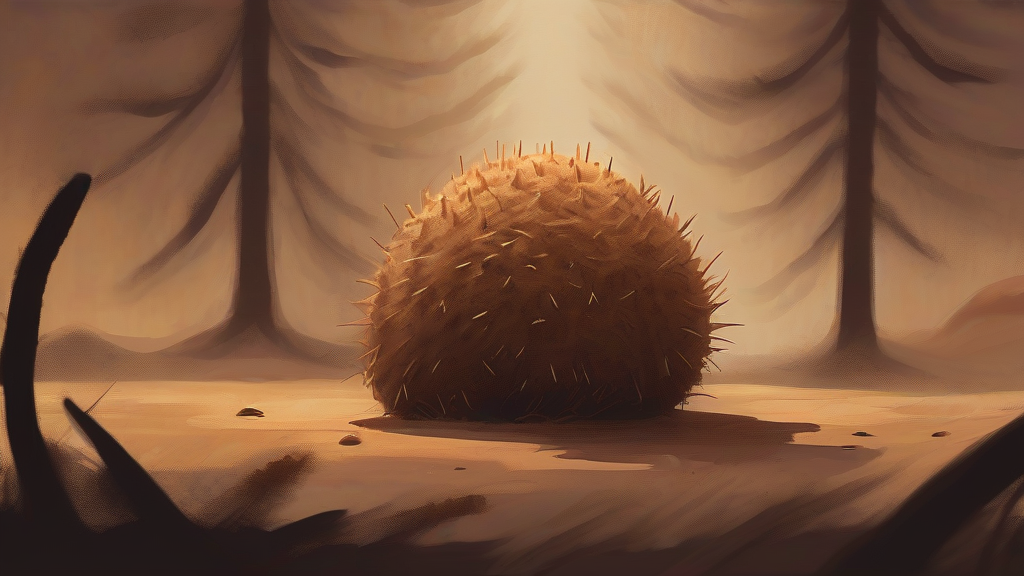
'Burriest' is the superlative of 'burry', meaning having the most burs or prickly seed cases. A bur is the small, hook-covered fruiting body produced by plants such as burdock, cocklebur, and agrimony, designed to latch onto passing animals so its seeds are carried to new ground. When farmers, shepherds, shearers, or textile workers call a pasture, a sheep's fleece, or a garment 'burry', they mean it has picked up these clinging seeds; calling it 'burriest' ranks it as the worst offender among several. The word carries mildly negative connotations — burrs are a nuisance that must be picked or combed out of wool and clothing — yet it also evokes a charming piece of natural engineering: the hooks of burdock burs directly inspired George de Mestral's invention of Velcro in the 1950s. Though rare outside agricultural and rural speech, 'burriest' is a precise and vivid term for the prickliest of clinging things.
Having the greatest number of burs; most covered in prickly seed cases.
"The burriest stretch of hedgerow was where the cockleburs grew thickest."
Superlative of 'burry'; typically applied to pastures, animal coats, fleece, and fabric.
Having the roughest or most clinging texture, as though covered in burs.
"That old blanket is the burriest thing in the house — everything snags on it."
An extended, figurative sense; less common than the literal use.
The burriest plant you'll ever meet is likely burdock — whose clinging burs inspired Swiss engineer George de Mestral to invent Velcro after examining them under a microscope.
Reviewed by Deb Chak, Editor. AI-assisted content curated by RJS Tech Solutions LLP.
Etymology of burriest
'Burriest' derives from 'burry', formed simply from 'bur' — the word for a rough, prickly seed case — plus the adjectival suffix '-y'. 'Bur' itself entered English in the Middle English period, likely from Old Norse 'burr', meaning a knot or protuberance on wood, and came to be applied to the clinging seed heads of plants like burdock. As a regular superlative formation ('burr, burry, burrier, burriest'), it follows standard English morphology rather than tracing back to any classical root.
Related word forms
How burriest is actually used
'Burriest' is the comparative-superlative inflection of 'burry', a relatively informal word used mostly in rural, agricultural, and textile contexts when describing pastures, animals' coats, fleece, or clothing that has picked up prickly seed heads. It is uncommon in everyday urban speech but well established among farmers, shearers, and spinners.
Easily confused with burriest
'Blurry' means indistinct or out of focus, while 'burry' describes something covered in burs or prickles — an easy mix-up given their similar sound.