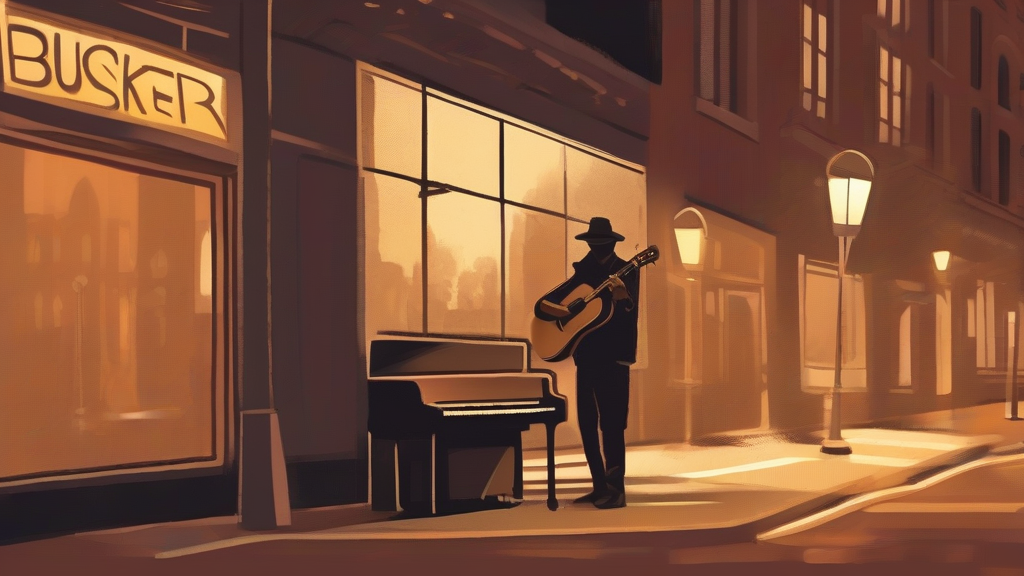
What does busker mean?
A busker is a person who performs entertainment — most often music, but sometimes juggling, magic, mime, or acrobatics — in public spaces such as streets, parks, squares, and subway stations, earning money through voluntary donations rather than ticket sales. The word is primarily British and Commonwealth English, with American usage favoring "street performer," although "busker" has gained international recognition alongside the global spread of street-performance culture. The term carries a largely positive connotation, evoking spontaneity, talent, and urban vibrancy; many famous musicians, including Ed Sheeran and Rod Stewart, began their careers busking. Cities vary widely in their treatment of buskers: some require permits or auditions, as London Underground does for its licensed performers, while others allow informal performances freely. Related terms include the verb "busk" (to perform on the streets) and the gerund "busking." For anyone describing city life, live music culture, or grassroots artistry, "busker" is an essential, vivid piece of vocabulary.
nounA person who entertains passers-by in a public place, such as a street, park, or subway station, typically by singing, playing music, juggling, or otherwise performing, usually in the hope of donations.
- A person who performs music or other entertainment in a public place for voluntary donations from passers-by.
"A lone violinist worked the corner as a busker, her open case filling with coins as commuters hurried past."
"The council has designated special pitches where licensed buskers can perform without disturbing local shops."
"She dropped five pounds into the guitar case of a talented young busker outside Covent Garden."
Regular plural; simply add -s.
"The festival featured buskers from across Europe along its cobblestone lanes."
Ed Sheeran was once just another busker — he famously performed on London Underground platforms before selling out stadiums.
Reviewed by Deb Chak, Editor. AI-assisted content curated by RJS Tech Solutions LLP.
Etymology of busker
"Busker" comes from the verb "busk," meaning to perform in public places for donations. The verb's ultimate origin is debated, but it is commonly traced to Romance sources such as Spanish "buscar" and Italian "buscare" (both meaning "to seek"), suggesting an early sense of seeking one's fortune or livelihood. The word became established in English in the nineteenth century, particularly in Britain and Australia, where it remains the standard everyday term for street entertainers.
How busker is actually used
"Busker" is chiefly British and Commonwealth English; American speakers more often say "street performer" or "street musician," though "busker" is increasingly recognized in the US. The tone is neutral to affectionate, though it can carry a faint implication of amateurism depending on context. It derives from the verb "busk" (to perform on the streets).
Easily confused with busker
A basker is someone who relaxes in warmth (as in sunshine); a busker is a public street entertainer — the words differ by one letter but are entirely unrelated in meaning.