What does byway mean?
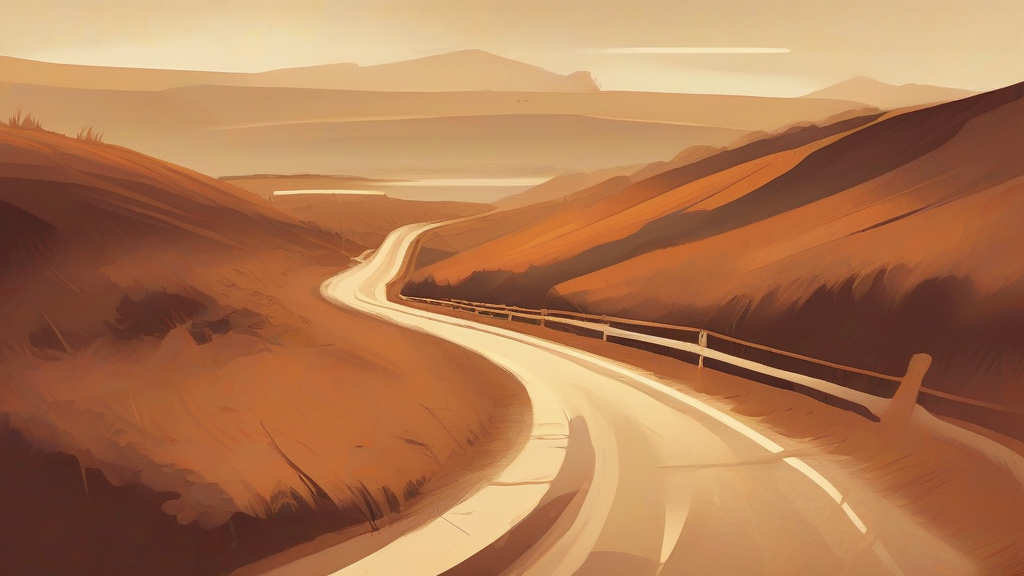
A byway is a small, quiet road, typically unpaved or lightly travelled, that branches off from main routes — the kind of lane one takes to escape traffic or explore the countryside at a slower pace. Beyond its literal meaning, the word also serves figuratively to describe obscure or neglected areas of knowledge, art, or endeavour: a scholar might work in the byways of a discipline rather than its well-trodden mainstream. The word's charm lies in its contrast with the highway; where a highway suggests speed, volume, and prominence, a byway suggests intimacy, seclusion, and discovery. The established idiom 'highways and byways' captures this pairing neatly, evoking both bustling thoroughfares and hidden corners of a landscape or a life. In the United States, the term gained official standing through the federal Scenic Byways program, which designates roads of special beauty or historic interest. Whether describing a rural lane or an esoteric field of study, 'byway' conveys something off the beaten path and all the more rewarding for it.
nounA minor or little-travelled road, especially one in the countryside. Figuratively, it denotes an obscure, neglected, or peripheral area of activity, knowledge, or interest.
- A minor or unfrequented road, especially a rural one.
- (Figurative) An obscure or little-known branch of study, activity, or interest.
"We abandoned the motorway and followed a narrow byway through the hills."
"The village is reachable only by winding byways that barely fit one car."
"His research delved into the byways of medieval manuscript illumination, a field few scholars explore."
Regular plural; commonly used in phrases such as 'the highways and byways'.
"The guidebook covers every byway in the region, however remote."
In Britain, some byways are legally 'green lanes' — ancient tracks so old that Romans may have walked them.
Reviewed by Deb Chak, Editor. AI-assisted content curated by RJS Tech Solutions LLP.
Etymology of byway
The word 'byway' derives from the preposition 'by', used adverbially to mean 'near, beside, or out of the way', combined with 'way' in its sense of a road or route. It follows the same productive English pattern seen in 'bypath' and 'bystreet', words formed with 'by-' to indicate something secondary or off the main course. The compound emerged in English usage around the early seventeenth century as travel and road networks expanded and writers sought terms for lesser routes alongside the principal highways.
How byway is actually used
The plural phrase 'highways and byways' is a well-established idiom evoking both major routes and remote corners, literal or figurative. In the US, 'scenic byway' is an official designation for roads recognized for their aesthetic or cultural value. The figurative sense carries a mildly romantic connotation of remoteness or scholarly obscurity.
Easily confused with byway
A bypass is a road built around a town or obstruction to divert traffic, while a byway is simply a minor, quiet road.