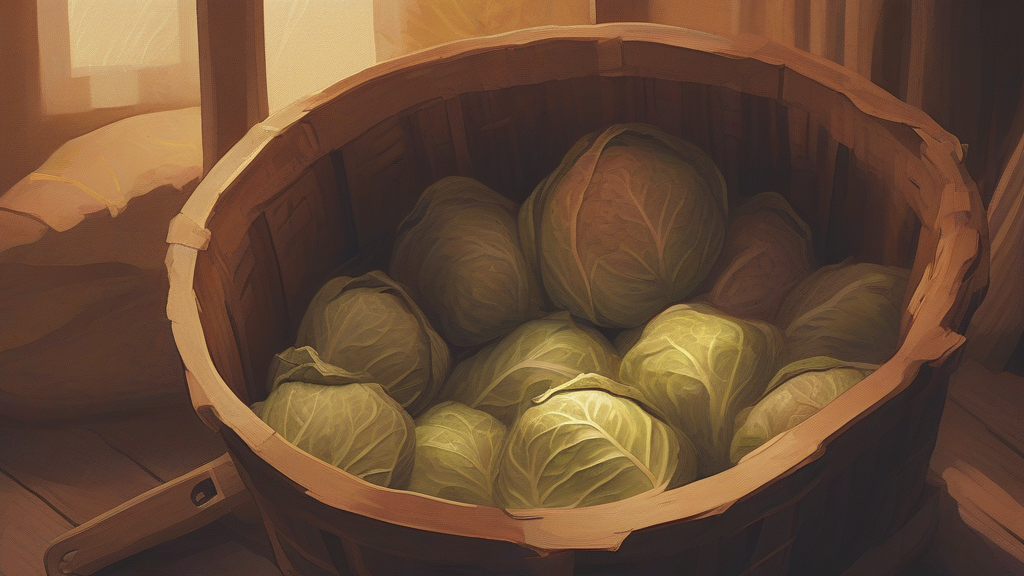
What does cabbaging mean?
To cabbage is an old piece of British slang meaning to steal or appropriate, especially to pilfer small quantities of material — originally the scraps of cloth left over from cutting out garments in a tailor's shop. Tailors were famously paid partly in these offcuts, known as 'cabbage', so workers who pocketed more than their share were said to be cabbaging. By extension, the verb came to describe helping oneself to anything small and easily concealed, and later to copying or cribbing someone else's ideas or writing. Today 'cabbaging' survives mainly as the progressive or gerund form of that verb ('she was cabbaging ribbon ends'), used informally and almost exclusively in Britain. Its connotations are of petty, opportunistic theft rather than grand larceny, often tinged with humour. The word ultimately derives, through Old North French caboche ('head'), from the same root that gave English both the vegetable 'cabbage' and the jeweller's term 'cabochon'.
Present participle and gerund of the verb 'cabbage': to steal or pilfer, especially to appropriate offcuts or remnants from materials entrusted to one; to copy or plagiarize work.
"He was caught cabbaging leather trimmings from the workshop floor."
Informal and chiefly British; implies minor theft rather than serious crime.
As a gerund, the action or practice of pilfering small amounts, especially of cloth or similar material.
"A little cabbaging of thread and buttons was tolerated in the old workrooms."
In Victorian tailor's shops, 'cabbaging' was so routine that leftover cloth had an actual name — 'cabbage' — and workers who pocketed it were said to be cabbaging, making this one of English's most literal words for petty theft.
Reviewed by Deb Chak, Editor. AI-assisted content curated by RJS Tech Solutions LLP.
Etymology of cabbaging
The verb 'cabbage', from which 'cabbaging' derives, appeared in English in the seventeenth century as tailor's slang for stealing cloth offcuts, which were themselves called 'cabbage'. Both the verb and the vegetable trace back to Old North French caboche, meaning 'head', from Late Latin caput — the leafy head of the plant giving the noun, while the connection between 'head' and pilfering likely ran through the notion of appropriating the 'head' or bulk of the material. A surviving cognate in English is 'cabochon', the smooth domed gemstone cut, which comes through French from the same source.
Related word forms
How cabbaging is actually used
'Cabbaging' is informal and chiefly British, with a slightly old-fashioned, colloquial flavor. It carries a connotation of petty rather than serious theft, often with a wry or affectionate tone when applied to harmless skimming of odds and ends.
Easily confused with cabbaging
While 'cabbage' most familiarly refers to the leafy vegetable, as a verb it means to steal or appropriate — and 'cabbaging' is simply that verb in its progressive or gerund form.