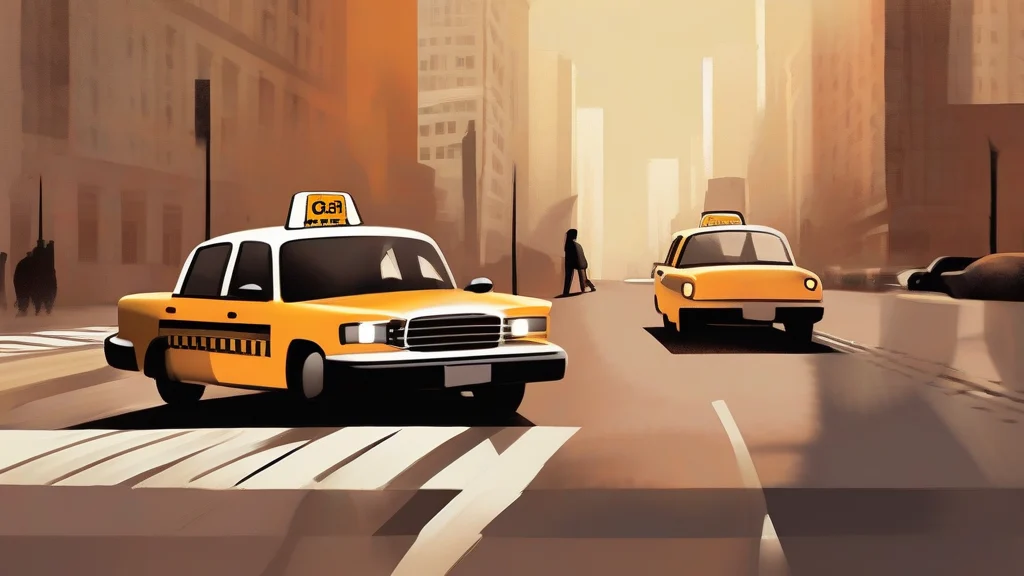
What does cabby mean?
A cabby is a taxi driver — the person behind the wheel of a cab who picks up passengers and ferries them across town for a fare. The word is informal and affectionate rather than formal, carrying a connotation of everyday urban life: the chatty local expert, the navigator of rush-hour shortcuts, the fixture of city streets. It is especially common in British English, while American English more often uses the variant spelling 'cabbie.' The term derives from 'cab,' itself a shortening of 'cabriolet,' the light two-wheeled horse-drawn carriage that preceded the motor taxi in nineteenth-century cities. Because it is colloquial, 'cabby' suits casual conversation, journalism, and fiction far better than formal writing, where 'taxi driver' is preferred. It is a warm, humanizing word that evokes a profession defined by conversation, local knowledge, and long shifts on the road.
nounA person who drives a taxicab for a living; an informal word for a taxi driver.
- An informal term for the driver of a taxicab.
"The cabby knew every shortcut in the city and had us at the station in ten minutes."
"Our cabby chatted cheerfully about the city's history the whole way to the hotel."
"In the rain-soaked evening traffic, every cabby in town seemed to be full."
Standard plural, formed regularly by adding -ies since the singular ends in consonant + y.
"Outside the theater, a row of cabbies waited patiently in the drizzle."
The humble cabby owes his name to a French horse-drawn carriage — the cabriolet — whose name literally comes from a verb meaning 'to leap,' because the light carriage seemed to skip across the road.
Reviewed by Deb Chak, Editor. AI-assisted content curated by RJS Tech Solutions LLP.
Etymology of cabby
Cabby is formed from 'cab,' the familiar shortening of 'cabriolet,' a lightweight two-wheeled French carriage whose name derives from French 'cabrioler,' meaning 'to leap or caper' — a nod to the vehicle's lively motion. When horse-drawn cabs gave way to motorized taxis, the drivers of these vehicles came to be called cabmen, cabdrivers, and informally cabbies. The word emerged in English during the era of horse-drawn hansom and cabriolet cabs in the nineteenth century and has persisted into the age of the automobile.
Related word forms
How cabby is actually used
Informal and friendly in register; 'cabby' is more common in British English, though it is understood in American English, where 'cabbie' is the more frequent spelling of this colloquial term.
Easily confused with cabby
Cabbage is a leafy vegetable (or, as slang, money or a dull person), while cabby is an informal noun for a taxi driver — the words merely share a similar sound.