
What does calcaneal mean?
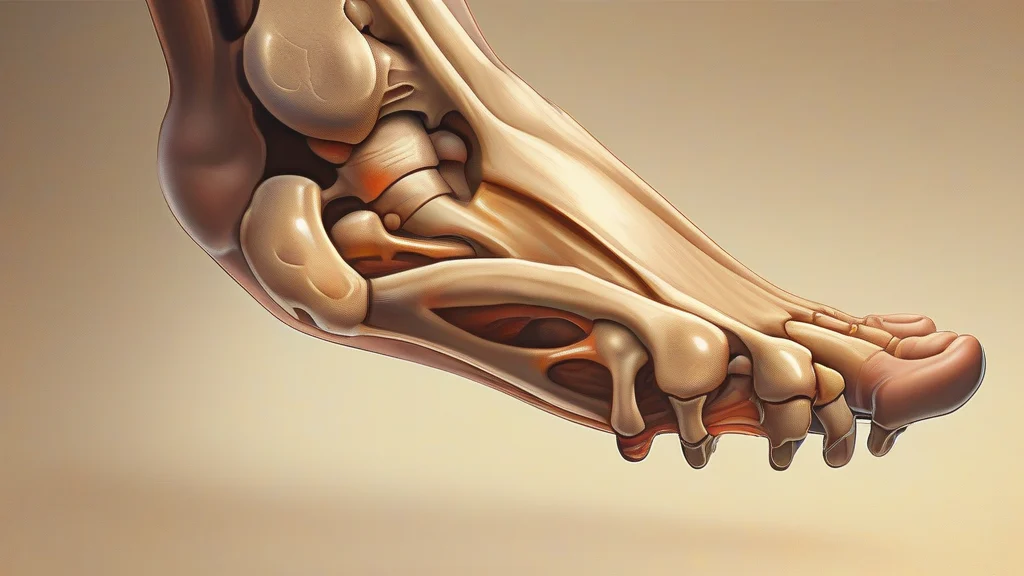
'Calcaneal' is an anatomical adjective meaning relating to the calcaneus, the large bone that forms the human heel. It belongs to the specialised vocabulary of medicine, anatomy, physiotherapy, and sports science rather than everyday speech. Clinicians use it to describe structures, injuries, and procedures at the back of the foot: a 'calcaneal fracture' follows a hard fall onto the heel, a 'calcaneal spur' is a bony outgrowth associated with plantar fasciitis, and the 'calcaneal tendon' — better known as the Achilles tendon — attaches the calf muscles to this bone. Because the calcaneus bears the body's weight with every step and absorbs especially high loads during running and jumping, calcaneal injuries are a serious concern in orthopaedics and athletics. The word carries a formal, clinical register; lay readers are more likely to encounter it in a diagnosis or imaging report than in casual conversation. Its precision makes it valuable wherever exact anatomical description matters.
adjectiveRelating to the calcaneus, the heel bone — the largest bone of the human foot, which forms the prominence of the heel.
- Of or relating to the calcaneus (heel bone), as in anatomy, medicine, and orthopaedics.
"The MRI revealed a small calcaneal fracture where the runner had landed awkwardly during the marathon."
"A calcaneal fracture often results from a fall from height, landing directly on the heel."
"The surgeon repaired the ruptured calcaneal tendon, restoring the athlete's ability to push off the ground."
Your heel bone takes the force of every step you take — roughly two to three times your body weight when you run — which is why 'calcaneal' shows up so often in sports medicine reports.
Reviewed by Deb Chak, Editor. AI-assisted content curated by RJS Tech Solutions LLP.
Etymology of calcaneal
The word derives from the Latin 'calcaneus', meaning the heel bone, itself formed from 'calcaneum' with roots linked to 'calx', the Latin word for heel or limestone (the same root that gives us 'chalk', 'calcium', and 'calculate'). The adjective form entered English through anatomical Latin usage, becoming established in medical vocabulary as anatomical terminology was standardised, largely during the early modern period and later codified in the nineteenth century. It shares its root with the noun 'calcaneus', the anatomical name for the heel bone itself.
Related word forms
How calcaneal is actually used
A technical term used almost exclusively in medical, anatomical, and orthopaedic contexts; it rarely appears in everyday conversation. In clinical writing it typically modifies nouns naming structures or conditions of the heel, such as 'calcaneal spur', 'calcaneal bursitis', or the 'calcaneal (Achilles) tendon'. British medical texts sometimes spell related terms with '-ae-' forms reflecting Latin origins, but 'calcaneal' itself is standard in both British and US usage.
Easily confused with calcaneal
Despite a superficial sound similarity in some accents, 'cardinal' means chief or fundamental (or relates to numbers and high-ranking clergy), whereas 'calcaneal' is an anatomical term relating specifically to the heel bone.