
What does calcaneus mean?
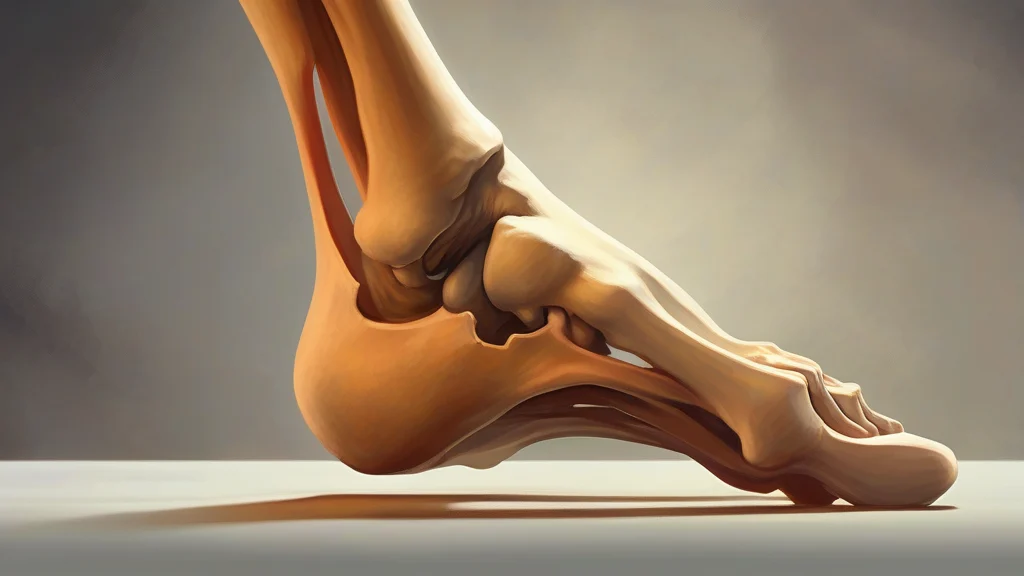
The calcaneus is the large bone that forms the human heel, making it the biggest of the seven tarsal bones in the foot. Sitting at the back of the foot beneath the talus, it bears the body's weight during standing, walking, and running, and it provides the attachment point for the Achilles tendon, the strongest tendon in the body. Because it absorbs such tremendous forces, the calcaneus is vulnerable to injury — falls from height frequently result in calcaneal fractures, which can be serious and slow to heal. The word derives from the Latin calcaneus or calcaneum, meaning "heel," and is used almost exclusively in medical, anatomical, and sporting contexts; lay speakers usually say simply "heel bone." Its adjective form, calcaneal, appears commonly in clinical phrases such as "calcaneal fracture." Understanding the calcaneus offers a window into how the foot's architecture supports human movement.
nounThe calcaneus is the large bone of the human heel that forms the foundation of the rear part of the foot and to which the Achilles tendon attaches.
- The large tarsal bone forming the human heel, articulating with the talus above and the cuboid in front and serving as the attachment point for the Achilles tendon.
"The runner fractured her calcaneus after landing awkwardly during the marathon."
"An X-ray revealed a hairline fracture of the calcaneus."
"In anatomy class we learned that the calcaneus is the largest of the tarsal bones."
The traditional plural is the Latinate "calcanei" (pronounced /kælˈkeɪnaɪ/); the anglicized "calcaneuses" also occurs, especially outside specialist writing. In most contexts writers refer to a patient's left or right calcaneus individually rather than using the plural.
"The radiologist compared images of both calcanei before reaching a diagnosis."
Every step you take lands squarely on your calcaneus — the single largest bone in your foot and the one your Achilles tendon pulls on with every stride.
Reviewed by Deb Chak, Editor. AI-assisted content curated by RJS Tech Solutions LLP.
Etymology of calcaneus
The word calcaneus comes directly from Latin calcaneus or calcaneum, meaning "heel," a derivative of calx, the Latin word for the heel (which also gave rise to terms for limestone and chalk). English adopted the term in anatomical usage in the early modern period, when Latin remained the international language of medicine and natural science. It shares this root with the adjective calcaneal, formed from the same Latin stem, and more distantly with other calx-derived vocabulary such as calcareous.
Related word forms
How calcaneus is actually used
The word belongs chiefly to medical, anatomical, and formal registers; in everyday speech people simply say "heel bone." The traditional plural is the Latinate "calcanei," though "calcaneuses" also occurs. The related adjective is "calcaneal" (as in "a calcaneal fracture").
Easily confused with calcaneus
Calcium is a chemical element essential to bones and other tissues, whereas the calcaneus is itself a specific bone — the heel bone.