
What does carcajou mean?
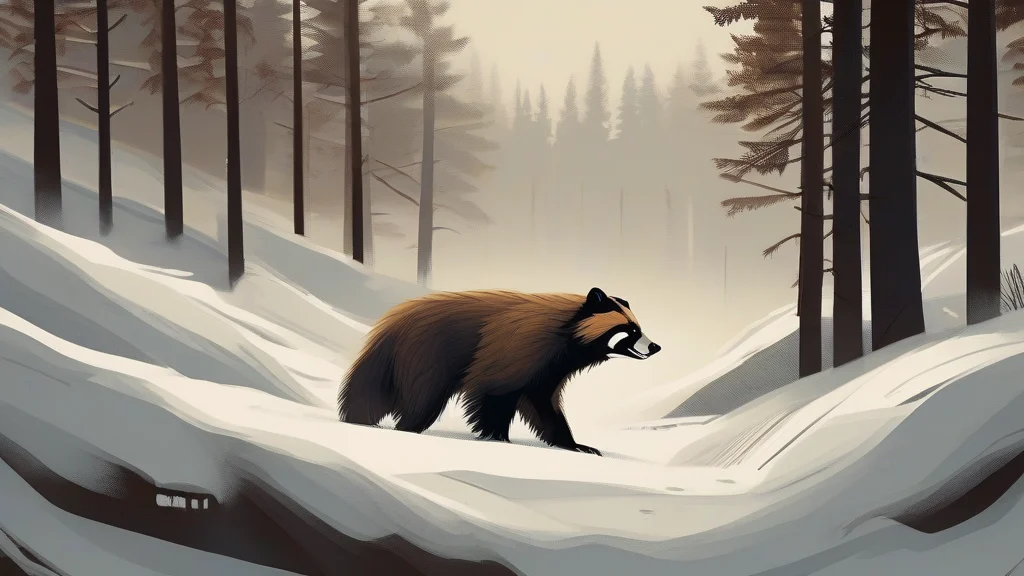
Carcajou is a chiefly North American name for the wolverine (Gulo gulo), the largest terrestrial member of the weasel family. Stocky, muscular, and famously pugnacious, the wolverine ranges across the boreal forests and tundra of Canada and Alaska, scavenging and hunting with an audacity that outstrips its modest size. The word entered English through Canadian French during the fur-trade era, ultimately deriving from an Algonquian Indigenous language, and it appears frequently in trappers' journals and early natural histories, where the animal's habit of raiding bait lines and caches earned it a fearsome reputation. In contemporary English the term has largely yielded to 'wolverine,' though it persists in Canadian usage and historical writing, lending any text that uses it a distinctly northern, frontier flavour.
nounThe wolverine (Gulo gulo), a stocky, ferocious mustelid of northern North American forests and tundra. The term is now largely regional or historical, 'wolverine' being the standard English name.
- The wolverine (Gulo gulo), a powerful, solitary mammal of the weasel family native to northern North America.
"The trapper found tracks of a carcajou pressed into the fresh snow near his line of marten sets."
"Fur-trade journals of the eighteenth century often describe the carcajou as the most cunning and destructive animal in the northern woods."
"A carcajou will drive wolves and even cougars away from their own kills."
The standard plural simply adds -s; the word has no irregular plural forms.
"Early fur-trade records mention carcajous destroying entire caches of provisions."
Before English speakers settled on 'wolverine,' they called this fearless forest glutton by a name borrowed from Indigenous languages via French fur-trade country: the carcajou.
Reviewed by Deb Chak, Editor. AI-assisted content curated by RJS Tech Solutions LLP.
Etymology of carcajou
Carcajou entered English from Canadian French, where it was adopted during the colonial fur trade from an Algonquian language of eastern Canada, most likely Ojibwa or a closely related tongue. French voyageurs and traders used the term for the wolverine, whose ferocity and cunning made a strong impression on those working traplines. The word was absorbed into English in North America, particularly in Canada, before the more transparent name 'wolverine' became dominant.
How carcajou is actually used
The word is somewhat dated and literary in modern English; 'wolverine' is the standard common name today. Carcajou survives mainly in historical accounts of the fur trade, in Canadian French–influenced regions of Canada, and in older natural-history writing.
Easily confused with carcajou
Both are names for northern North American animals borrowed through Canadian French, but a carcajou is the wolverine, a large weasel-like predator, whereas a caribou is a reindeer.