
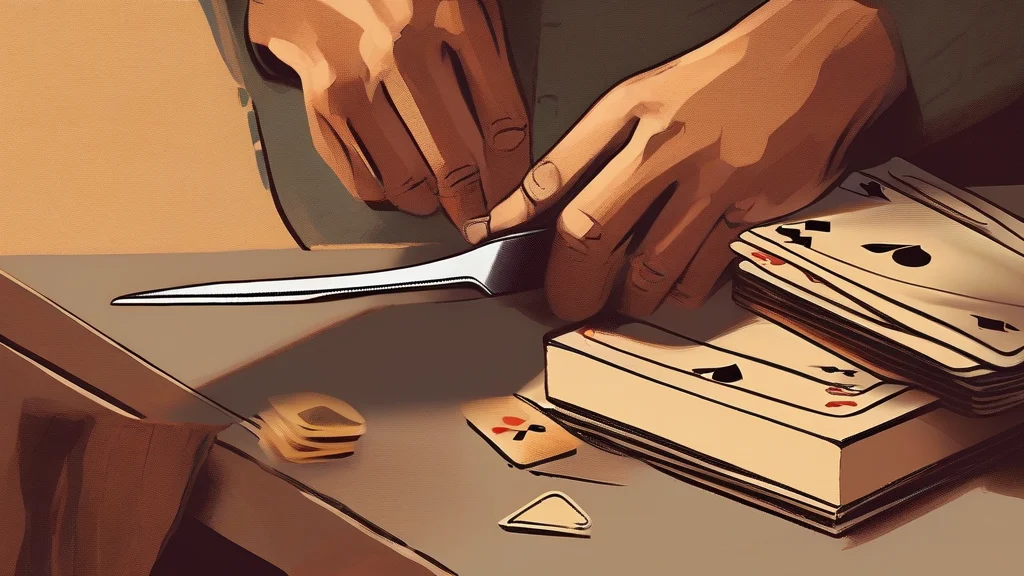
What does cardsharp mean?
A cardsharp is someone who cheats at card games, typically by manipulating cards, arranging favorable outcomes, or deceiving opponents. The word can also be used figuratively for a swindler or a calculating person who gains advantage through trickery rather than honest skill. Cardsharp is especially associated with British English and has a literary, historical tone, although it remains readily understood today. Its history lies in the combination of “card,” referring to a playing card, and “sharp,” meaning shrewd or skilled in a cunning way. The expression originally identified a person adept at defeating opponents through dishonest techniques. In modern writing, it is most effective when the context evokes gambling, deception, or a memorable confidence trickster. Unlike neutral terms for a dishonest gambler, “cardsharp” gives the impression that the person’s deception is practiced, resourceful, and perhaps charming.
nounA cardsharp is a person who cheats at card games, especially by using dishonest tricks. By extension, the word can mean a swindler or unscrupulous schemer.
- A dishonest player who cheats at card games.
- By extension, a swindler or unscrupulous operator who profits from deception.
"The casino hired investigators after learning that a cardsharp had been cheating at the poker tables."
"The casino hired investigators after learning that a cardsharp had been cheating at the poker tables."
"In the novel, the suave cardsharp persuaded the wealthy family to trust him with their fortune."
The regular plural is used when referring to multiple card cheats or swindlers.
"The novel portrays a group of cardsharps who prey on wealthy visitors."
“Cardsharp” names not only a cheater at cards but a whole type of slick trickster whose game is deception itself.
Reviewed by Deb Chak, Editor. AI-assisted content curated by RJS Tech Solutions LLP.
Where does cardsharp come from?
The compound developed in 19th-century English from “card” and “sharp,” initially referring to a player who cheated at cards. “Card” comes through Old French carte from Latin carta, while “sharp” descends from Old English scearp and has Germanic roots. Over time, the word came to be used more broadly for a swindler or a person who succeeds through cunning and deception.
Related word forms
How cardsharp is actually used
The word is chiefly a historical or literary label for a person who cheats at cards. In figurative use, it carries a strongly negative, often old-fashioned connotation and suggests someone who is clever, calculating, and fundamentally dishonest.
Easily confused with cardsharp
“Card shark” is an alternate spelling; “cardsharp” is especially common in British English.