What does carnivalesque mean?
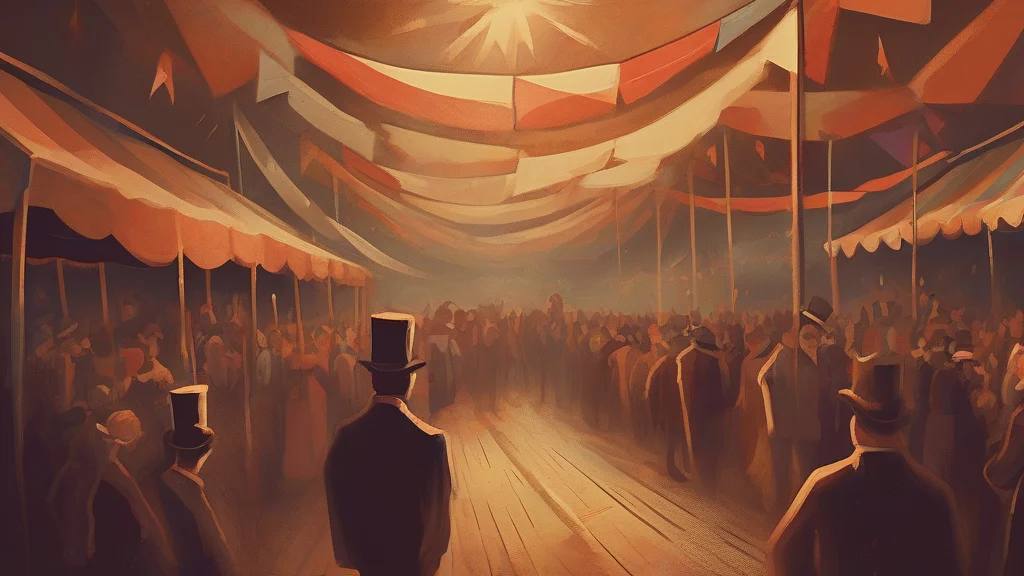
"Carnivalesque" is an adjective describing something that resembles a carnival — exuberant, chaotic, riotously festive, and given to mockery or excess. A street parade with costumed revelers, a satirical protest, or a rowdy celebration might all be called carnivalesque. The word has particular importance in literary and cultural theory, where the Russian critic Mikhail Bakhtin used it to describe moments when official hierarchies are temporarily overturned through popular humor, parody, and the grotesque — as in medieval festivals where peasants mocked their lords with impunity. Derived from "carnival," which ultimately traces back to Latin roots relating to the removal of meat before Lent, the term entered English in the twentieth century and remains most at home in academic and critical writing. It carries strongly positive connotations of vitality and freedom, though it always implies a breakdown of ordinary order. For writers seeking a precise way to evoke festive subversion rather than mere merriment, carnivalesque is unmatched.
adjectiveRelating to or characteristic of a carnival, especially in having an exuberant, chaotic, or riotously festive atmosphere; in literary theory (after Mikhail Bakhtin), describing the subversive overturning of hierarchies and official order through grotesque humor and popular festivity.
- Resembling or evoking a carnival: riotously festive, exuberant, and chaotic in atmosphere.
- In literary and cultural criticism (following Bakhtin): involving the temporary suspension or inversion of official social hierarchies through popular humor, parody, and the grotesque.
"The protest took on a carnivalesque air, with costumed marchers mocking the politicians they marched against."
"The city's streets took on a carnivalesque energy during the week-long festival."
"Critics read the novel as a carnivalesque satire in which servants mock their masters with impunity."
Literary theorist Mikhail Bakhtin turned this single adjective into a whole philosophy of rebellion — the idea that ordinary people topple kings with laughter, costumes, and chaos.
Reviewed by Deb Chak, Editor. AI-assisted content curated by RJS Tech Solutions LLP.
Etymology of carnivalesque
Carnivalesque is formed from "carnival" plus the suffix "-esque," meaning "in the style of." Carnival derives from Italian carnevale, which traces to Medieval Latin carnelevare, literally "removal of meat," referring to the abstention from meat during Lent. The adjective gained wide currency in the twentieth century, especially after Mikhail Bakhtin's studies of Rabelais and folk humor introduced "the carnivalesque" as a critical concept.
How carnivalesque is actually used
A relatively learned term common in academic writing on literature, art, and cultural studies, where it carries specific theoretical weight from Bakhtin's work on Rabelais. In general use it simply connotes wild, festive disorder. It is almost always used attributively or predicatively as an adjective and is rarely applied to solemn or formal contexts.
Easily confused with carnivalesque
Carnival is the festive event itself, while carnivalesque describes things that resemble or evoke its chaotic, celebratory qualities.