What does casked mean?
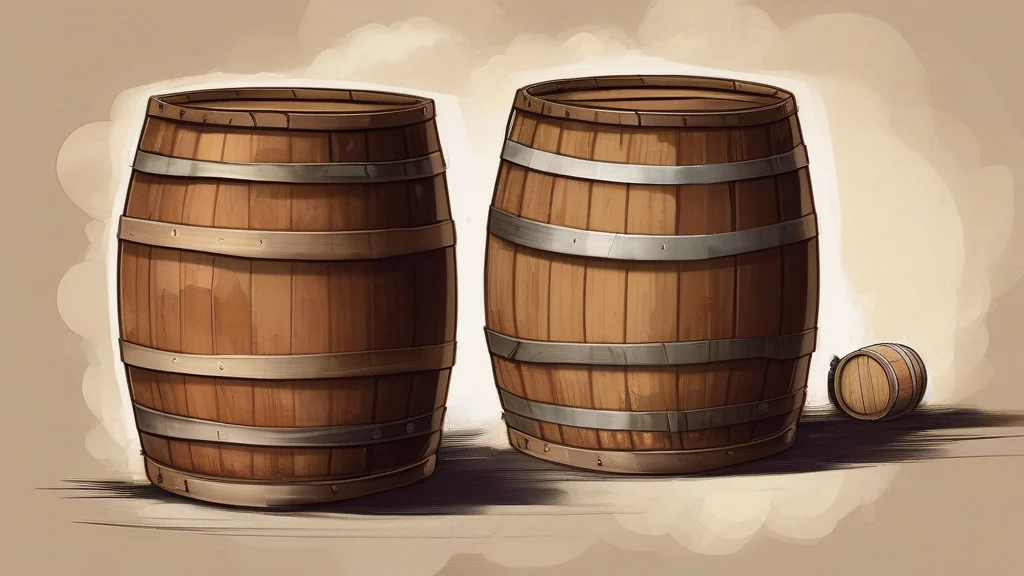
"Casked" is the past tense and past participle of the verb "cask," meaning to put up, store, or seal something in a cask — a large wooden barrel traditionally used for wine, beer, spirits, and other goods. The word also functions adjectivally to describe items that have been packed or matured this way, as in "casked ale" or "casked whisky." Its natural habitat is the language of brewing, distilling, shipping, and commerce, where it signals that a product's character was shaped by time spent in wood. Beyond the drinks trade, "casked" can describe anything hermetically enclosed, a sense found mainly in older or technical writing. Though not common in casual conversation, it evokes tradition, patience, and craft, which is why modern distillers and brewers favor it on labels and tasting notes. Related words include the noun "cask" and the gerund "casking."
Past tense and past participle of cask: to put up or store (a liquid or other goods) in a cask or casks.
"They casked the cider in autumn so it would be ready by spring."
Most common in brewing, distillery, and shipping contexts.
Enclosed, sealed, or stored in a cask; packed in a wooden barrel.
"The warehouse held thousands of casked herring ready for export."
Often found in historical, commercial, or industry writing rather than everyday speech.
Before bottles took over the world, everything worth drinking spent its youth casked in oak — the barrel wasn't packaging, it was an ingredient.
Reviewed by Deb Chak, Editor. AI-assisted content curated by RJS Tech Solutions LLP.
Etymology of casked
The verb "to cask" derives directly from the noun "cask," meaning a barrel-shaped container for liquids. The noun itself entered English in the late Middle Ages, likely borrowed via French or Spanish sources; its ultimate origin is uncertain, though it has been linked to Spanish "casco." From the noun came the regular verb, attested from around the sixteenth century, giving the participle "casked." A distant relative is French "casque," meaning a helmet, which shares the same obscure root referring to a rounded, shell-like vessel or covering.
Related word forms
How casked is actually used
Primarily used in trade, brewing, and whisky contexts; largely technical or commercial rather than everyday vocabulary. The adjectival use ('casked goods') appears mostly in historical or industry writing. In whisky marketing, 'casked' often carries connotations of craftsmanship and maturation.
Easily confused with casked
'Cased' means enclosed in a case or container of any kind, while 'casked' specifically refers to being stored or sealed in a wooden barrel.