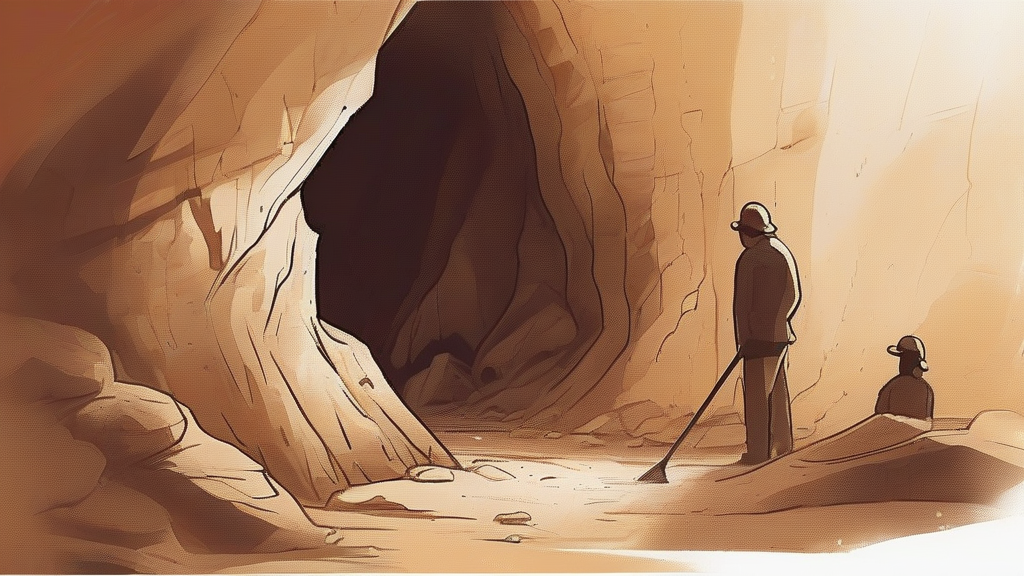
What does caverning mean?
Caverning is the present participle of the verb "to cavern," describing the act of hollowing something out into cavern-like chambers or passages. It appears most naturally in geological writing, where groundwater, erosion, or mining activity slowly carves vast underground spaces out of limestone, chalk, or other soluble rock. Because "cavern" is far more familiar as a noun denoting a large cave, its verbal use remains comparatively rare and carries a slightly literary or technical flavor rather than everyday register. The word derives ultimately from the Latin cavus, meaning hollow, which also gave English words such as cave, cavity, concave, and excavate. Writers reach for caverning when they want to emphasize an ongoing, dynamic process of excavation — the slow, patient sculpting of the earth's interior — rather than simply naming a finished hole in the ground.
verb (present participle)The present participle of the verb "to cavern," meaning to hollow out or excavate something so that it resembles or forms caverns.
- To hollow out or erode into cavern-like spaces, as by water or geological processes.
- To form or travel through caves and cavern-like openings (rarer, often figurative).
"Centuries of flowing water have been caverning the limestone deep beneath the hills."
"Underground rivers have been caverning the chalk for millennia."
"He described the miners' work as caverning the mountain's heart."
Every stalactite you've ever seen exists because water was quietly caverning the earth for millions of years.
Reviewed by Deb Chak, Editor. AI-assisted content curated by RJS Tech Solutions LLP.
Etymology of caverning
Caverning comes from the verb "cavern," formed from the noun "cavern," which entered English from Old French caverne and ultimately from Latin caverna, meaning a hollowed-out place or cave. The Latin root traces back further to cavus, meaning hollow, the same root behind cave, cavity, and excavate. As a verb, "cavern" developed in English to mean both to hollow out into cavernous forms and, less commonly, to fill or furnish with caves.
Related word forms
How caverning is actually used
A relatively uncommon verb form; "cavern" is more frequently used as a noun, so participial uses appear mostly in descriptive, literary, or geological prose.
Easily confused with caverning
"Carven" is an archaic past participle of "carve" meaning sculpted, whereas "caverning" refers to hollowing out spaces like caverns.
"Craven" means cowardly; despite the similar sound, "cravening" has nothing to do with hollowing out rock.